15 Creative Color Wheel Ideas Unique Artists Will Love
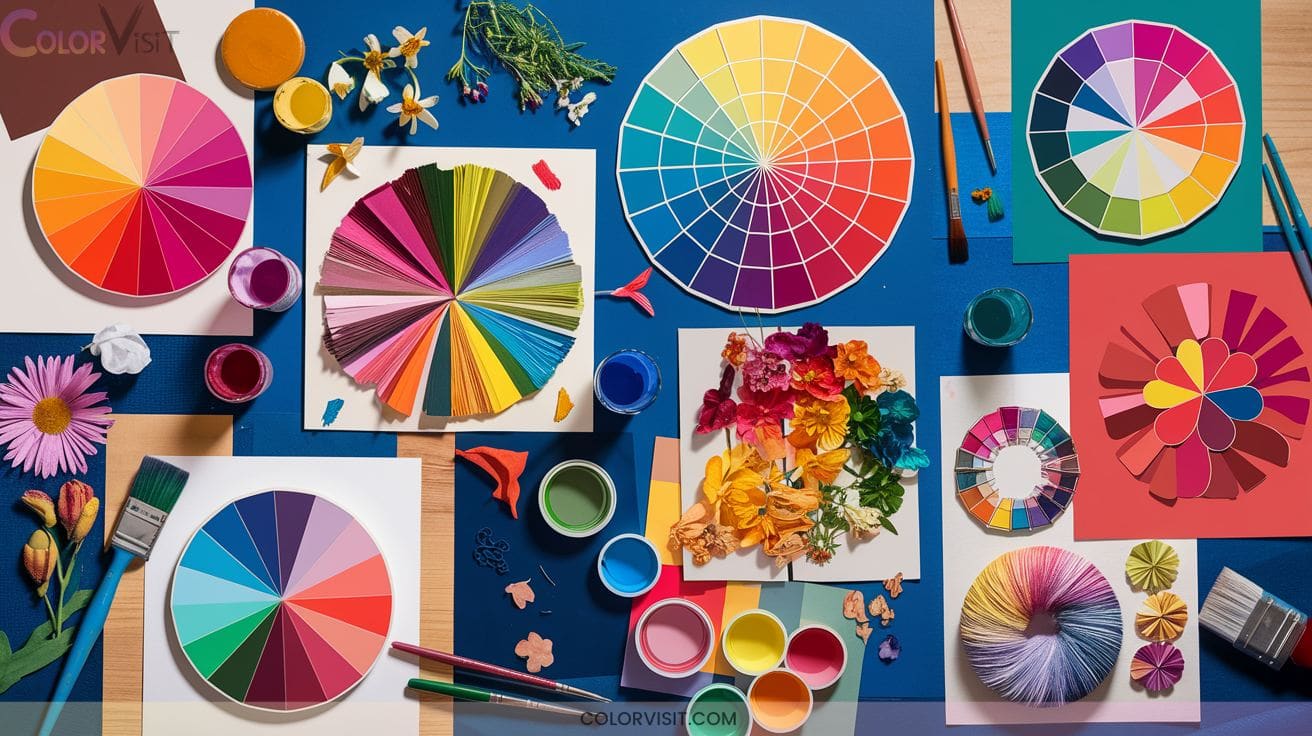
You’ll invigorate your color theory practice with 15 creative color wheel ideas tailored for boundary-pushing artists. Explore collage art wheels using torn magazine clippings and fabric for tactile depth, or construct mandala-inspired and 3D folded paper wheels to master radial symmetry and gradation.
Synthesize chakra-mapped palettes, engineer mixed media compositions, and apply advanced harmonies in photographic layouts. Collaborative murals and ombre-painted furniture further expand chromatic strategy. There’s more to discover for artists aiming to master dynamic color interplay.

| Color Wheel Childrens Colorsaurus | 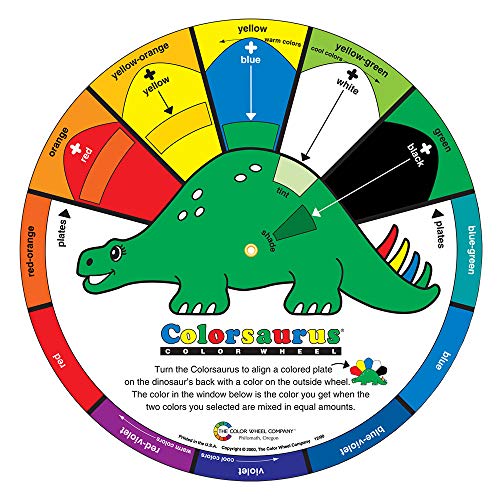 | Best For Kids | Type: Color mixing tool (dinosaur-themed) | Age Range: 4+ | Educational Focus: Color theory basics | VIEW LATEST PRICE | Read Our Analysis |
| Daydream Education Color Wheel Poster (33” x 23.5”) | 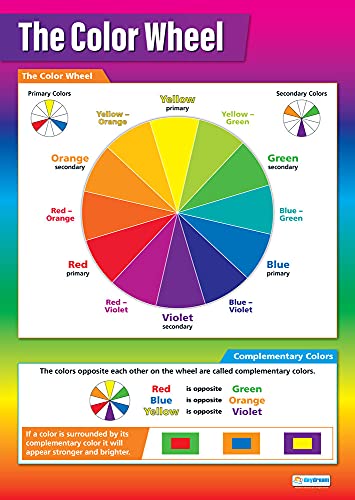 | Classroom Essential | Type: Educational poster (color wheel) | Age Range: Middle & high school | Educational Focus: Color wheel fundamentals | VIEW LATEST PRICE | Read Our Analysis |
| ADOGEO Giant Color Wheel Art Poster |  | Artist Favorite | Type: Art reference poster (color theory) | Age Range: K-12, college, adults | Educational Focus: Comprehensive color theory | VIEW LATEST PRICE | Read Our Analysis |
| Insnug Pottery Wheel for Kids (3-Pack) |  | Creative Starter Kit | Type: Pottery wheel kit (cat-themed) | Age Range: 8–12 | Educational Focus: Color mixing, motor skills | VIEW LATEST PRICE | Read Our Analysis |
| Innofans Pottery Wheel for Kids (Octopus) |  | Top-Rated Kit | Type: Pottery wheel kit (octopus-themed) | Age Range: 8–12 (also suitable for 5+) | Educational Focus: Creativity and fine motor skills | VIEW LATEST PRICE | Read Our Analysis |
| Blue Marble Pottery Wheel Refill Kit |  | Ultimate Refill | Type: Clay & craft refill kit | Age Range: 8+ | Educational Focus: Artistic expression, color exploration | VIEW LATEST PRICE | Read Our Analysis |
| Pottery Wheel for Kids Ages 8-12 |  | Imaginative Design | Type: Pottery wheel kit (unicorn-themed) | Age Range: 8–12 | Educational Focus: Color awareness, concentration | VIEW LATEST PRICE | Read Our Analysis |
| Color Wheel Metal Tin Sign (12″ x 16″) |  | Decorative Accent | Type: Decorative metal tin sign | Age Range: All ages (decorative) | Educational Focus: Visual color reference | VIEW LATEST PRICE | Read Our Analysis |
| Pottery Wheel Kit for Kids with Glow Paints |  | Glow Feature | Type: Pottery wheel kit with glow paints | Age Range: 6–13 | Educational Focus: Color science, creative design | VIEW LATEST PRICE | Read Our Analysis |
| Color Wheel Interactive for Artists (Black/Gold) |  | Portable Tool | Type: Interactive mini color wheel | Age Range: All ages (artists, professionals) | Educational Focus: Color mixing and relationships | VIEW LATEST PRICE | Read Our Analysis |
1. Collage Art Color Wheels
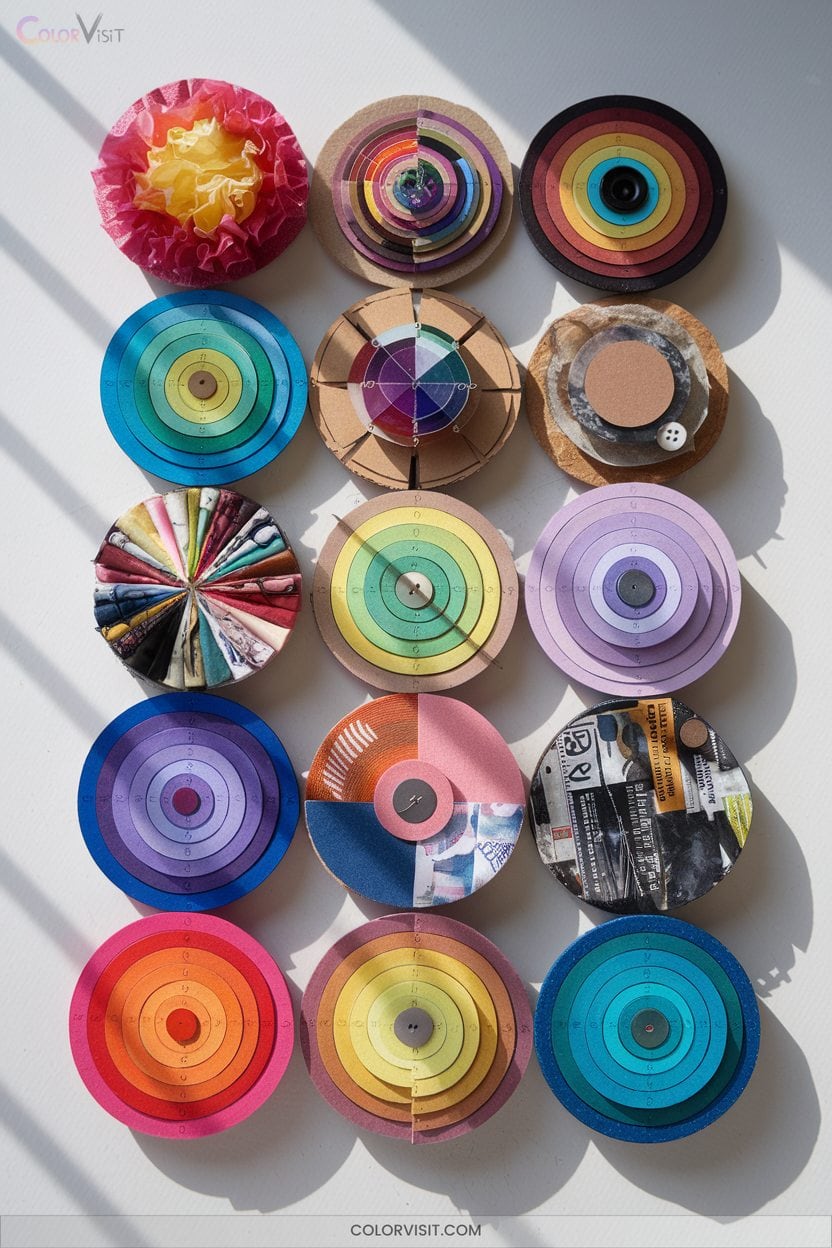
A collage art color wheel leverages magazine clippings, recycled paper, and mixed-media sources to construct a visually dynamic, texturally rich representation of color theory principles.
You’ll organize hand-cut or torn elements into 12 radial segments, accurately mapping primary, secondary, and tertiary hues.
Modular assembly allows group collaboration, while tonal layering within each segment develops nuanced value gradations.
Integrate unconventional materials—fabric, photos, found objects—for enhanced tactile depth and negative space manipulation.
Employ adhesive techniques to achieve a smooth, wrinkle-free finish.
Incorporate labeling systems, protective coatings, and strategic lighting to optimize both educational impact and exhibition durability.
2. Mandala-Inspired Color Wheels
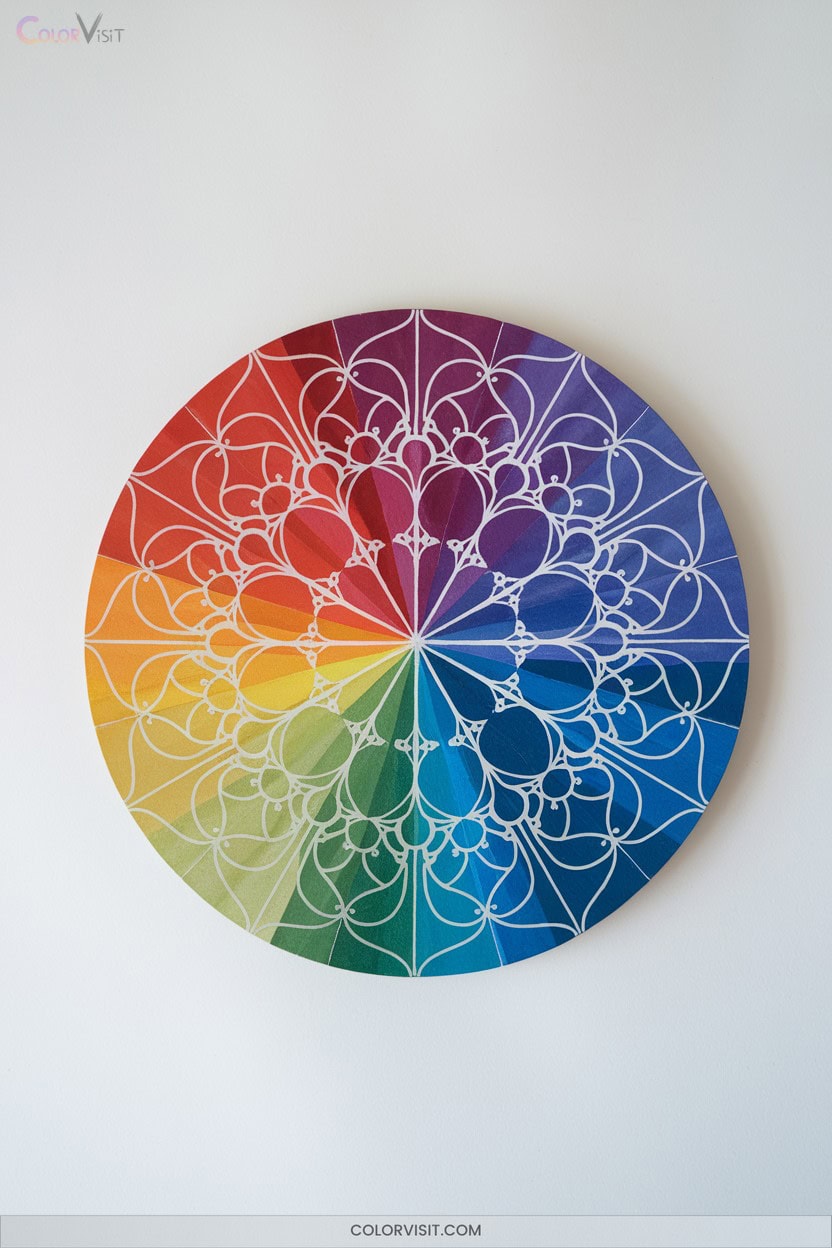
Drawing from the intricate symmetry and symbolic resonance of traditional mandalas, mandala-inspired color wheels synthesize geometric precision with advanced color theory.
You’ll leverage radial symmetry to organize primary and secondary hues, employing protractors or freehand techniques to construct precise or organic motifs.
Integrate tints, shades, and color gradations to achieve dynamic visual depth, while geometric patterns—triangles, circles, and squares—structure harmonious chromatic arrangements.
Experiment with watercolors or mixed media to exploit unique pigment interactions.
3. Chakra-Inspired Color Explorations
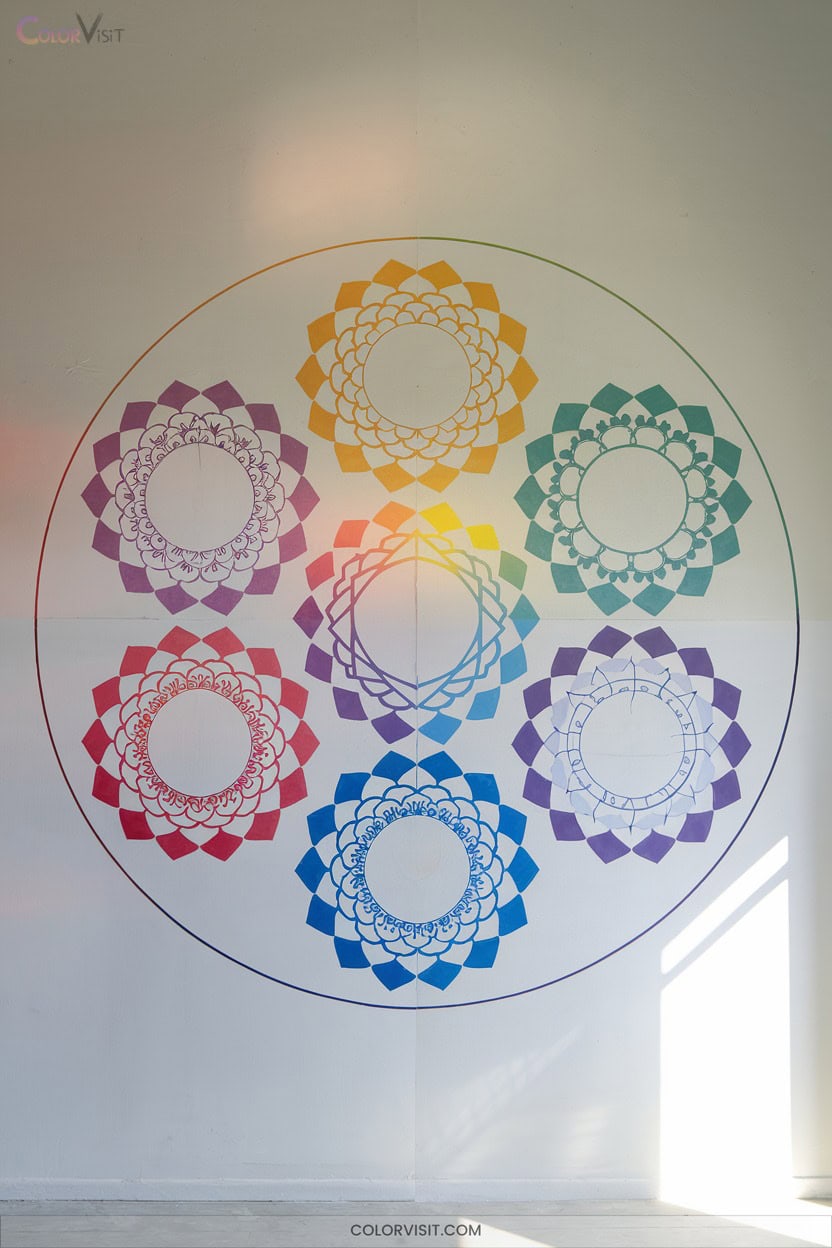
How might you harness the vibrational resonance of chakra colors as a strategic framework for color exploration?
By leveraging the sequenced chromatic spectrum of the chakras, you’ll align your palette with both energetic symbolism and visual harmony.
Each hue—red through violet—carries distinct emotional and spiritual connotations, empowering you to engineer expressive, balanced compositions.
Integrate chakra color theory for advanced color dynamics and conceptual depth:
- Construct color wheels mapping chakra progression for energy flow visualization.
- Synthesize gradients or muted blends for nuanced palettes.
- Apply complementary chakra pairs for dynamic contrast.
- Integrate therapeutic color symbolism for targeted emotional impact.
4. Folded Paper 3D Wheels
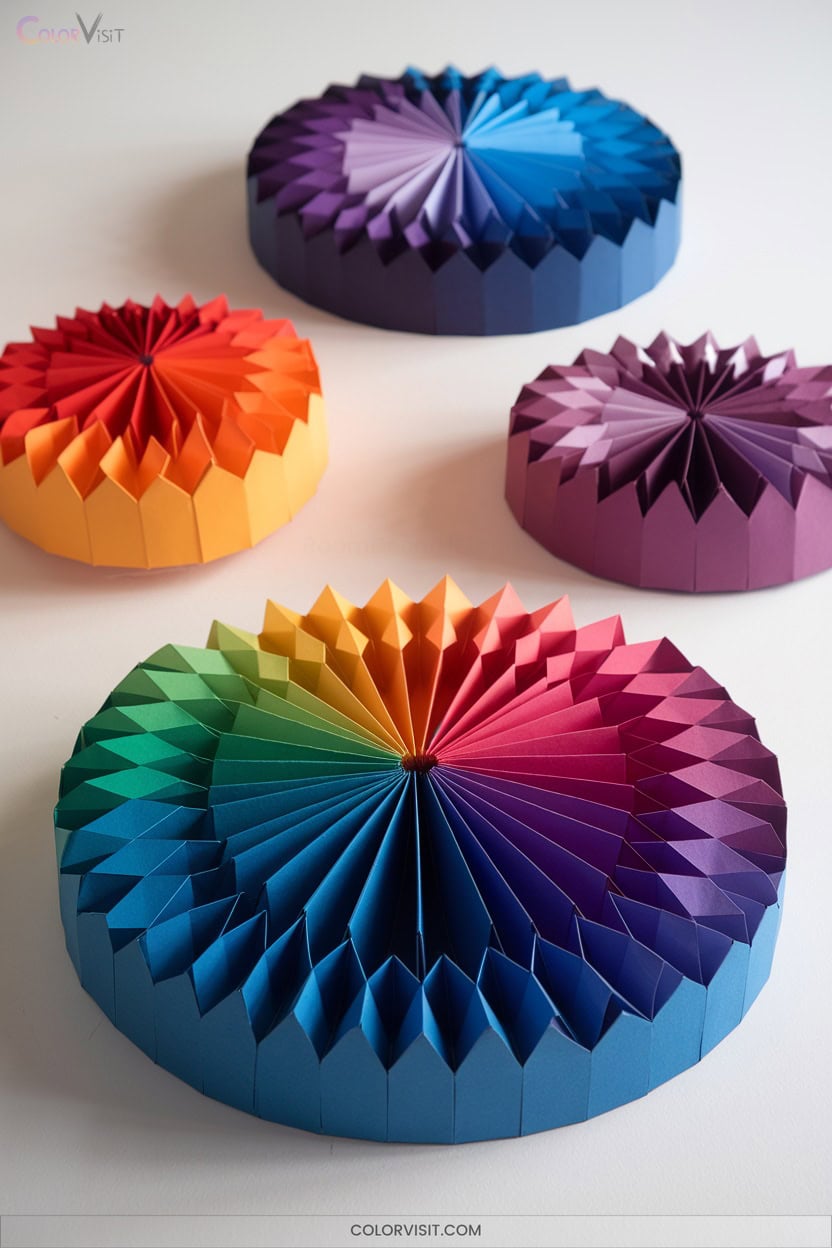
Origami engineering transforms the traditional color wheel into a dynamic, three-dimensional construct, merging geometric rigor with chromatic strategy.
Select dual-sided, square paper for ideal vibrancy and structural integrity.
Use precise fold patterns—concentric, spiral, or modular—to achieve symmetry and dimensional depth.
Employ the two-color principle or expand with primary and secondary hues, ensuring clean color boundaries for visual harmony.
Layer and stack components to enhance the 3D effect, leveraging shadow creation and light interactions for heightened visual impact.
This approach not only demonstrates advanced color theory but also pushes the boundaries of spatial design and tactile engagement in artistic practice.
5. Mixed Media Color Wheel Creations
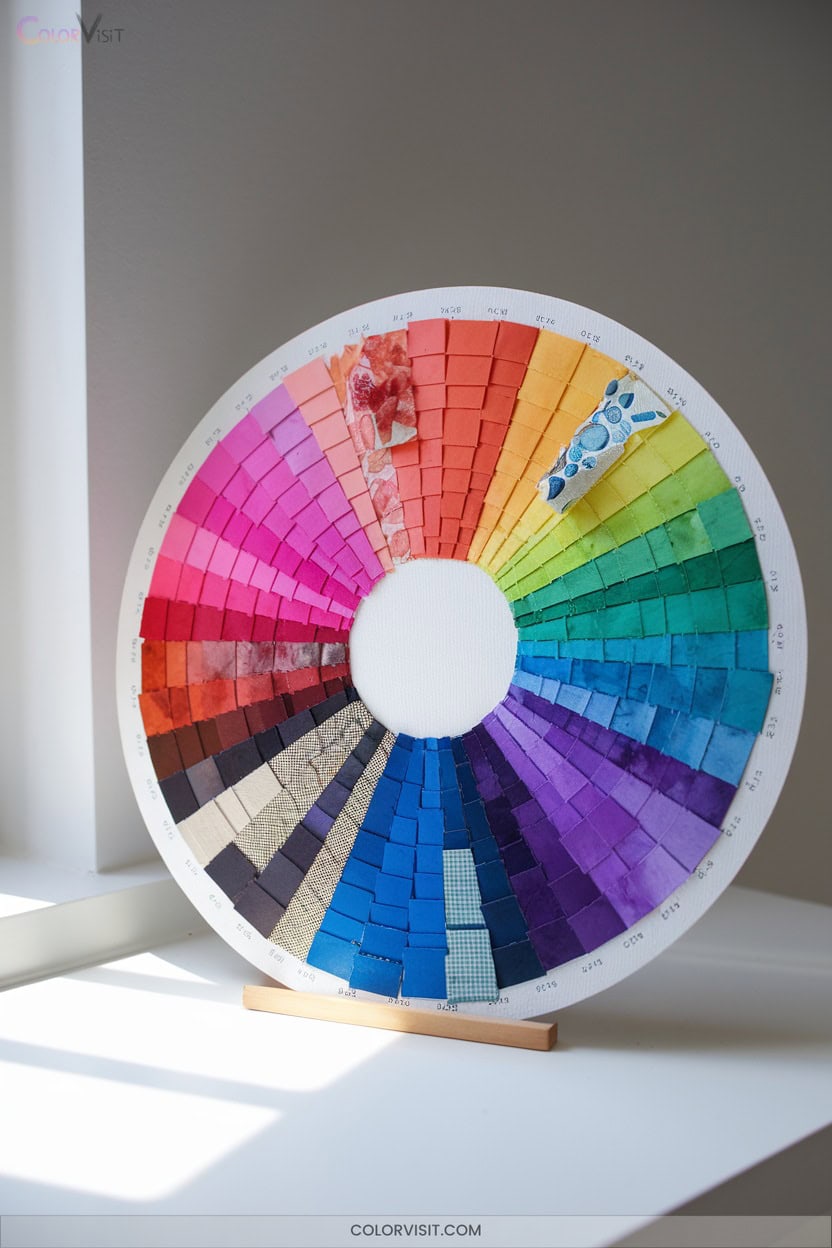
While three-dimensional paper constructions offer a tactile exploration of spatial color theory, mixed media color wheel creations push chromatic experimentation further by integrating diverse materials and techniques.
You’ll manipulate pigment selection, chroma, and tonal variation using acrylics, inks, and natural pigments for vibrant, lightfast results.
Precision in layering, blending, and chromatic manipulation amplifies contrast and harmony.
Advanced artists optimize material-specific wheels, leveraging color theory for visual dynamism.
- Experiment with complementary and analogous schemes for contrast and cohesion.
- Integrate recycled or natural materials for unique textural outcomes.
- Use art journaling to pre-visualize mixed media palettes.
- Explore pigment mixing to expand chromatic range.
6. Digital Interactive Color Wheels
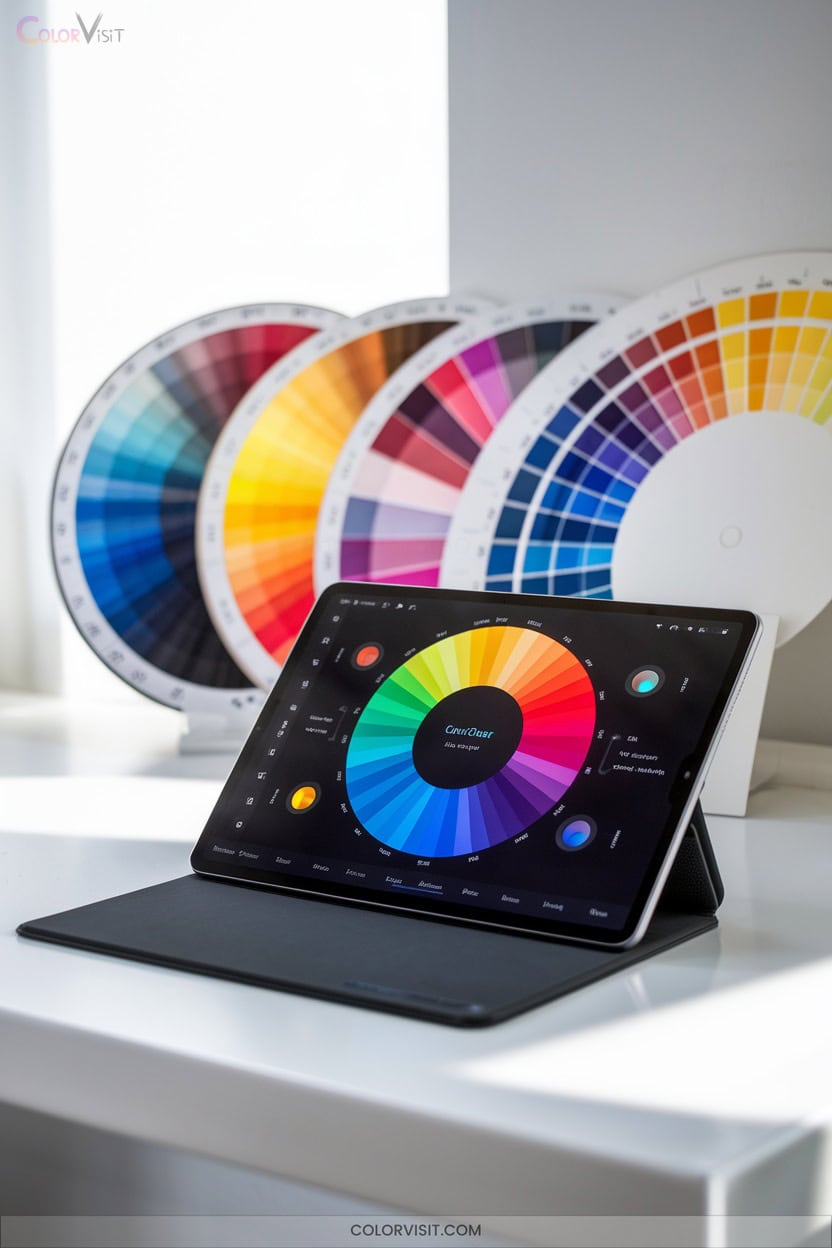
A digital interactive color wheel transforms traditional color theory exploration into an intuitive, data-driven process by leveraging real-time manipulation and precise parameter control.
You can access these tools instantly via web platforms, utilizing interfaces that support direct color code input and dynamic adjustment of hue, saturation, and brightness.
Interactive segments, sliders, and overlays facilitate granular control while providing immediate visual feedback on palette changes.
Advanced algorithms automate harmonious palette generation and allow you to compare multiple color schemes side-by-side.
Seamless integration with design software, export capabilities, and community-driven resources streamline your workflow and foster efficient, informed color decisions for innovative projects.
7. Analogous Color Palette Art
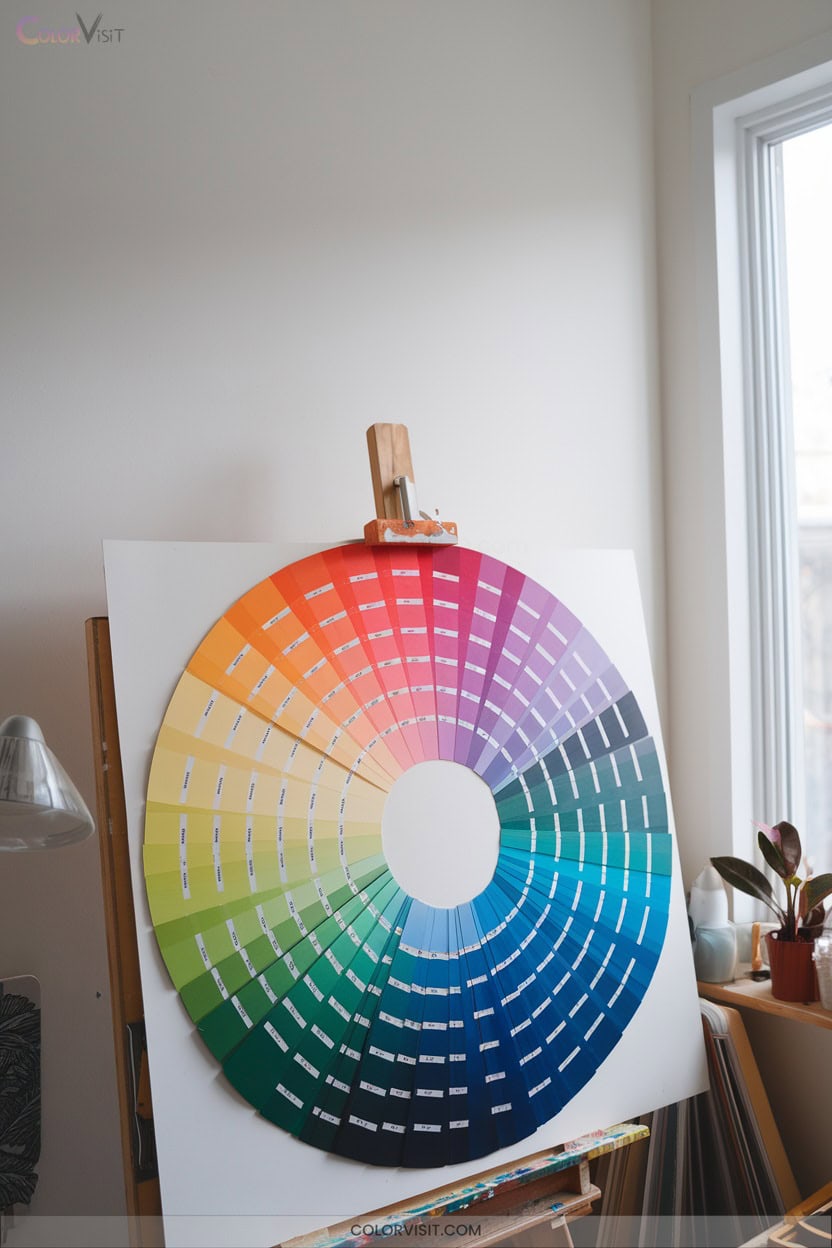
Building on the precision and versatility offered by digital interactive color wheels, analogous color palette art leverages adjacent hues to generate visually harmonious compositions.
Analogous color palettes harness the harmony of neighboring hues, creating balanced and visually engaging digital art compositions.
You’ll select a primary anchor hue, then incorporate neighboring colors—typically three to five—for a unified, balanced effect.
Mastering this technique demands a nuanced understanding of chromatic relationships, temperature interplay, and palette dominance.
To elevate innovation, try these approaches:
- Experiment with tints, shades, and tones for depth.
- Use gradient blends for seamless chromatic flow.
- Employ contrasting underpainting to enhance vibrancy.
- Integrate monochromatic elements for complexity and visual intrigue.
8. Complementary Color Design Projects
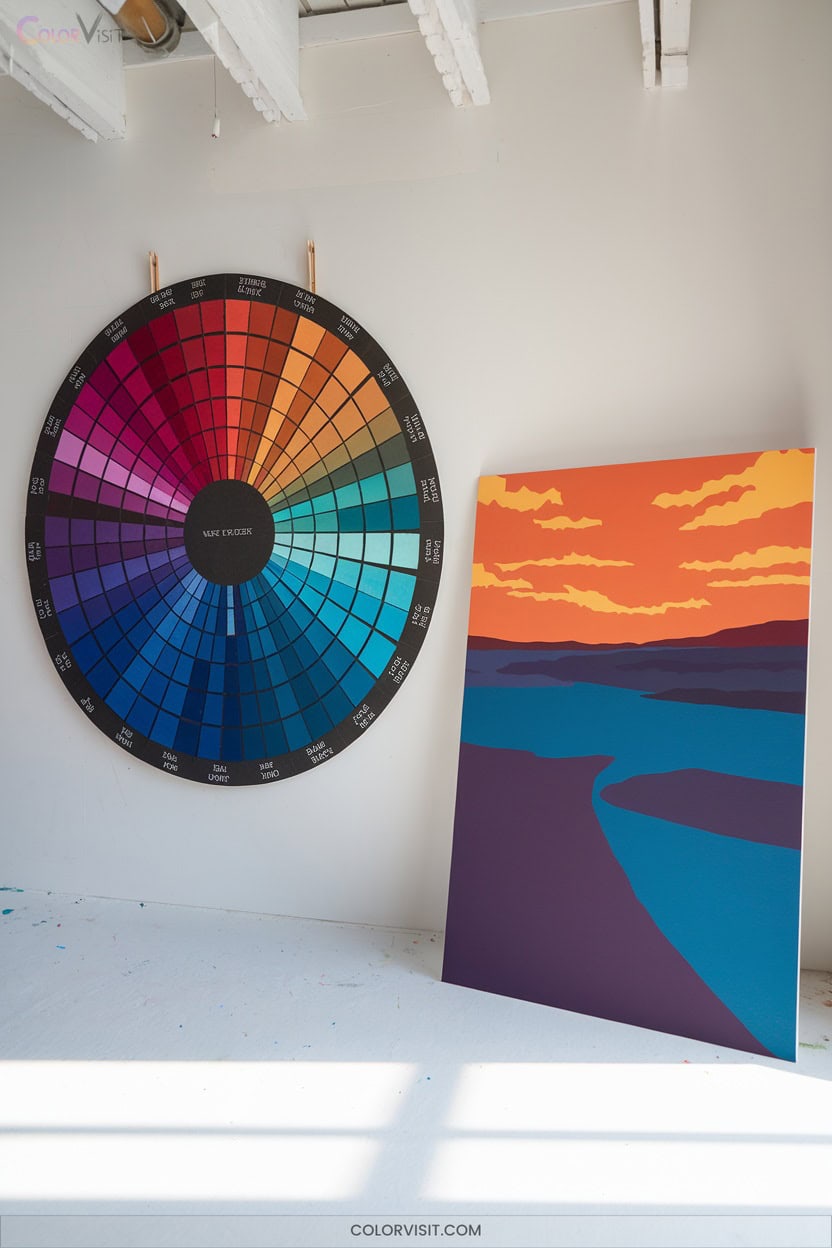
Curious how artists achieve striking visual energy in their compositions? Harness complementary color design.
By strategically pairing hues opposite on the color wheel—think red-green, blue-orange, yellow-purple—you’ll leverage simultaneous contrast, intensifying each color’s vibrancy.
Employ value manipulation: blend tints and shades within pairs for dimensionality and nuanced gradations.
Experiment with saturation and temperature shifts to create visual hierarchy and kinetic flow.
Integrate guided drawing and nine-plus color variations for textural richness.
Whether using oil pastels or gouache, these techniques transform classroom exercises and advanced designs, producing dynamic, balanced compositions that captivate viewers and push the boundaries of color innovation.
9. Branding With Color Theory
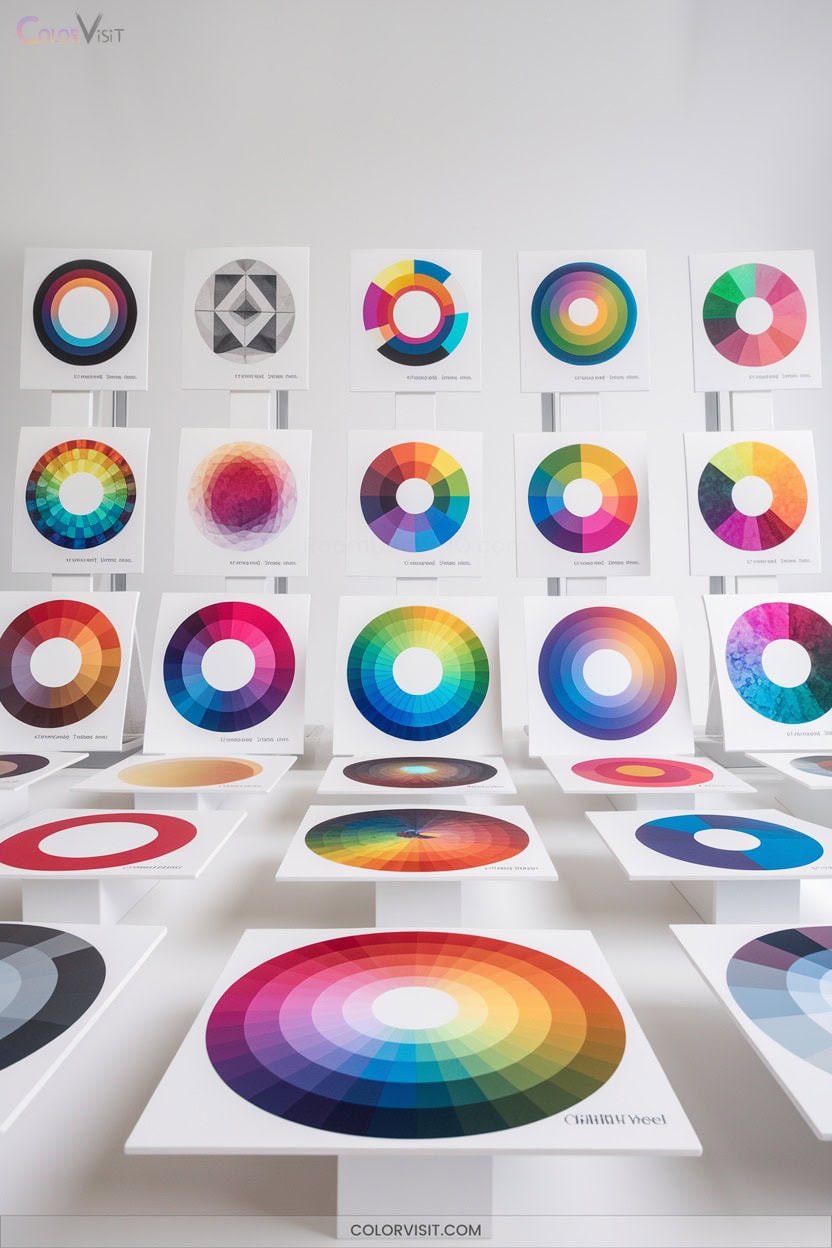
Why do certain brands command instant recognition and trust?
Color theory is your secret weapon.
With 90% of first impressions driven by color, your palette isn’t just decorative—it’s strategic.
Harnessing color psychology, competitor analysis, and technical execution drives brand equity and consumer loyalty.
To innovate with color in branding, pursue these analytical strategies:
- Leverage industry benchmarking to avoid overused palettes and enhance differentiation.
- Use unused competitor colors to boost memorability and market presence.
- Test color accessibility and document HEX/RGB/Pantone codes for cross-platform consistency.
- Subvert expectations with bold, category-disrupting hues or accent-driven monochromatic schemes.
10. Gradation and Ombre Color Art
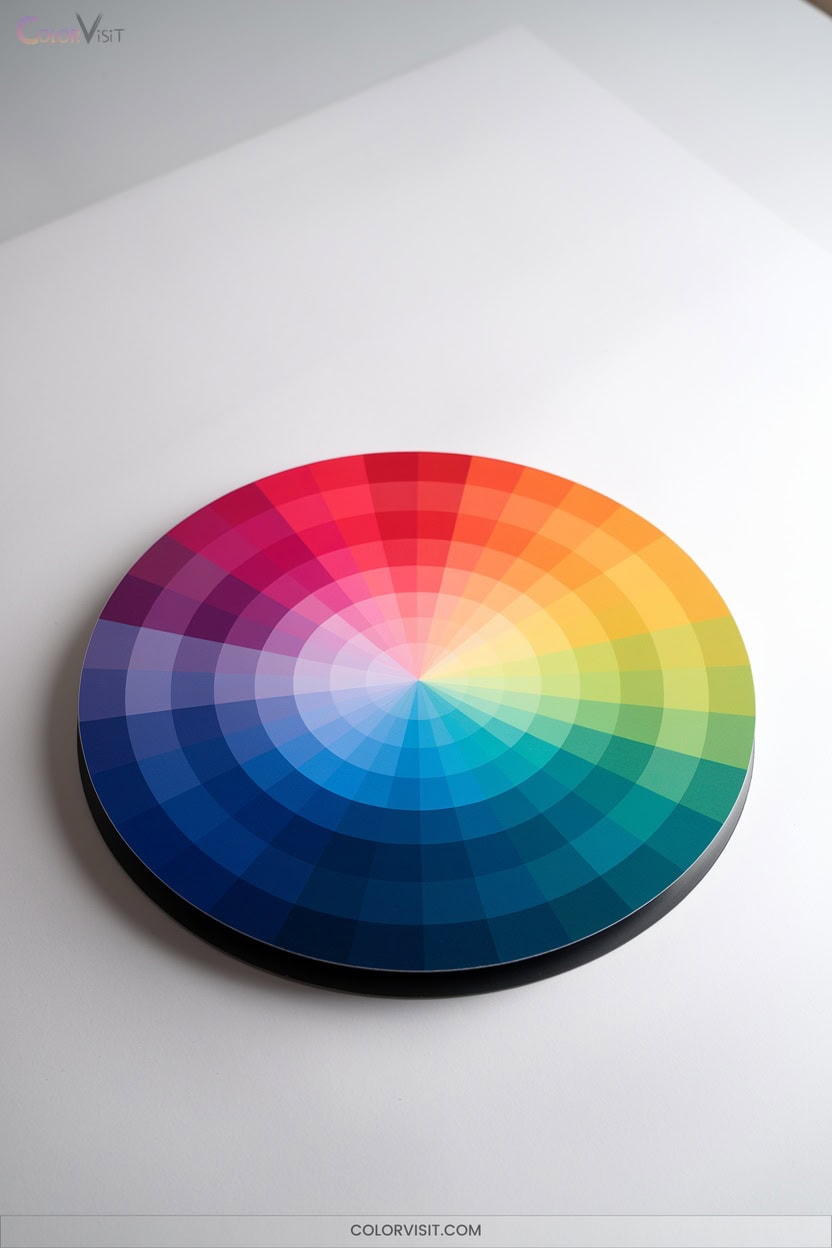
Gradation and ombre techniques form the backbone of sophisticated color manipulation in art, enabling you to orchestrate seamless blends and controlled chromatic shifts across surfaces.
Master blending—whether through wet-on-wet, layering, or the introduction of intermediate hues—allows you to achieve nuanced shifts that heighten visual complexity.
Employ dry brushes and strategic palette setups for textured ombre effects, adding dimensionality and contrast.
Explore hatching or crosshatching in drawing to emulate painterly gradation.
Analyze color harmony and select pigments that reinforce your conceptual intent, transforming gradients into focal points.
Let gradation articulate mood, atmosphere, and movement, energizing both portraits and abstract compositions.
11. Complementary Color Scenes in Photography
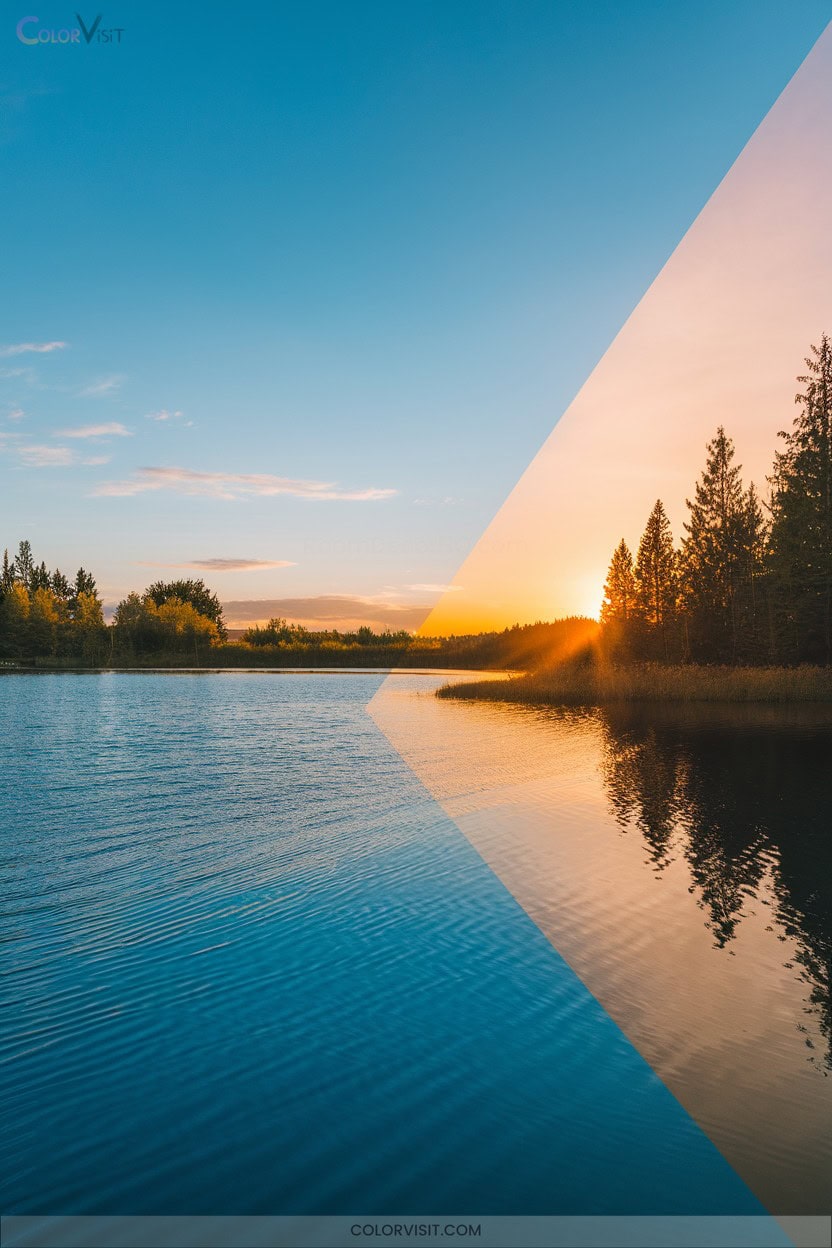
A mastery of complementary color scenes in photography hinges on a rigorous understanding of color theory, specifically the dynamic interplay between hues positioned directly opposite each other on the color wheel.
When you leverage these chromatic pairs—red and green, blue and orange, yellow and purple—you amplify image vibrancy and visual contrast, creating compelling focal points.
To innovate effectively, consider these technical strategies:
- Identify complementary pairs in your environment using a color wheel.
- Prioritize one color as dominant, using its complement as an accent.
- Manipulate saturation and luminance for nuanced intensity.
- Integrate color contrast via props, backgrounds, or lighting for balanced compositions.
12. Color Harmony in Photographic Composition
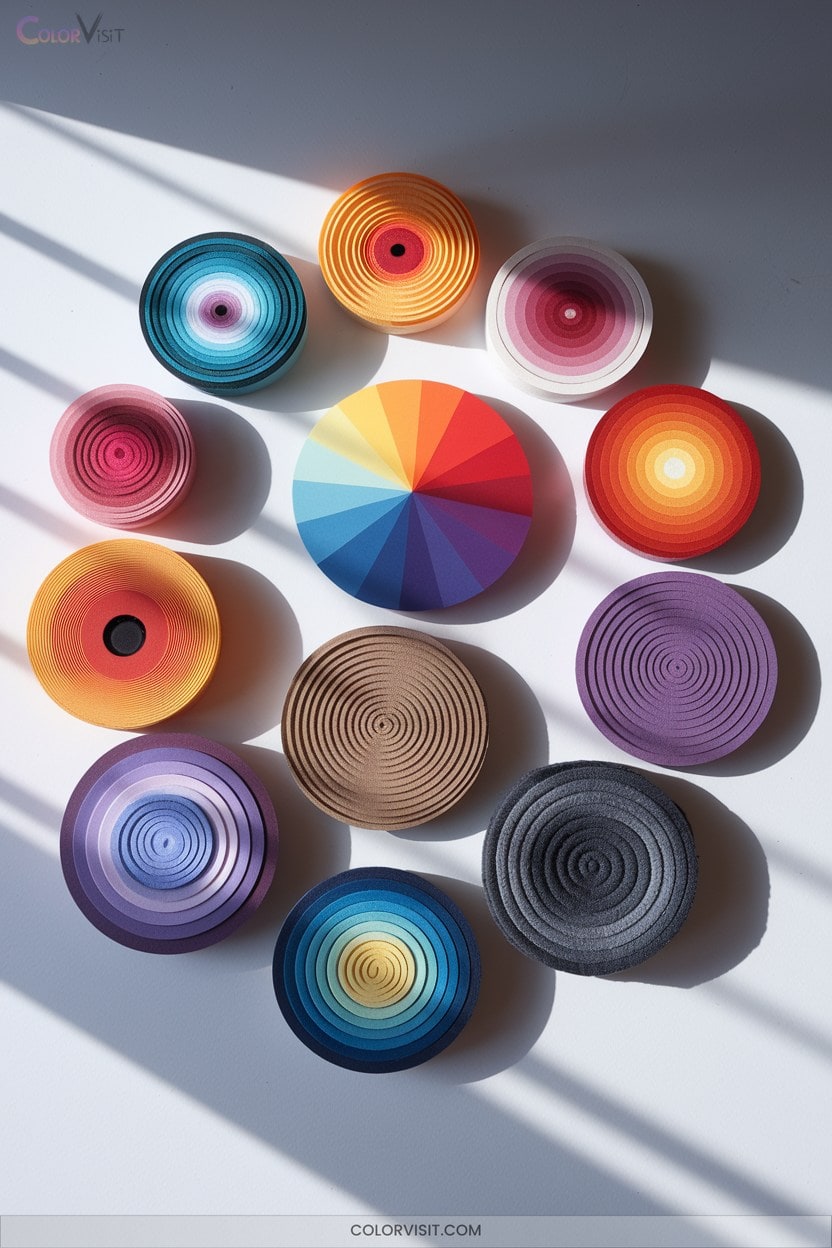
Building on the dynamic energy of complementary color scenes, mastering color harmony in photographic composition requires a sophisticated orchestration of hues and relationships mapped on the color wheel.
You’ll leverage monochromatic, analogous, triadic, and tetradic harmonies to construct visually compelling images.
Analyze color wheel placement to select harmonies that optimize emotional resonance and guide visual flow.
Manipulate contrast, lighting, and negative space to balance dominant and subordinate colors, ensuring compositional clarity.
Employ split-complementary and rectangular schemes for dynamic tension.
Through mindful framing and targeted color adjustment in post-processing, you refine chromatic interactions, elevating mood, focus, and narrative integrity within each photograph.
13. Color Mixing and Secondary Color Activities
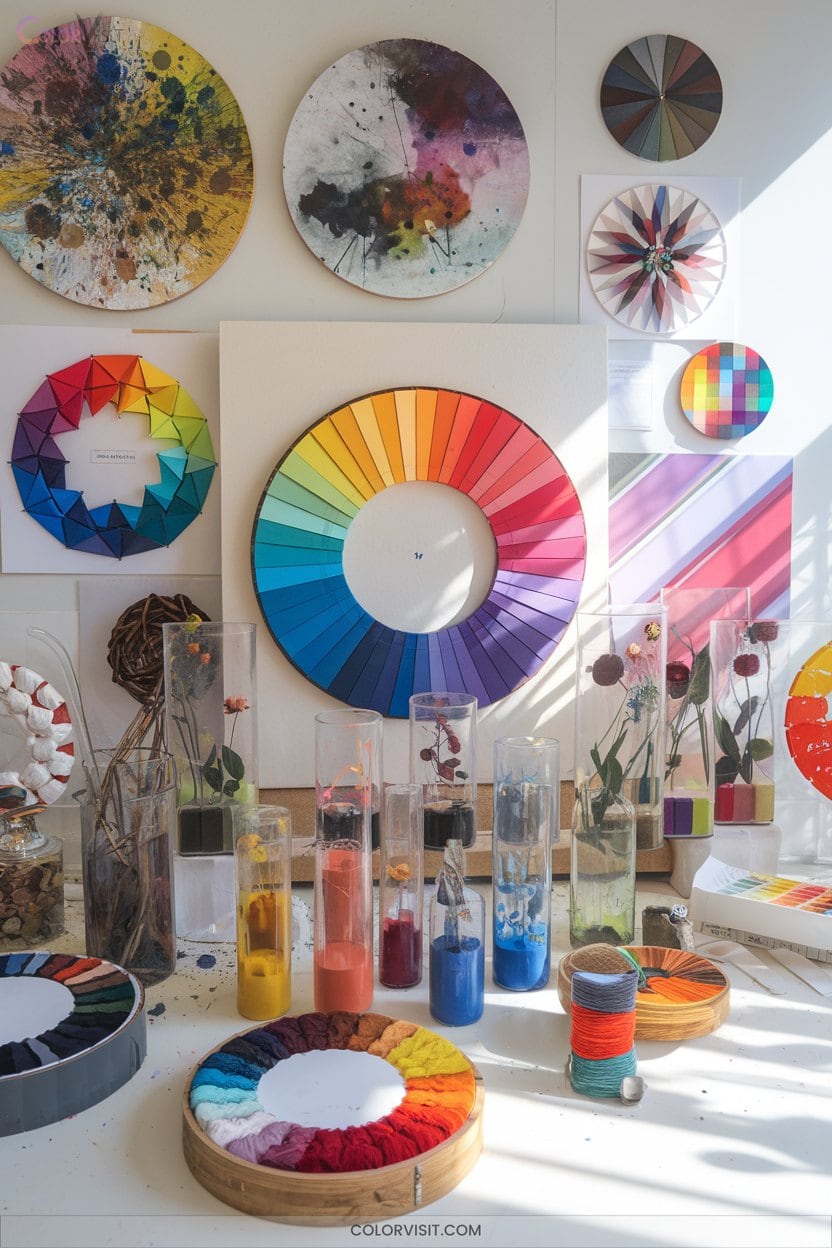
Mastering color mixing with technical accuracy enables sophisticated secondary color activities that deepen your understanding of chromatic relationships.
By manipulating primary hues—red, blue, and yellow—you’ll generate secondary colors (green, orange, purple) with precise control over hue, saturation, and value.
Advanced color theory empowers you to engineer tints, shades, and nuanced gradations for innovative palettes.
Employ these activities for technical refinement:
- Construct interactive color wheels to visualize secondary color genesis.
- Execute controlled color mixing exercises to calibrate chromatic accuracy.
- Solve color puzzles to analyze relational logic.
- Design painting projects emphasizing secondary color dominance and complementary interactions.
14. Collaborative Color Wheel Projects
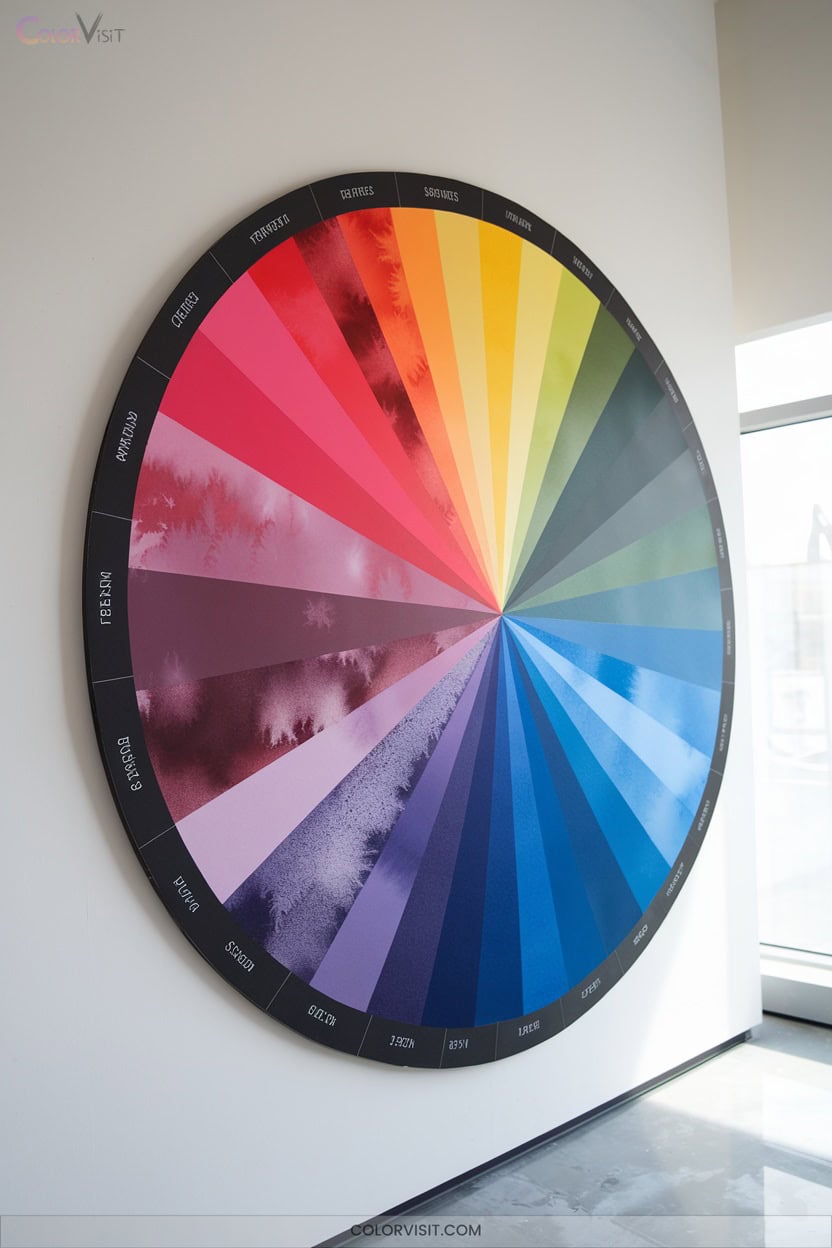
Elevate your color theory practice by engaging in collaborative color wheel projects that synthesize collective creativity with technical rigor.
Coordinate a color mural, assigning segments to participants to demonstrate chromatic harmony and unity.
Launch school-wide color wheels to foster communal engagement while reinforcing concepts like analogous, complementary, and triadic relationships.
Integrate color psychology posters and symbolism guides, leveraging cross-disciplinary research for deeper meaning.
Facilitate patterned animal color wheels to analyze natural palettes and color relationships.
Innovate with community color time capsules, encapsulating chromatic artifacts to capture temporal palettes.
Through these structured collaborations, you’ll expand both technical expertise and creative synergy.
15. Painted Furniture and Decor Using Color Wheels
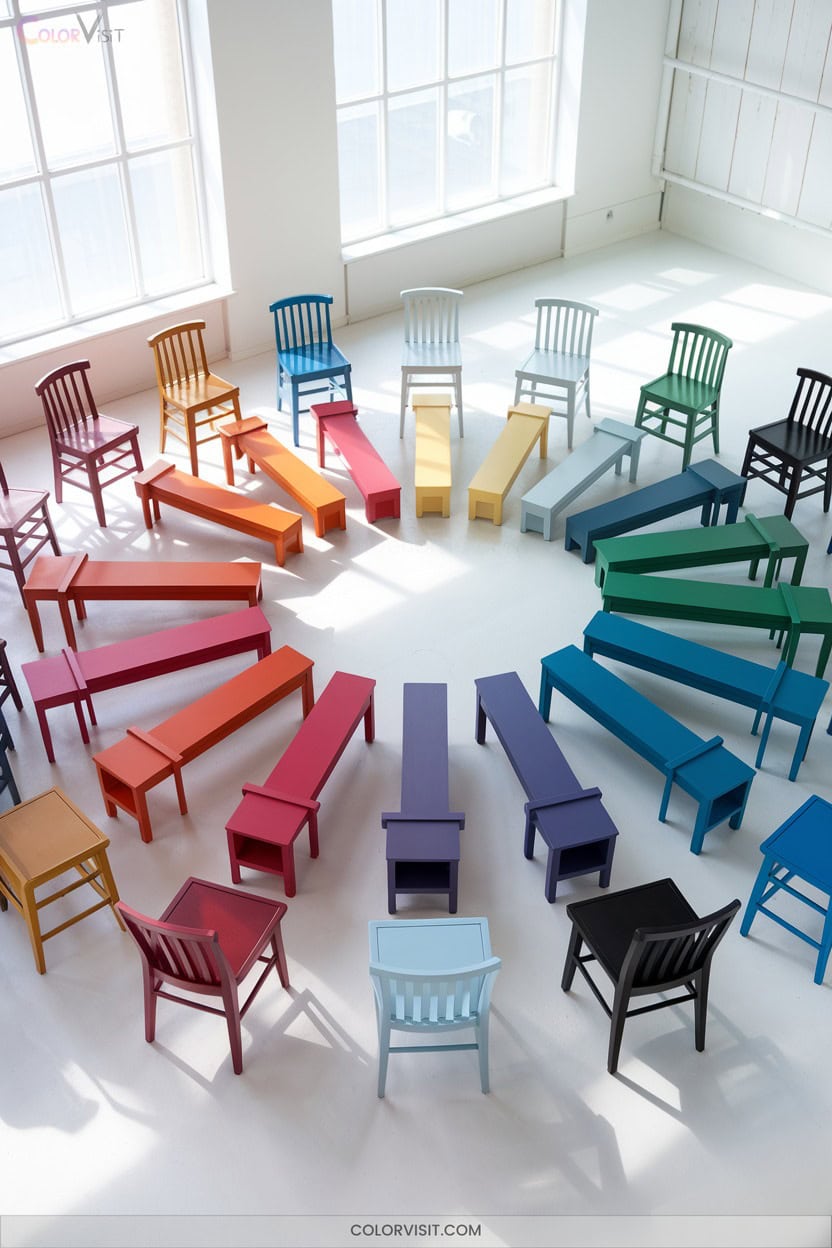
Furniture transforms into functional art when you strategically apply color wheel theory to its surfaces.
Harness primary, secondary, or tertiary hues to engineer bold stenciling, dynamic ombre gradients, or crisp geometric motifs.
Emphasize structure using complementary contrasts or opt for monochromatic harmony for cohesive visual flow.
Incorporate nature-inspired palettes or abstract influences for innovative results.
- Select a color harmony—complementary, analogous, or triadic—for your design.
- Apply stenciling with contrasting colors to accentuate form and detail.
- Blend shades for a technical ombre effect, enhancing dimensionality.
- Integrate geometric patterns using harmonious hues for a contemporary, innovative finish.
More Details on Our Top Picks
Color Wheel Childrens Colorsaurus
If you’re looking for a fun, interactive way to introduce color theory to a young learner, the Color Wheel Childrens Colorsaurus is a perfect fit. You’ll spin the color plates on the dinosaur’s back to mix and match twelve outer and fine inner colors.
You get 60 combinations, making learning hands-on and playful. It’s designed for kids ages 4 and up, so you can teach color levels early. The engaging look grabs attention, turning playtime into real learning.
You won’t need fancy tools; just rotate, explore, and discover. With this toy, you make color theory click in a way kids love.
- Type:Color mixing tool (dinosaur-themed)
- Age Range:4+
- Educational Focus:Color theory basics
- Size:Not specified (toy)
- Interactive Element:Rotating color plates
- Color Application:Color combination learning
- Additional Feature:Dinosaur-themed interactive design
- Additional Feature:60 color combinations possible
- Additional Feature:Rotating color plates feature
Daydream Education Color Wheel Poster (33” x 23.5”)
The Daydream Education Color Wheel Poster (33” x 23.5”) is a vibrant classroom essential perfect for art teachers and homeschoolers who want to make color theory click. You’ll love its bold, colorful design that grabs attention and keeps students engaged.
Crafted by educators, it simplifies core art concepts and boosts understanding at a glance. Its large size guarantees readability from anywhere in the room, while the glossy finish adds durability and pop. Weighing just 3.7 ounces, it’s easy to hang and fits seamlessly in any learning space.
With a 4.7-star rating from 262 reviews, you’re getting a trusted, top-selling resource that’s far from outdated.
- Type:Educational poster (color wheel)
- Age Range:Middle & high school
- Educational Focus:Color wheel fundamentals
- Size:33” x 23.5”
- Interactive Element:Visual reference (non-interactive)
- Color Application:Color relationships (primary to tertiary)
- Additional Feature:Extra large classroom poster
- Additional Feature:Teacher-designed educational layout
- Additional Feature:Gloss paper finish
ADOGEO Giant Color Wheel Art Poster
You’re going to love the ADOGEO Giant Color Wheel Art Poster if you’re an artist, student, or educator who values clarity and durability in your creative tools. Its 16×24 inch size gives you room to easily see primary, secondary, and tertiary colors, plus complementary, analogous, and triadic schemes.
You’ll appreciate the 300 GSM heavyweight paper with a vibrant gloss finish; it resists fading and tearing, lasting through classes and projects. Whether you’re teaching color theory or exploring it, this poster’s sharp design enhances studios, classrooms, or offices.
It’s a smart gift for creatives, and the satisfaction guarantee means you’re fully supported in your artistic journey.
- Type:Art reference poster (color theory)
- Age Range:K-12, college, adults
- Educational Focus:Comprehensive color theory
- Size:16” x 24”
- Interactive Element:Static reference (non-interactive)
- Color Application:Tints, shades, tones, schemes
- Additional Feature:300 GSM heavy-duty paper
- Additional Feature:Vibrant gloss finish resists fading
- Additional Feature:Comprehensive color theory chart
Insnug Pottery Wheel for Kids (3-Pack)
One standout pick for creative kids ages 8 to 12 is the Insnug Pottery Wheel for Kids (3-Pack), a hands-on kit that blends art and play with cat-themed fun. You’ll shape, spin, and paint with ease using the two-speed wheel and safe, air-dry clay.
With 3 clay packs, 12 vibrant paints, tools, and an apron, you’re ready to craft jewelry, pots, or playful figurines. It boosts fine motor skills, focus, and color creativity while cutting screen time.
You and your kid can bond over molding and painting projects. This makes it perfect for gifting at birthdays or holidays. It’s smart, engaging, and just plain fun for any young artist ready to create.
- Type:Pottery wheel kit (cat-themed)
- Age Range:8–12
- Educational Focus:Color mixing, motor skills
- Size:Not specified (kit with tools)
- Interactive Element:Electric pottery wheel (dual speed)
- Color Application:12 vibrant paints included
- Additional Feature:Cat-themed pottery kit
- Additional Feature:Two-speed electric wheel
- Additional Feature:Includes apron and table protection
Innofans Pottery Wheel for Kids (Octopus)
Looking for a creative color wheel idea that stands out in 2026? Try the Innofans Pottery Wheel for Kids (Octopus). You’ll love how it blends pottery and painting with a vibrant 12-color palette and dual-speed wheel for sculpting or detailing.
It’s perfect for kids 8-12; however, younger artists can join in too. You get everything: air dry clay, tools, brushes, and a handy guide. The compact, USB-charged design is travel-friendly and easy to clean.
You’ll enjoy quality screen-free time, sparking creativity and family bonding. It’s durable, safe, and rated 4.6 stars for a reason: this octopus-themed kit makes art fun and accessible.
- Type:Pottery wheel kit (octopus-themed)
- Age Range:8–12 (also suitable for 5+)
- Educational Focus:Creativity and fine motor skills
- Size:5 x 6 x 4 inches
- Interactive Element:Motorized pottery wheel
- Color Application:12-color paint palette
- Additional Feature:Octopus model with USB charging
- Additional Feature:Comes with instruction booklet
- Additional Feature:Detachable parts for easy cleaning
Blue Marble Pottery Wheel Refill Kit
The Blue Marble National Geographic Pottery Wheel Refill Kit is perfect for young artists enthusiastic to explore their creativity with vibrant, hands-on clay projects. You’ll get 2 lbs of air-dry clay, 30 tools, and 7 paints—including glow-in-the-dark and new pink, orange, and purple shades.
With 5 push molds, 2 pattern rollers, gemstones, and wooden sculpting tools, you can craft unique, colorful designs. This 3.38-pound kit fits kids 8 and up, measuring 11 x 2.38 x 12 inches. Made by award-winning Blue Marble, it’s backed by a U.S. support team and boasts a 4.6-star rating from 257 reviews. There is no discontinuation, full warranty, and top-tier creativity support.
- Type:Clay & craft refill kit
- Age Range:8+
- Educational Focus:Artistic expression, color exploration
- Size:11 x 2.38 x 12 inches
- Interactive Element:Hands-on sculpting and painting
- Color Application:7 paints including glow-in-dark
- Additional Feature:Glow-in-the-dark paint included
- Additional Feature:Pattern rollers and push molds
- Additional Feature:National Geographic brand award-winning
Pottery Wheel for Kids Ages 8-12
When you want a hands-on creative outlet that sparks imagination and keeps kids engaged without screens, the Unicorn Pottery Wheel Toy is perfect for children ages 8–12. You’ll love how it builds fine motor skills, concentration, and color awareness through fun, tactile play.
With air-dry clay, sculpting tools, brushes, and an apron included, your child can mold, paint, and design endless creations. It’s ideal for sparking creativity and sharing DIY moments as a family. Best of all, it’s a hit as a gift; it’s great for birthdays, holidays, or rainy-day projects.
You’re giving more than a toy; you’re giving a chance to create, learn, and connect, one colorful masterpiece at a time.
- Type:Pottery wheel kit (unicorn-themed)
- Age Range:8–12
- Educational Focus:Color awareness, concentration
- Size:Not specified (kit with tools)
- Interactive Element:Manual/electric pottery shaping
- Color Application:12 colors included
- Additional Feature:Unicorn mini pottery studio
- Additional Feature:Includes paint palette and sponge
- Additional Feature:Designed for beginner crafters
Color Wheel Metal Tin Sign (12″ x 16″)
You’ll love how this vibrant Color Wheel Metal Tin Sign (12″ x 16″) sparks creativity and adds a bold pop of color to any space. It is perfect for artists, designers, or anyone who thrives in a visually inspiring environment. You’ll enjoy its high-quality print, delivering rich hues and sharp details that stand out in homes, offices, or studios.
Lightweight yet durable, it’s easy to hang and makes a striking statement. You can gift it for birthdays, Christmas, or housewarmings; it’s thoughtful, stylish, and versatile. With its eye-catching design, you’ll instantly elevate your decor while celebrating color in a whole new way.
- Type:Decorative metal tin sign
- Age Range:All ages (decorative)
- Educational Focus:Visual color reference
- Size:12” x 16” (larger option)
- Interactive Element:Non-interactive (decorative)
- Color Application:Printed color wheel
- Additional Feature:Vintage-style metal decor
- Additional Feature:High-quality tin printing
- Additional Feature:Dual size options available
Pottery Wheel Kit for Kids with Glow Paints
A pottery wheel kit for kids with glow paints transforms creative play into something magical. It is perfect for imaginative children aged 6 to 13 craving hands-on art adventures. You’ll love how it boosts fine motor skills and sparks creativity with 30+ pieces, including air-dry clay, glow-in-the-dark paints, and a USB-powered wheel.
It’s mess-friendly with washable, non-toxic materials and a disposable tablecloth for quick cleanup. You and your child can bond using dual-speed modes to shape pottery together. Then, you can display glowing creations at night. Packaged to impress, it’s an ideal gift for young artists.
Rated 4.2 stars, it’s a rising favorite in creative toys: fun, engaging, and perfect for family art time.
- Type:Pottery wheel kit with glow paints
- Age Range:6–13
- Educational Focus:Color science, creative design
- Size:12.2 x 8.6 x 3.1 inches
- Interactive Element:Glow-in-dark paint, dual-speed wheel
- Color Application:12 water paints + 6 glow paints
- Additional Feature:Magical unicorn design
- Additional Feature:6 glow-in-dark paints
- Additional Feature:Premium gift-ready packaging
Color Wheel Interactive for Artists (Black/Gold)
If you’re an artist, designer, or creative professional who values portability and precision, the Color Wheel Interactive for Artists (Black/Gold) is your go-to tool for mastering color theory on the move. You’ll love its compact 2.5-inch rotating design that fits in your pocket or clips to your bag.
With a sleek black and gold finish, it’s durable, stylish, and perfect for mixing paints or building palettes. You can quickly visualize hues, tints, shades, and tones; this is ideal for nail art, tattooing, or graphic design. It’s a must-have for students and pros alike. The launch is scheduled for December 2025.
- Type:Interactive mini color wheel
- Age Range:All ages (artists, professionals)
- Educational Focus:Color mixing and relationships
- Size:2.5 x 2.5 inches
- Interactive Element:Rotatable color wheel
- Color Application:Color mixing visualization tool
- Additional Feature:Attachable portable art tool
- Additional Feature:Black/gold stylish finish
- Additional Feature:On-the-go color mixing guide
Frequently Asked Questions
How Can I Use the Color Wheel to Improve My Textile Designs?
You can strategically leverage the color wheel to engineer harmonious palettes, optimize color contrasts, and apply advanced schemes like triadic or tetradic relationships, ensuring your textile compositions achieve visual impact, color accuracy, and innovative, market-driven differentiation.
What Are the Best Apps for Creating Digital Color Wheel Art?
You’ll revolutionize your workflow with apps like Color Wheel, Pocket Color Wheel, Color Gear, Canva Color Wheel, and Colorfly. Leverage features like AR integration, contrast ratio calculators, and dynamic palette generators for boundary-pushing digital color wheel art.
How Does Color Theory Influence Mood in Home Decor?
You leverage color theory to strategically orchestrate mood in home decor, employing hue, saturation, and value to evoke emotional responses. Calibrating warm and cool palettes, you optimize psychological impact, enhancing functionality, aesthetic harmony, and spatial experience.
Can Color Wheel Principles Be Applied to 3D Modeling Projects?
Colorful composition, contrast, and cohesion converge when you apply color wheel principles in 3D modeling. Manipulate hue harmony, saturation shifts, and strategic shader setups to craft compelling, chromatically-consistent scenes that showcase sophisticated visual storytelling and innovative material mastery.
How Do I Generate Custom Palettes With a Color Wheel Generator?
You select a base hue, adjust parameters like saturation and brightness, then explore schemes—analogous, triadic, tetradic—within the generator. Fine-tune with sliders, extract from images, and leverage accessibility tools to guarantee your palette’s functional and innovative.
Conclusion
Delve into these color wheel ideas and you’ll spark a chromatic revolution in your studio. You’ll orchestrate pigment symphonies, engineer harmonious gradients, and architect color narratives that defy convention.
With techniques ranging from mixed-media layering to tridimensional paper engineering, your palette will transcend the ordinary and morph into a kaleidoscopic powerhouse.
These projects aren’t just exercises—they’re catalysts for artistic metamorphosis. Take command of hue, value, and saturation, and watch your creative output reach stratospheric visual impact.