
15 Space-Enhancing Small Living Room Paint Color Ideas
To make your small living room feel larger, go for high-LRV whites, airy light grays, warm taupes, and creamy beiges to amplify light and erase boundaries. Greige balances cozy and modern, while sky blue, soft blonde, and pale yellow reflect and bounce light for an uplifting vibe.
Reflective paints, high-gloss accents, and lighter ceilings visually raise the height. If you want expert color pairings and advanced visual tricks, there’s much more to inspire your design next.
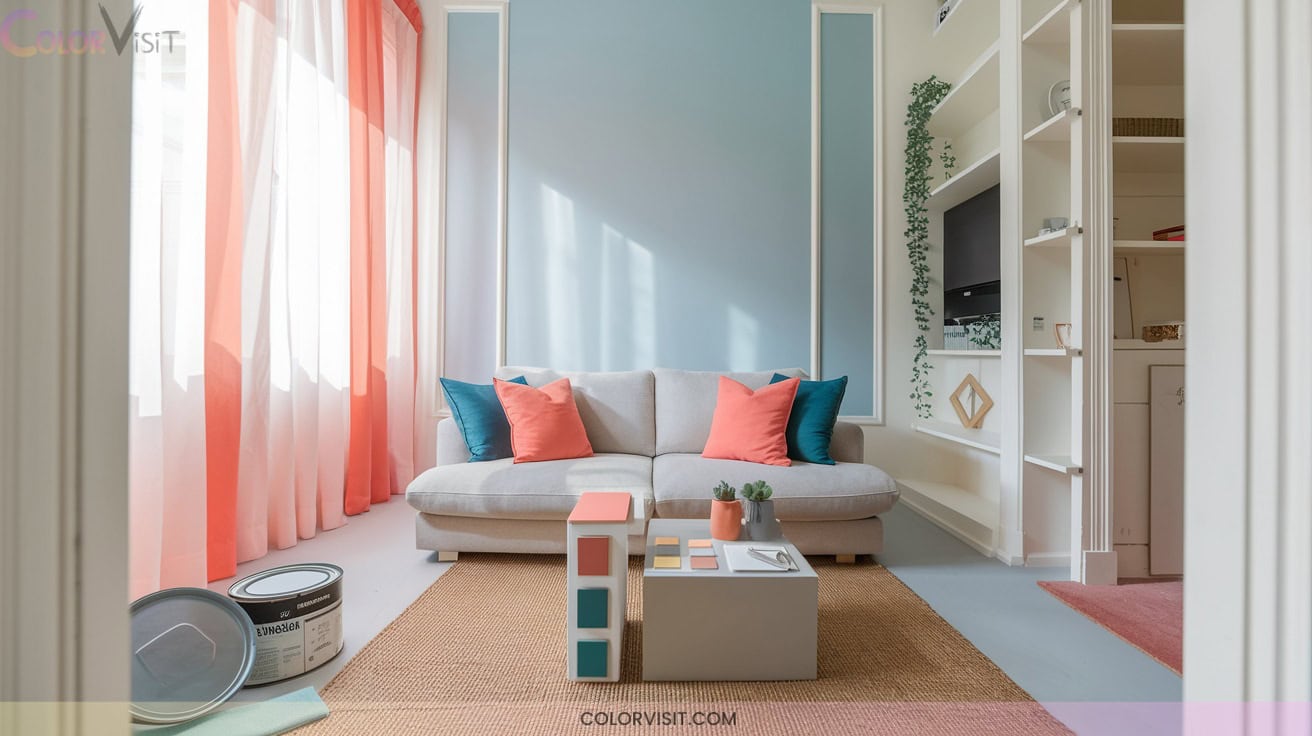

1. White for Maximum Light and Openness
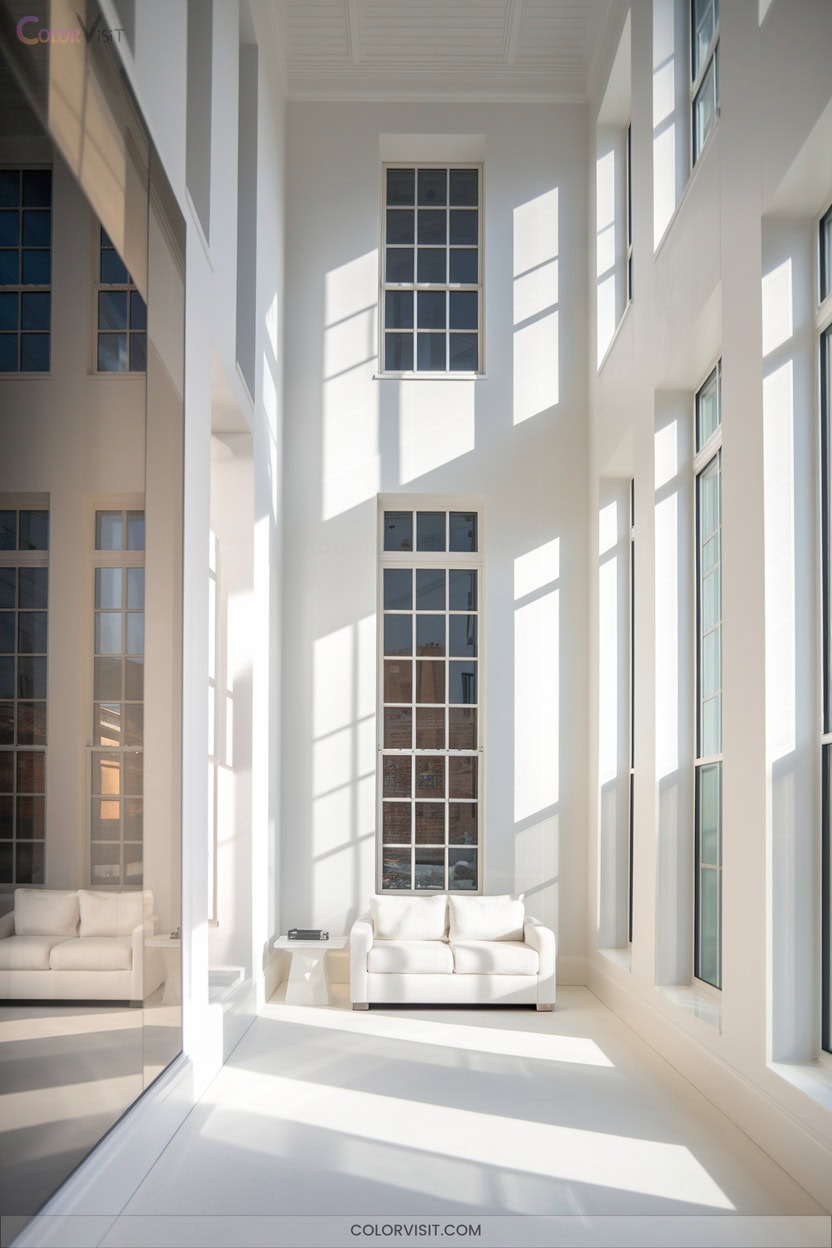
White paint remains the designer’s go-to solution for maximizing light and openness in small living rooms, thanks to its unparalleled ability to reflect up to 85% of visible light and brighten even the dimmest spaces.
By neutralizing shadows and visually expanding boundaries, you’ll dissolve claustrophobic barriers and create a seamless, airy flow.
White paint erases boundaries and shadows, transforming cramped rooms into open, luminous spaces with a sense of effortless spaciousness.
Opt for matte finishes to conceal imperfections or choose glossy if you crave heightened reflectivity—each offers distinct spatial advantages.
Warm undertones counteract cool exposures, while a unified white palette amplifies cohesion and spatial perception.
You’ll set the stage for innovative décor, effortless styling, and universally appealing, photogenic interiors.
2. Light Gray’s Subtle Sophistication
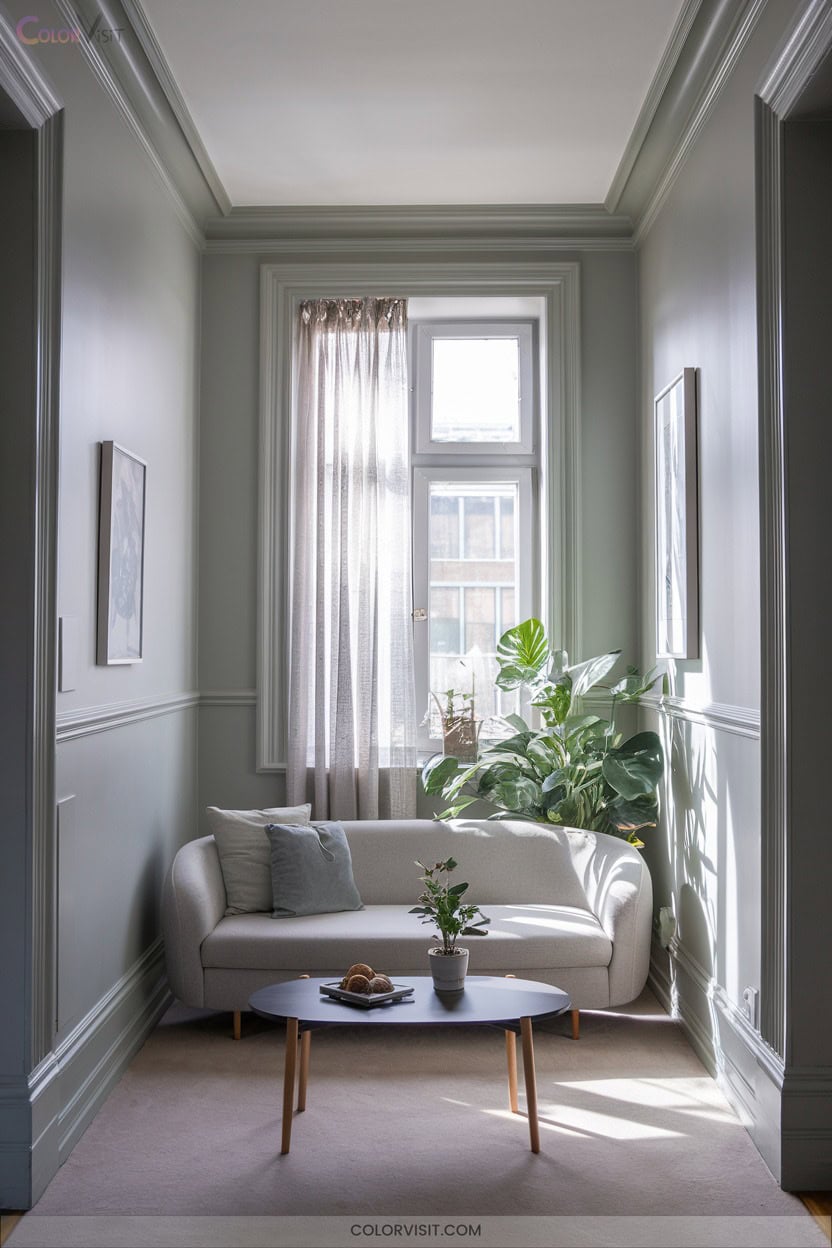
A carefully chosen light gray instantly elevates a small living room with understated sophistication and a designer’s sense of balance.
Leverage light gray’s versatility—green-gray like Sherwin-Williams Gossamer Veil neutralizes yellow undertones, while blue-grays sharpen modern lines beside crisp white trim.
Mid-tones such as Repose Gray adapt seamlessly to shifting light, ensuring spatial cohesion.
High LRV values (60-75) maximize brightness, making compact rooms feel expansive without glare.
For innovation, layer two or three gray tones to create depth while maintaining minimalism.
Always sample—lighting alters undertones.
Pair with metallic accents, natural woods, and contrasting textiles for a curated, future-forward aesthetic.
3. Taupe’s Warmth and Depth
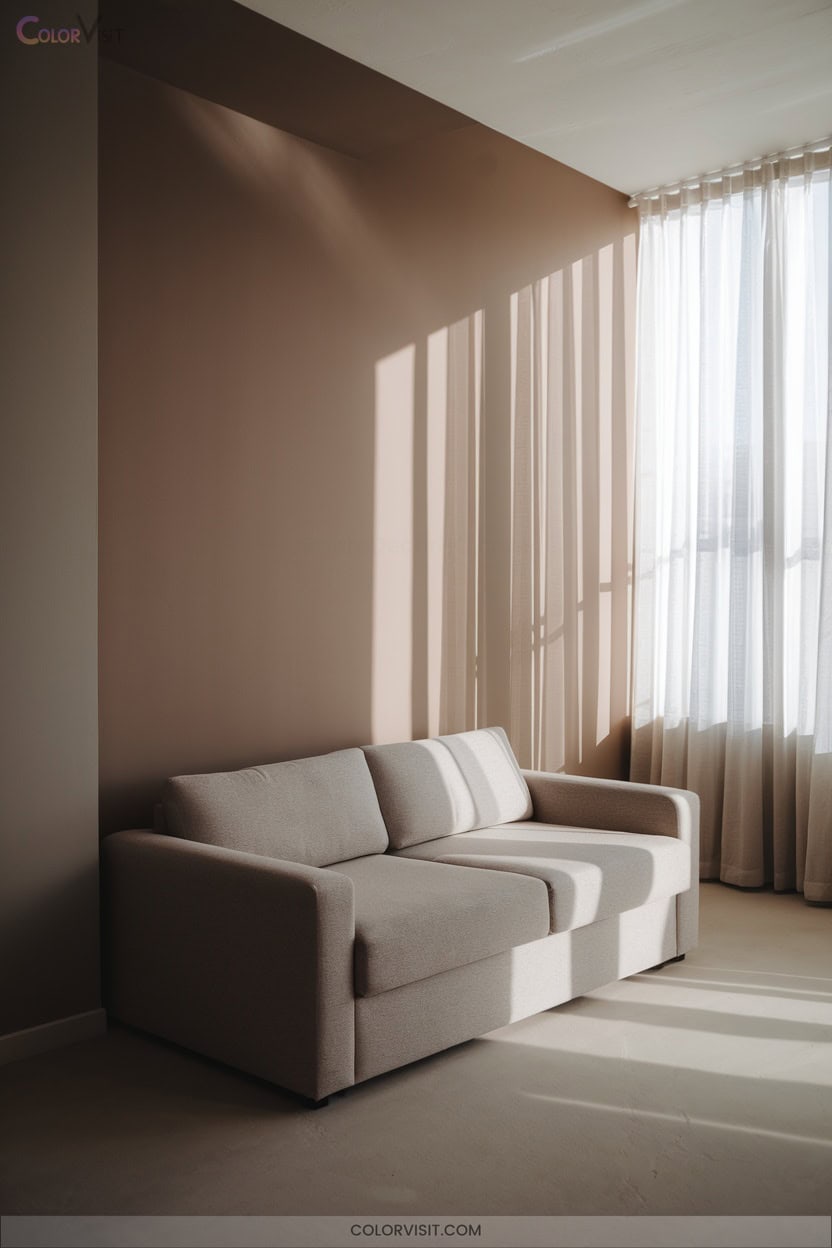
While light gray delivers subtle refinement, taupe infuses small living rooms with an inviting warmth and depth that pure grays can’t match.
Harness taupe’s unique gray-brown balance to create a cozy, expansive feel—its earthy undertones adapt dynamically to shifting daylight.
You’ll find taupe’s versatility ideal for innovative layering with brass accents, statement furniture, and natural materials like wood or stone.
Whether you choose a shade with cool green or warm pink undertones, taupe’s ability to anchor bold or pastel accents elevates modern and traditional spaces alike.
Use it as a dominant color or for accent walls to maximize design flexibility.
4. Beige for Bright, Neutral Spaces
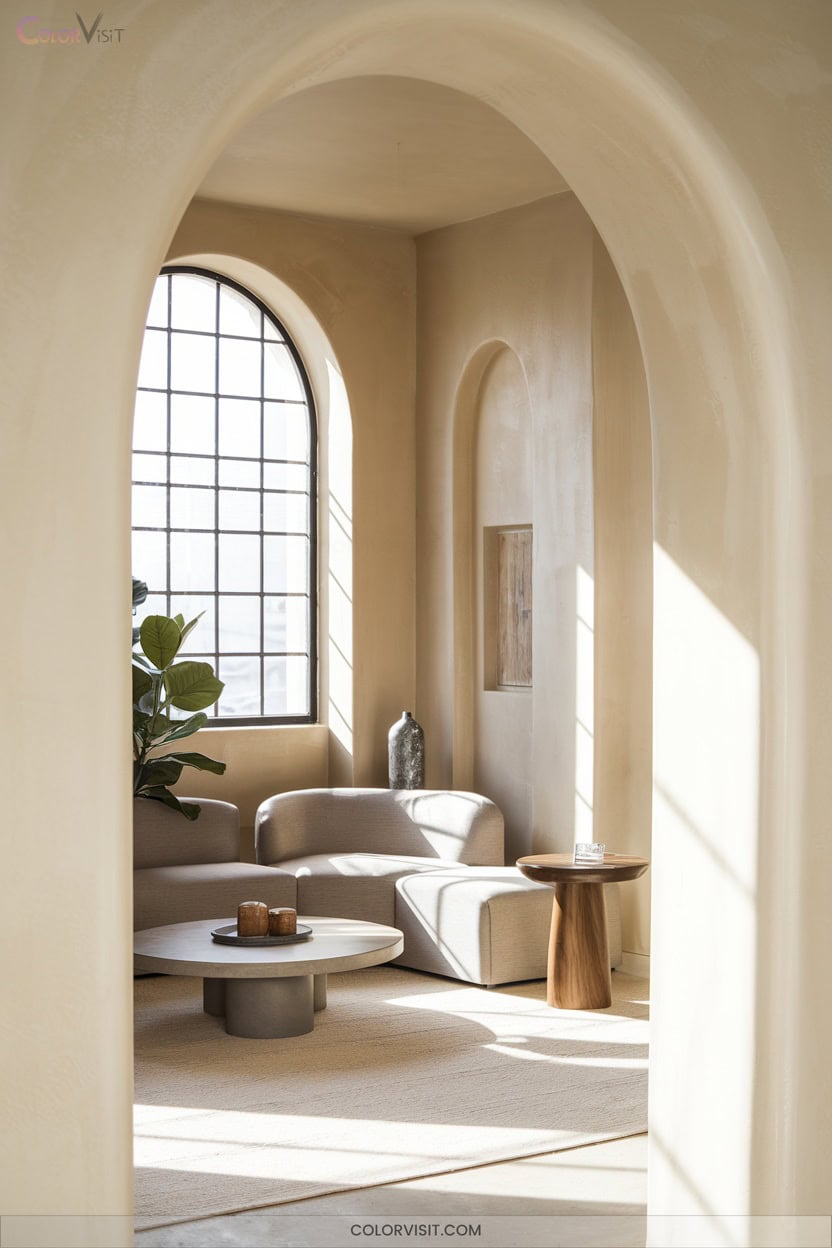
Beige transforms small living rooms by introducing warmth and dimension, sidestepping the sterility that stark whites or cool grays can bring. Opt for high-LRV beiges—think Crème or soft almond—to amplify natural light and visually expand the space.
Beige’s versatility lets you layer contrasting accents or integrate a spectrum of materials, from marble to oak, for a nuanced, cohesive look. Use beige on walls, trim, or cabinetry to blur room boundaries and enhance openness.
Test swatches in varied lighting to optimize depth and brightness. This timeless neutral adapts to evolving styles, ensuring your space feels innovative yet inviting.
5. Greige: The Perfect Balance
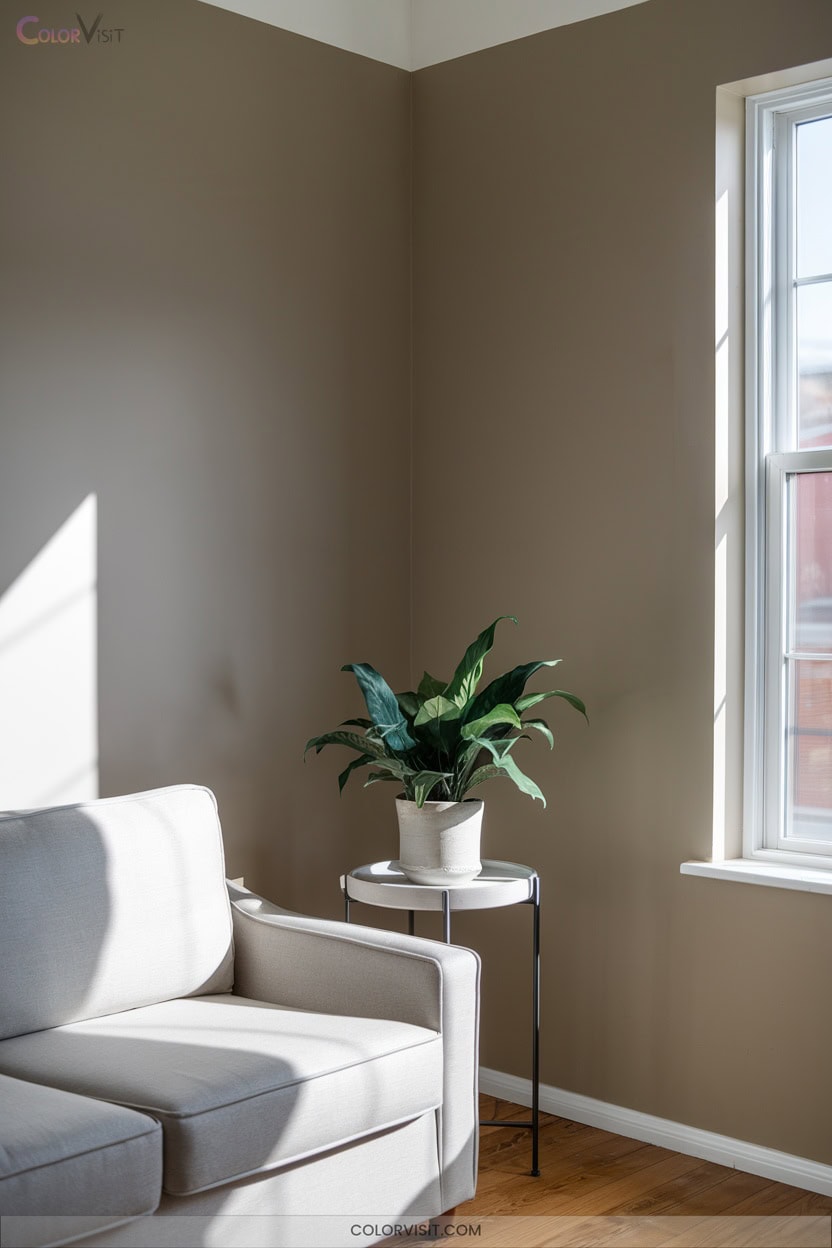
Blending the warmth of beige with the sophistication of gray, greige delivers an elevated neutral that’s remarkably adaptive for small living rooms.
You’ll appreciate how greige sidesteps the undertone pitfalls of pure beige, offering a seamless backdrop for both minimalist and maximalist styles.
Greige avoids the undertone challenges of beige, creating a flawless foundation for both sleek minimalism and bold, layered interiors.
With flexible undertones, greige coordinates effortlessly with natural textures, pastels, or vibrant jewel tones.
Its chameleon-like response to lighting—appearing warmer in daylight, cooler in shadow—enhances spatial flow and avoids visual clutter.
Explore shades like Revere Pewter or Edgecomb Gray and leverage their higher LRV to open up tight spaces without sacrificing refined, contemporary appeal.
6. Midnight Blue for Dramatic Depth
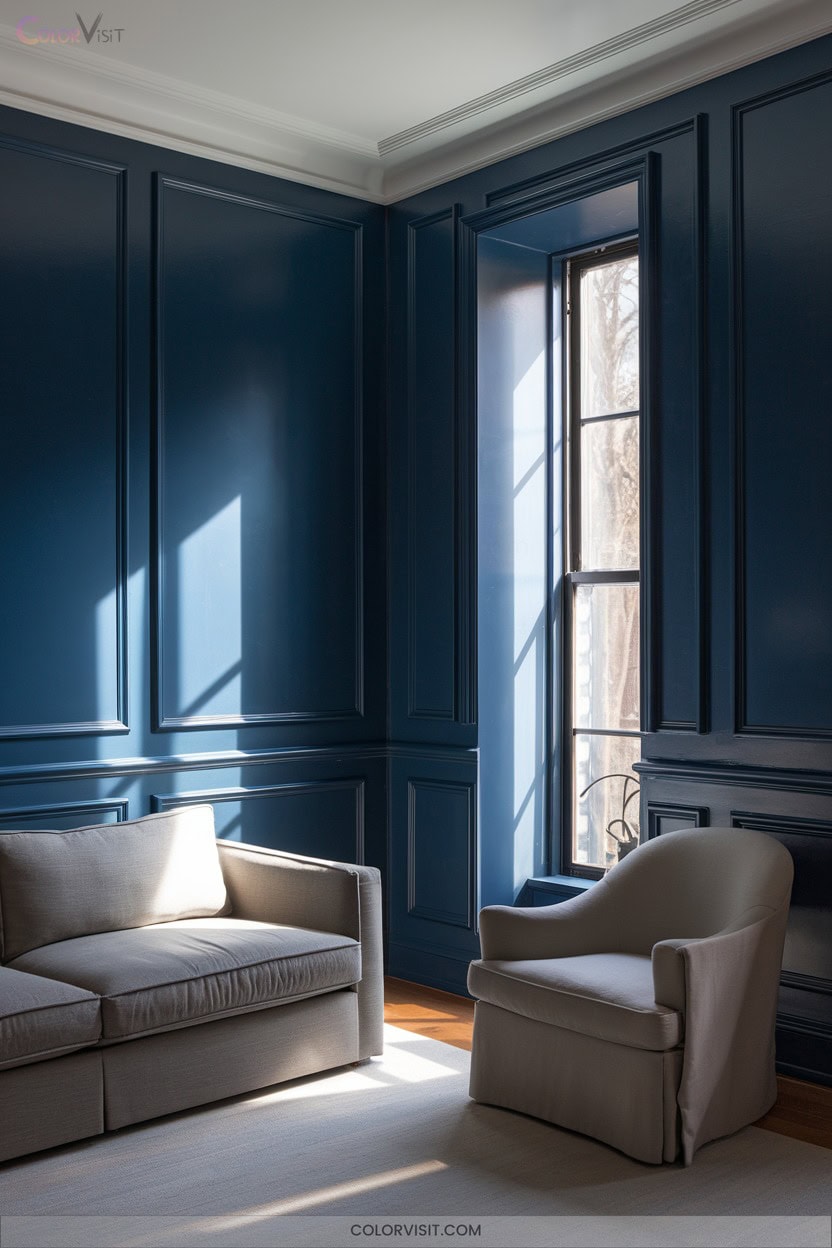
For those ready to move beyond greige’s quiet elegance, midnight blue delivers a bold, sophisticated alternative that transforms small living rooms with dramatic depth.
This deep blue-gray, enriched with black undertones, remains pure and luminous—never muddy or shifting—regardless of light conditions.
Apply eggshell on walls for velvety richness; choose semi-gloss for trim to define architecture and reflect light.
Extend the color onto the ceiling to visually expand the space, especially with 8’ heights.
Pair midnight blue with light furnishings and warm woods for striking contrast.
Integrate layered lighting and green plants to maintain vibrancy and organic balance.
7. Forest Green’s Rich and Moody Vibe
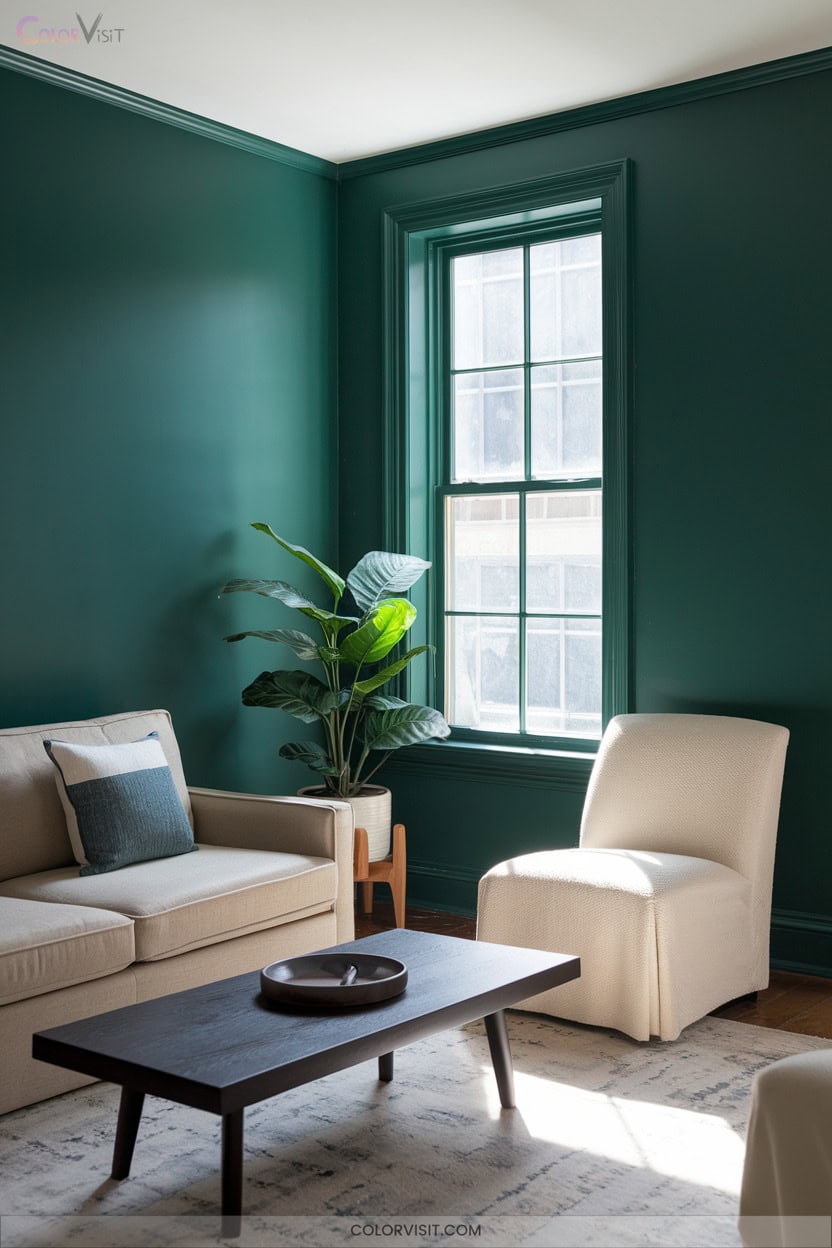
A deep forest green wall instantly infuses a small living room with moody sophistication and organic charm.
You’ll find this hue creates visual depth, grounding the space while evoking tranquility and a strong connection to nature.
Elevate the look with plush, mid-century modern furnishings and layer in natural elements for a curated, innovative atmosphere.
To maximize both style and spatial perception, consider these expert moves:
- Pair with brass accents and warm lighting to soften the mood.
- Introduce greenery and textured, neutral rugs for balance.
- Use forest green as an accent wall to maintain openness without sacrificing boldness.
8. Charcoal Gray to Make Walls Recede
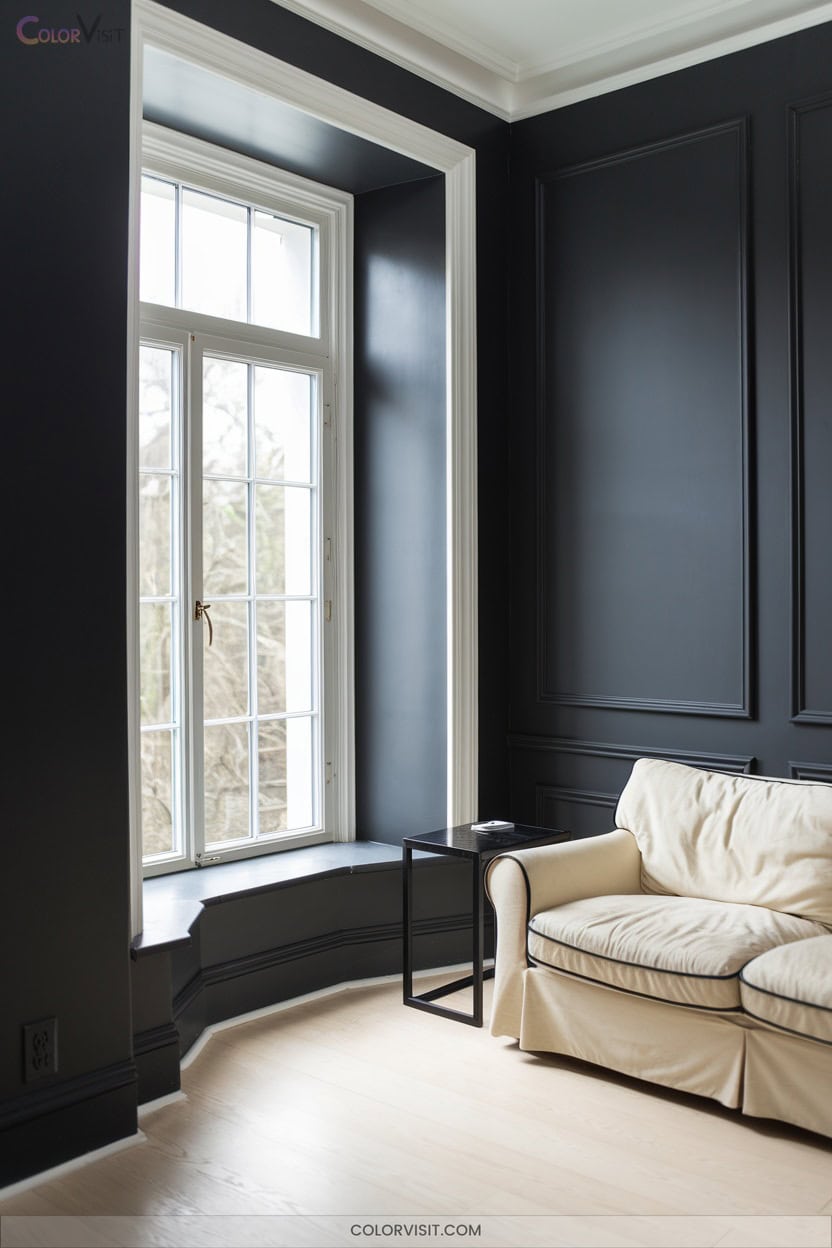
While forest green brings natural depth, charcoal gray offers a refined way to visually expand your small living room.
Charcoal gray’s moody sophistication absorbs light, making walls visually recede and the room feel instantly deeper.
For innovation, use charcoal as an accent—on a feature wall, built-in shelving, or trim—paired with bright white ceilings to maximize perceived height.
Integrate reflective surfaces or metallic décor to amplify light and spatial illusion.
Complement with cool whites, blues, or subtle patterns to prevent heaviness.
Choose layered lighting and consider Sherwin-Williams Urbane Bronze or Benjamin Moore Charcoal Slate for nuanced, space-enhancing resonance.
9. Chocolate Brown for Cozy Comfort
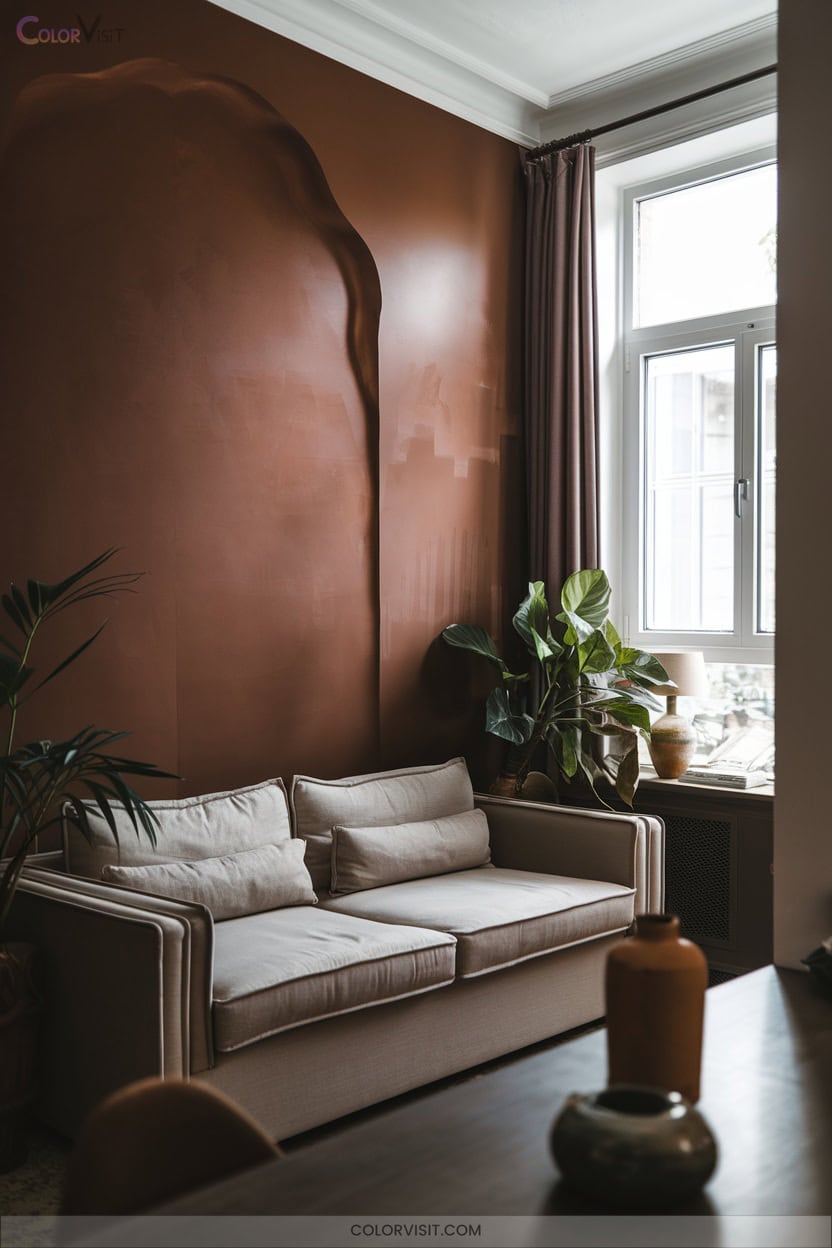
Why not embrace the rich warmth of chocolate brown to transform your small living room into an inviting, cocoon-like retreat?
This modern classic surrounds you with a sense of grounded comfort, especially when you use color-drenching techniques for seamless sophistication.
To maximize depth, layer a mix of matte and glossy finishes, and choose tones that complement your favorite oak or vintage pieces.
For a contemporary yet timeless effect, try:
- Painting trim and ceilings the same chocolate hue for visual expansion
- Introducing metallic or light accents to highlight richness
- Integrating textured fabrics and plants to enhance earthy, tactile appeal
Experiment with samples for precision.
10. Matte Black for Bold Continuity
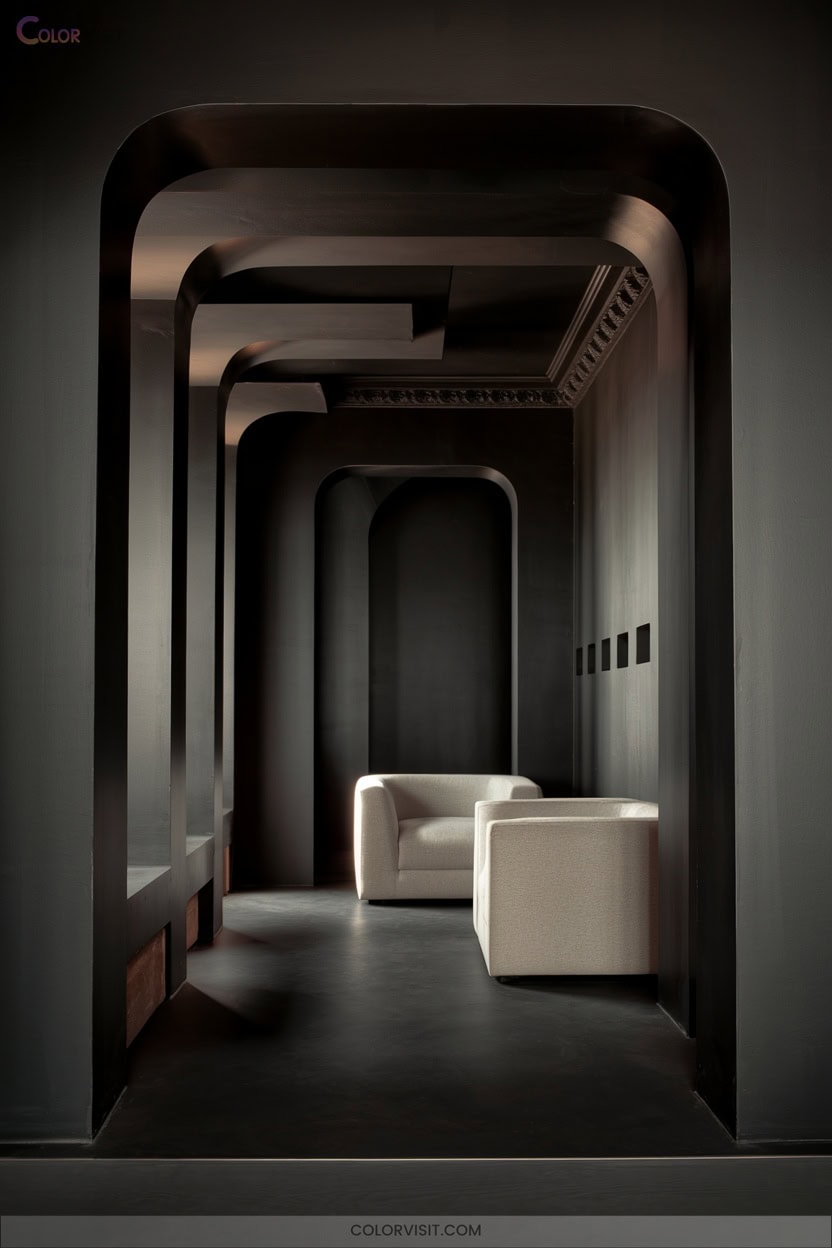
After exploring the comforting embrace of chocolate brown, consider the striking sophistication of matte black for your small living room.
Matte black’s low reflectance eliminates glare, creating a seamless, visually balanced canvas that enhances depth and intimacy.
Pair it with light-toned wood floors, minimal furnishings, and strategic accent lighting to prevent the space from feeling confined.
Opt for clean-lined furniture and metallic accessories to establish contrast and visual hierarchy.
Meticulous wall preparation and selecting a high-quality matte finish guarantee a flawless result.
Embrace matte black’s bold versatility—it transforms compact spaces with modern drama, offering a tailored palette for style-forward innovation.
11. Electric Red Accent Walls
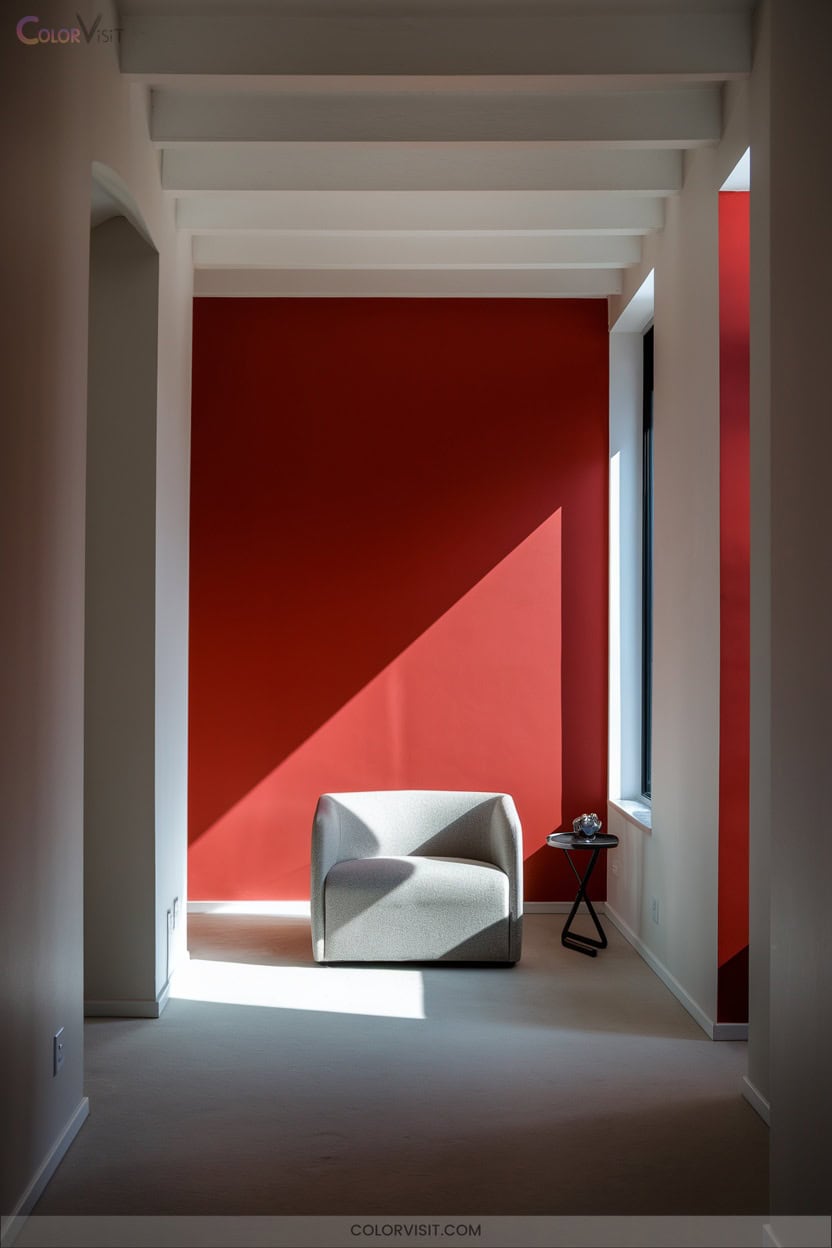
A single accent wall painted in electric red instantly energizes a small living room, injecting bold personality and drawing the eye to a deliberate focal point.
To maximize spatial perception, place the accent wall behind a key feature like a fireplace or media unit, and contrast with neutral surrounding colors for visual harmony.
Amplify depth with layered textures and curated accessories.
For a refined, innovative look:
- Use neutral furnishings to ground the intensity of red.
- Incorporate metallic or wood accents for striking contrast.
- Leverage directional lighting to sculpt the wall’s vibrancy and enhance dimensionality.
Adapt with removable wallpaper for easy future updates.
12. Sky Blue for an Expansive Feel
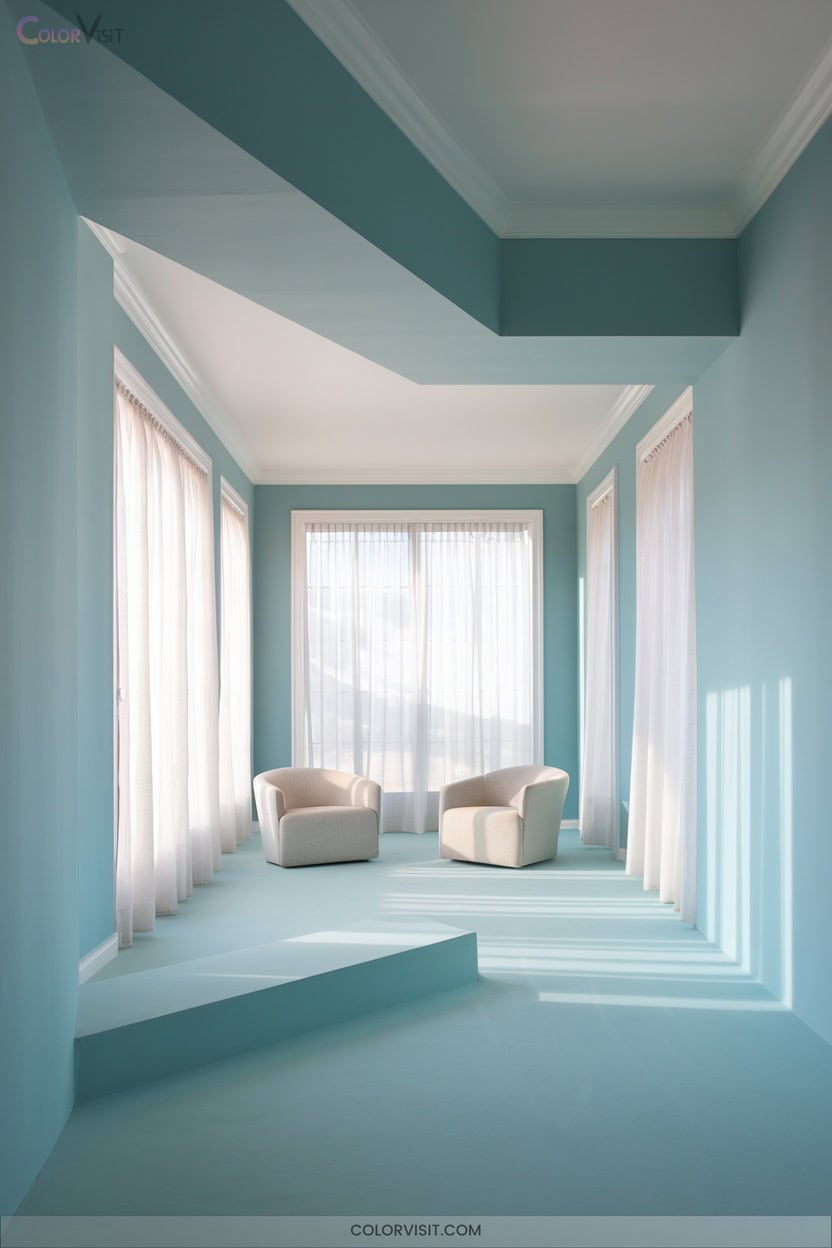
If you want your small living room to feel more open and tranquil, sky blue offers a transformative solution that visually expands the space while setting a serene tone.
Sky blue visually enlarges small living rooms, infusing the space with a calming, open atmosphere perfect for relaxation.
Leverage sky blue’s reflective properties to amplify natural light, optimizing a sense of spaciousness even in compact layouts.
Pair it with crisp whites or soft creams for maximum luminosity, or introduce subtle earth tones to anchor the cool palette.
Test swatches under varied lighting to verify the effect aligns with your vision.
For added innovation, explore a monochromatic scheme by layering deeper blue accents, creating depth without diminishing the room’s expansive feel.
13. Soft Blonde for Inviting Warmth
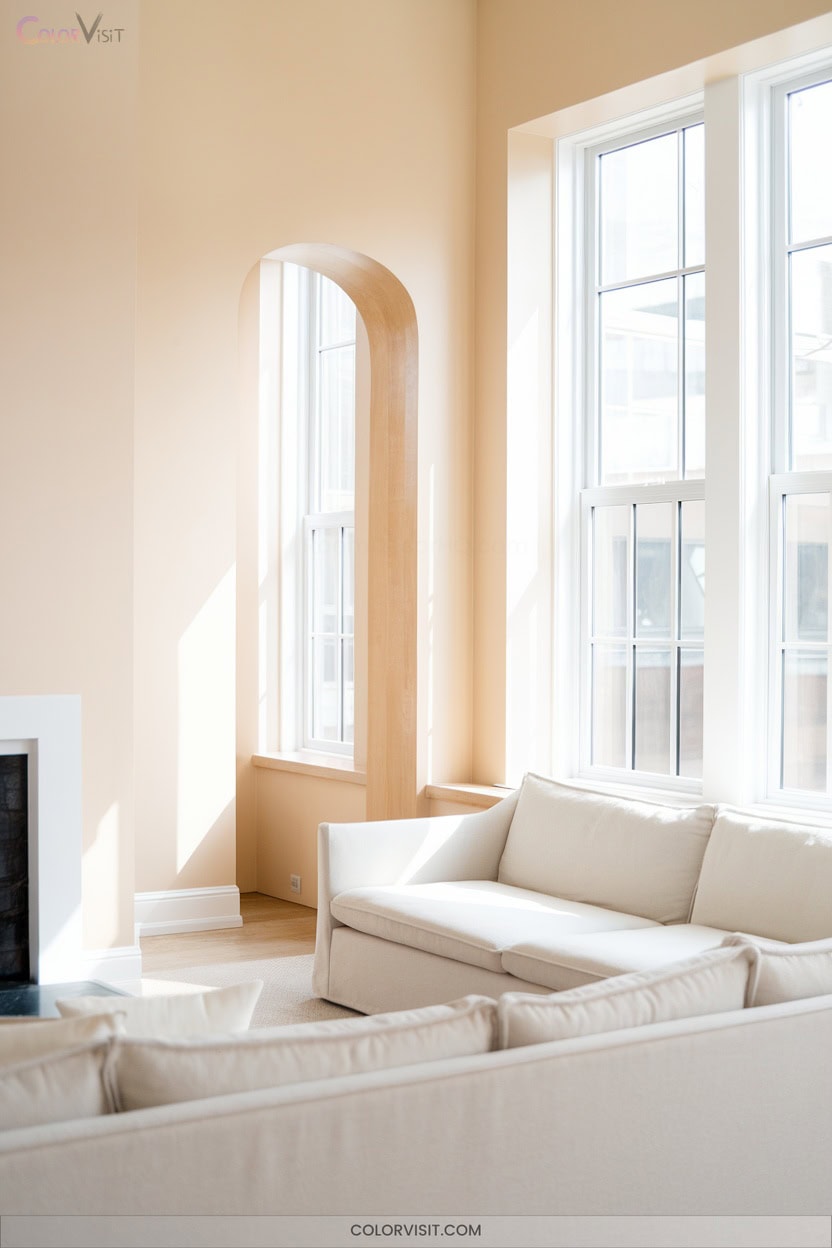
While stark whites can sometimes leave a small living room feeling sterile, soft blonde paint infuses the space with inviting warmth and hospitality.
This nuanced neutral acts as a versatile backdrop, harmonizing effortlessly with modern, minimalist decor and nature-inspired elements.
Its light-reflective properties amplify natural and artificial light, ensuring your room feels radiant rather than confined.
For innovative style, consider:
- Layering textured accents like woven baskets for depth without clutter
- Introducing bold contrasts—think sleek black or vibrant red accessories
- Selecting a satin or eggshell finish to subtly enhance warmth and light
Soft blonde transforms compact living rooms into timeless, welcoming retreats.
14. Pale Yellow to Boost Light and Cheer
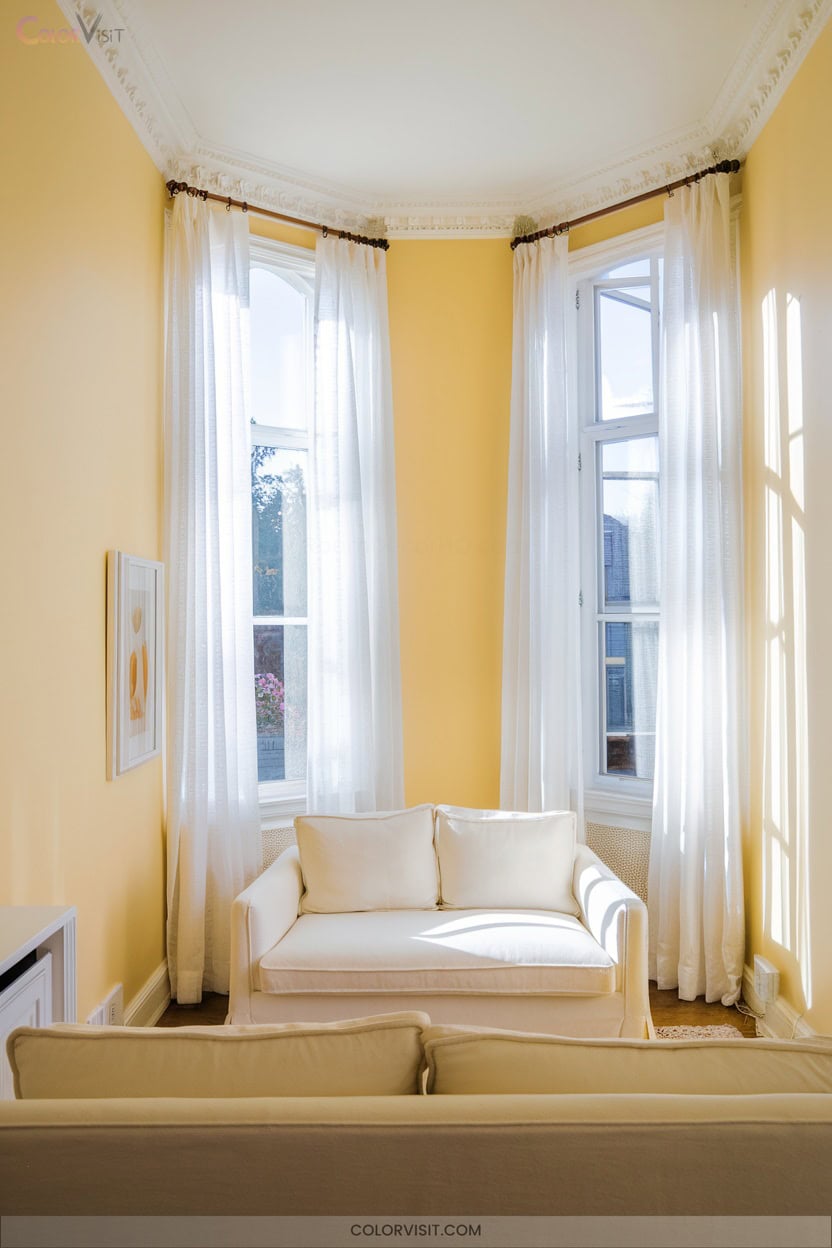
Step into a brighter, more uplifting space by choosing pale yellow paint for your small living room.
This innovative shade spans from airy creams to buttery hues, instantly amplifying natural and artificial light while projecting optimism and warmth.
Pale yellow’s reflective properties visually expand square footage, creating an illusion of openness.
Pair it with light or neutral furnishings for a modern, seamless look, or use deeper yellow accents to add dimension.
Consider Benjamin Moore’s Crisp Linen or Windham Cream for a sophisticated base.
Pale yellow’s versatility supports both contemporary and classic design, harmonizing beautifully with cool grays, whites, and vibrant décor.
15. Reflective Paint and Lighter Ceilings for Enhanced Space
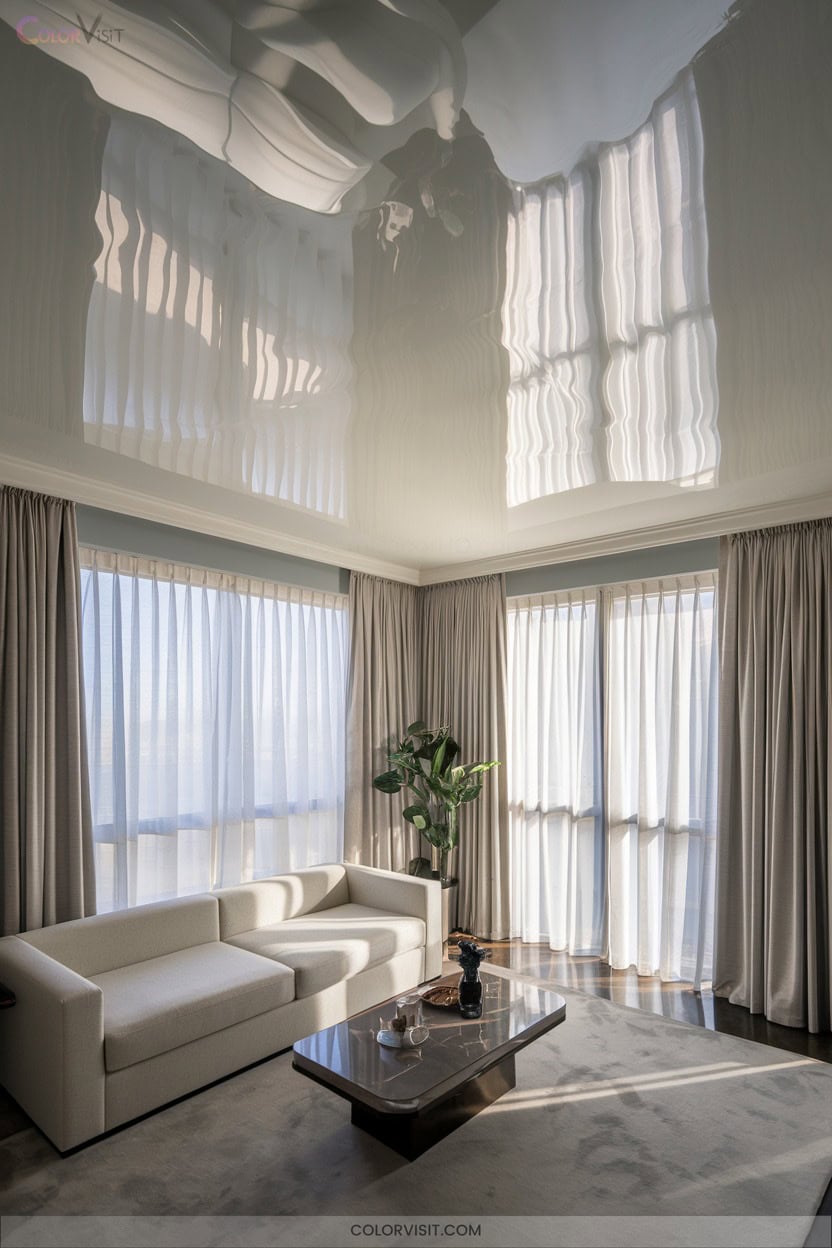
A fresh coat of reflective paint can instantly transform a small living room, amplifying both natural and artificial light to create a sense of openness.
Opt for high-LRV hues—think crisp whites or cool pastels—and semi- or high-gloss finishes to maximize reflectivity.
Elevate the effect by painting your ceiling a lighter shade than your walls.
This technique visually raises the ceiling, enhancing spatial perception.
For a truly innovative, space-enhancing result, try:
- Glossy finishes on trim or cabinetry for added light bounce
- Monochromatic schemes for seamless visual flow
- Mirrors or light flooring to further reflect and disperse illumination
Frequently Asked Questions
What Paint Finishes Work Best in Small Living Rooms for Easy Cleaning?
You’ll want to select satin or pearl finishes for your small living room. These options balance easy cleaning with sophisticated sheen, delivering both innovation and practicality. They’re resilient in high-traffic zones and maintain a refined, modern aesthetic.
How Do I Choose Colors That Complement My Existing Furniture?
You’ll often discover your ideal palette simply by noticing how your favorite throw coincidentally echoes a chair’s hue. Reference the color wheel, identify undertones, and select complementary shades. Balance intensity with neutrals for a sophisticated, curated effect.
Can Wallpaper Be Used With Space-Enhancing Paint Colors?
Absolutely, you can integrate wallpaper with space-enhancing paint colors for a dynamic effect. Opt for light-toned, subtly textured wallpapers on accent walls, coordinating with muted paint hues to amplify light, create depth, and maintain a cohesive, expansive aesthetic.
How Often Should I Repaint a Small Living Room for Best Results?
Of course, you could just leave your walls forever—but innovation loves a fresh canvas. Repaint every 2-3 years, especially in high-traffic zones, leveraging durable, low-VOC paints to maintain vibrancy, surface integrity, and continuously evolving aesthetic impact.
Are There Eco-Friendly Paint Options for Small Spaces?
You can choose innovative eco-friendly paints like zero-VOC, milk paint, or mineral-based options. These enhance air quality, offer modern color choices, and promote sustainability—perfect for small spaces where you want both style and environmental responsibility.
Conclusion
With the right paint color, you can instantly transform your small living room into a visually spacious retreat. For example, when a client chose soft greige with a reflective eggshell finish, their once-cramped lounge felt brighter and more inviting.
Remember, lighter hues, strategic ceiling treatments, and subtle undertones all play critical roles in amplifying light and openness. Embrace these expert-approved shades, and you’ll create a living room that truly feels larger, more stylish, and welcoming.