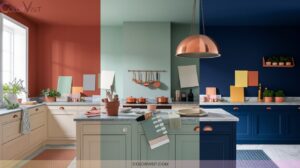
14 Welcoming Hallway Color Ideas to Connect Your Home’s Spaces
Invite guests in with hallways draped in soft neutrals for timeless flow, or make a bold statement using deep greens or navy.
Energize your space with strategic yellow accents and personalize with a vivid gallery wall. Highlight architecture using two-tone walls and warm beige, or add intrigue with floral patterns and cheerful pops of color in alcoves.
Choose durable, eco-friendly paints and materials for lasting appeal. Explore the next strategies, and your hallway will truly connect every room.
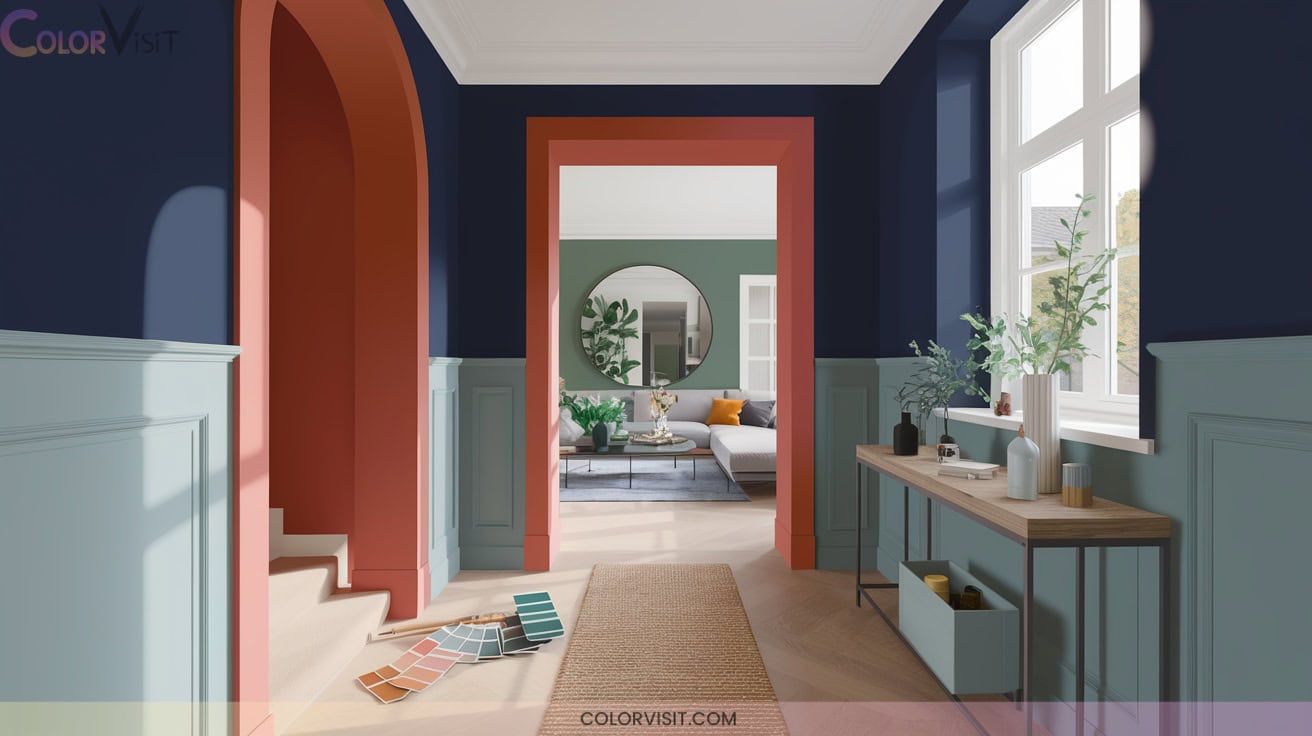

1. Embrace Soft Neutrals for a Timeless Look
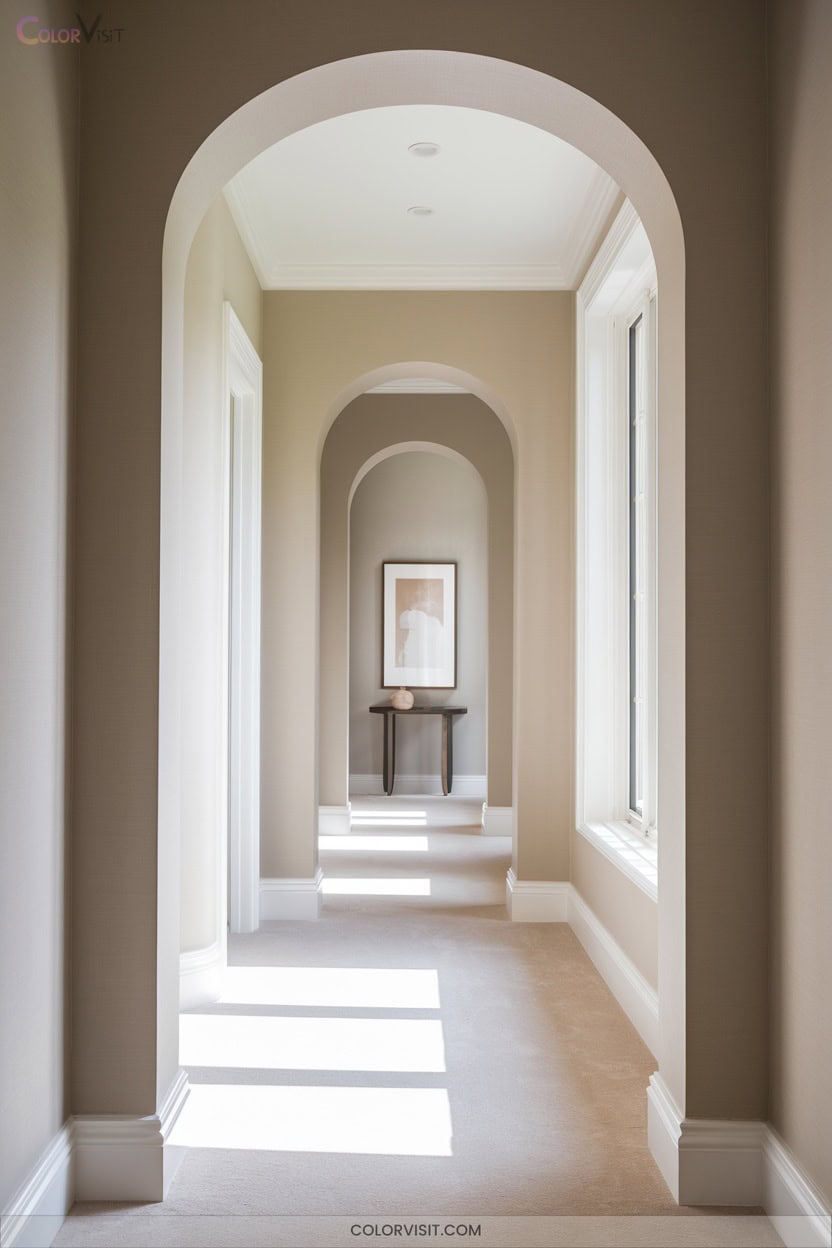
Transform your hallway into a serene and inviting entryway by embracing soft neutrals like beige, taupe, and creamy white.
Elevate your hallway’s ambiance with calming neutrals such as beige, taupe, and creamy white for a welcoming entryway.
These versatile hues expand space visually, reflecting light to enhance openness and tranquility. Anchor the palette with warm wood tones or textured rugs for tactile depth.
Layer subtle patterns or muted accents—think dusty pink or olive—to enrich the scheme without visual clutter.
Integrate natural elements such as greenery for warmth and energy. Prioritize layered lighting to prevent blandness and highlight architectural features.
This timeless approach guarantees adaptability to evolving trends, allowing you to refresh your hallway’s look with minimal effort.
2. Create Drama With Deep, Moody Hues
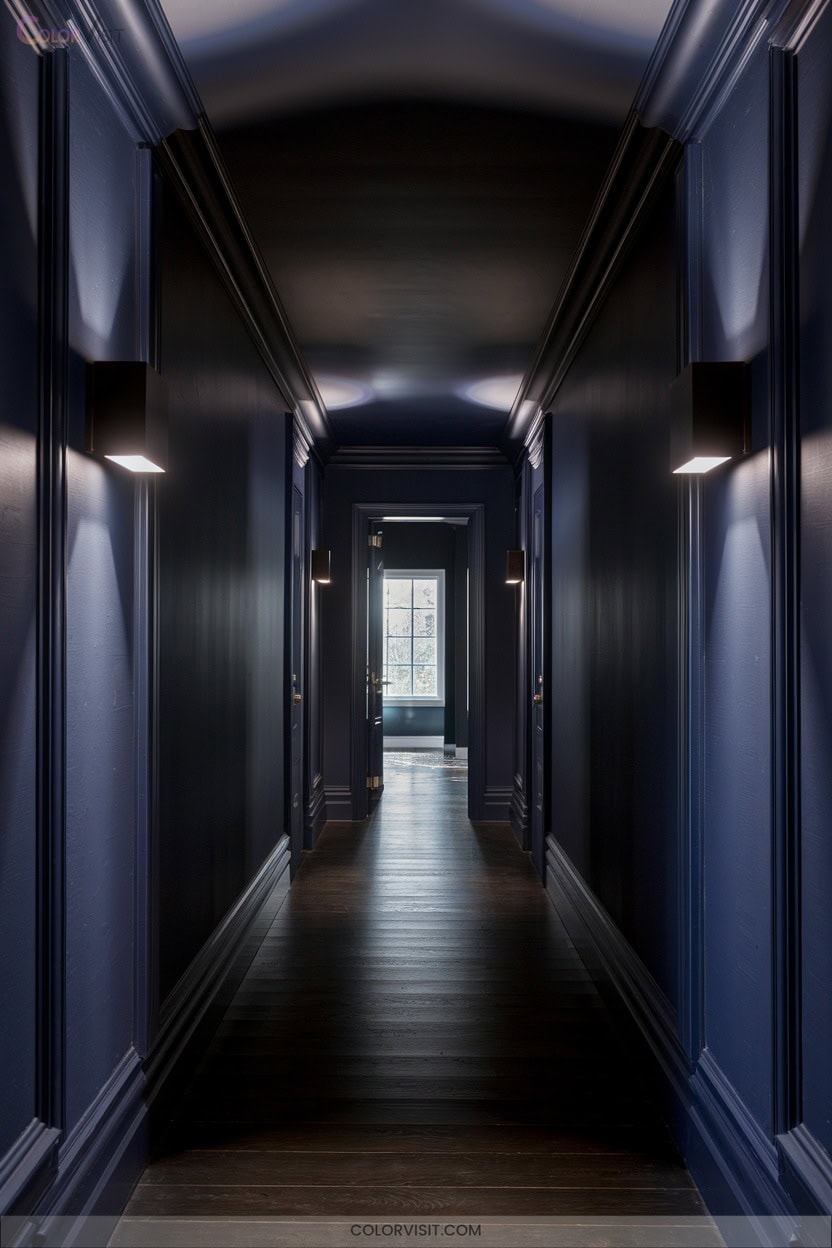
While soft neutrals offer timeless serenity, deep, moody hues introduce a bold sense of drama that instantly elevates your hallway.
Opt for dark green for restorative depth, midnight blue for mysterious elegance, or charcoal gray for an enveloping, cozy ambiance. Opulent plums and deep oranges inject sophistication and warmth.
Maximize impact by color-drenching walls, trim, and ceilings, or contrast rich purple shades—like Mahogany No.36—with crisp white ceilings.
Layer in textured wallcoverings, luxurious fabrics, and strategic lighting to prevent gloom.
Harness mirrors and lighter accents to reflect natural light, ensuring the space remains balanced, inviting, and visually dynamic.
3. Energize With Bright Yellow Accents
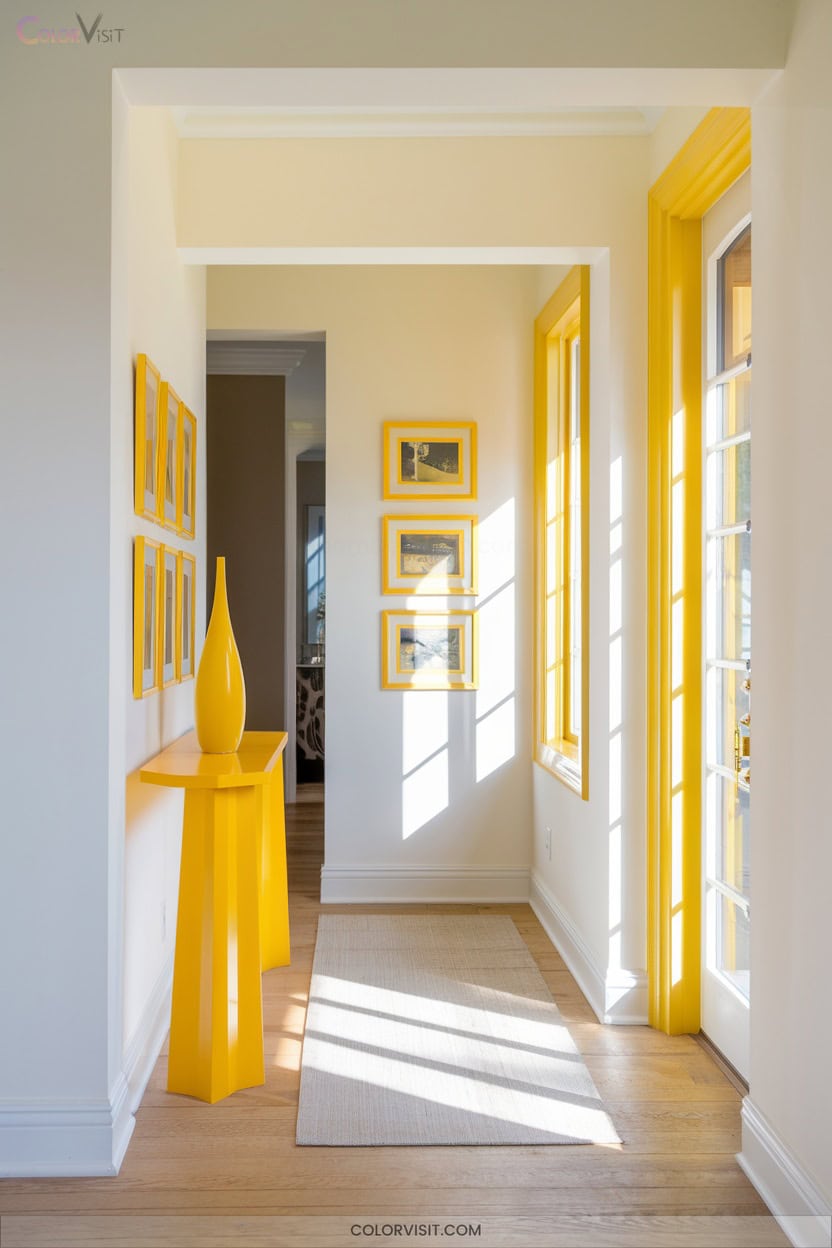
Infuse your hallway with instant energy by introducing bright yellow accents—a strategic choice for spaces that crave light and energy.
Yellow’s vibrancy enhances spatial perception, making narrow corridors feel expansive while elevating mood with optimism and warmth.
For maximal visual impact, layer yellow throw pillows, rugs, or curated artwork against crisp neutrals or deep blues for dynamic contrast. Integrate minimalist yellow vases or lighting fixtures to inject brightness without visual clutter.
Yellow’s psychological influence promotes concentration and lively conversation, making it ideal for passageway zones.
Harness yellow’s versatility to bridge modern minimalism, rustic charm, or vintage glamour, transforming your hallway’s ambiance.
4. Use Two-Tone Walls for Architectural Interest
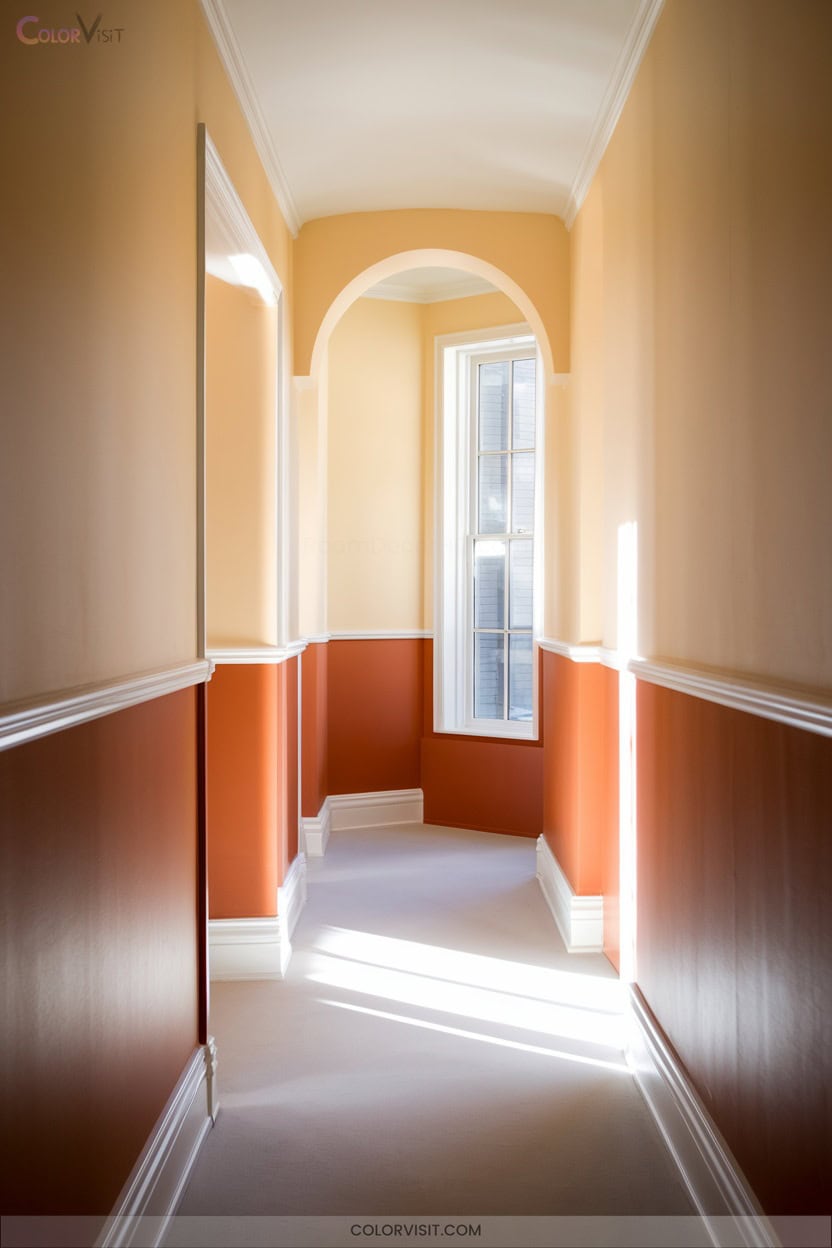
Elevate your hallway’s impact by employing two-tone walls—an approach that instantly introduces visual contrast and architectural depth.
Select a lighter hue for the upper wall and a deeper shade below to elongate sightlines and emphasize ceiling height.
Use existing dado rails or create a crisp demarcation for added precision.
Two-tone walls highlight architectural features and allow for creative color pairings, from subtle pastels to dramatic contrasts.
This technique visually expands narrow hallways and guarantees a cohesive flow between spaces.
Align both tones with your furnishings to unify the look, and don’t hesitate to express personal style through inventive combinations.
5. Highlight With Warm Beige and Taupe
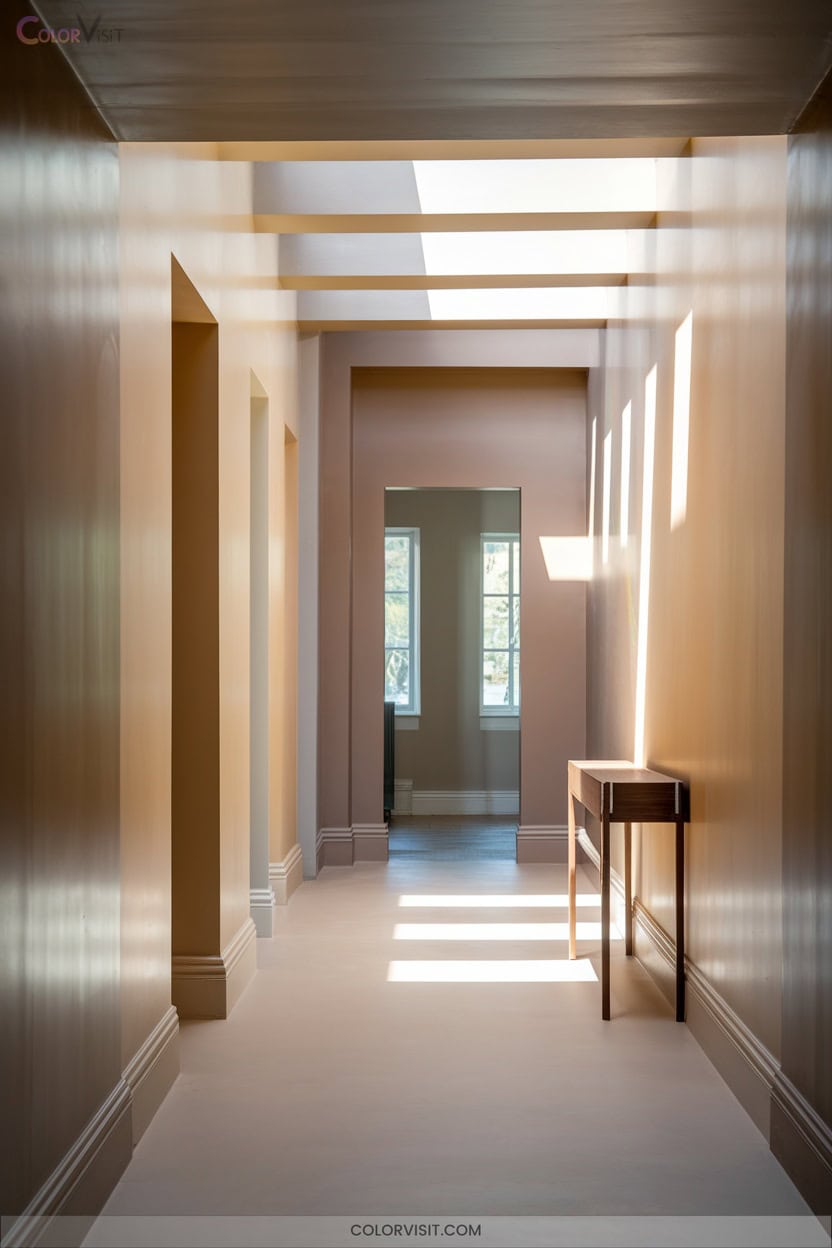
Choose warm beige and taupe for your hallway to instantly create a space that feels both inviting and refined.
Opt for taupe shades with yellow or pink undertones to maximize warmth; lighter variations visually expand narrow corridors, while deeper hues add drama to grand entries.
Elevate your palette by pairing taupe walls with brass accents, natural wood, or marble veining for tactile sophistication.
Integrate burgundy or muted green accessories for innovative contrast, and ground the space with taupe cabinetry or monochromatic layering. Cream trim highlights wall depth, while semi-gloss finishes enhance light.
These tonally rich neutrals provide timeless, seamless flows.
6. Make a Statement With Bold Hot Pink
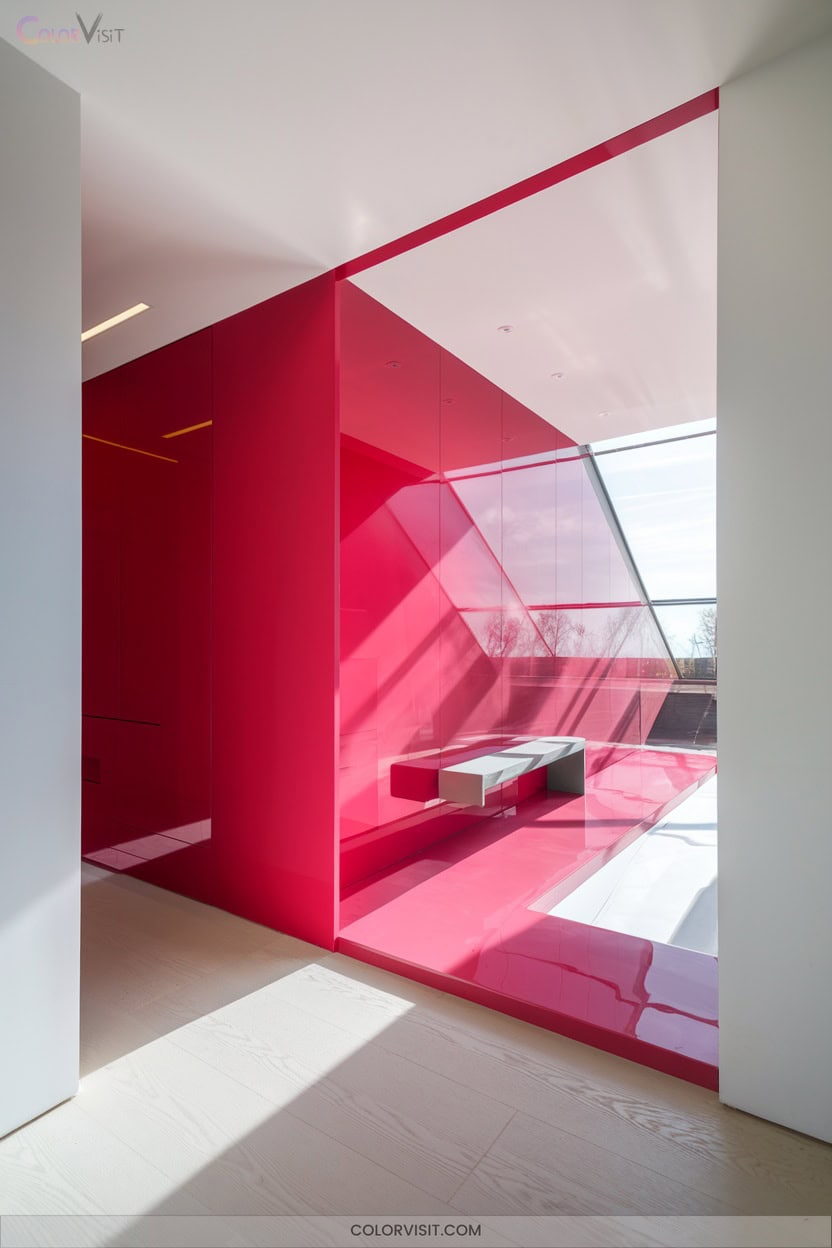
Command attention in your hallway by introducing bold hot pink—a color that radiates confidence, warmth, and creative energy.
Harness its psychological impact by using it as an accent wall or integrating it through statement furniture.
For visual harmony, pair hot pink with crisp neutrals like white or gray, or layer with deep jewel tones to achieve a luxurious, modern edge.
Opt for sophisticated shades such as Benjamin Moore Peony Pink, or go daring with neon for a playful twist—always test swatches in situ.
Balance hot pink’s vibrancy with minimalist architectural details and strategic lighting for an innovative, welcoming passage space.
7. Connect Spaces With Coordinated Color Palettes
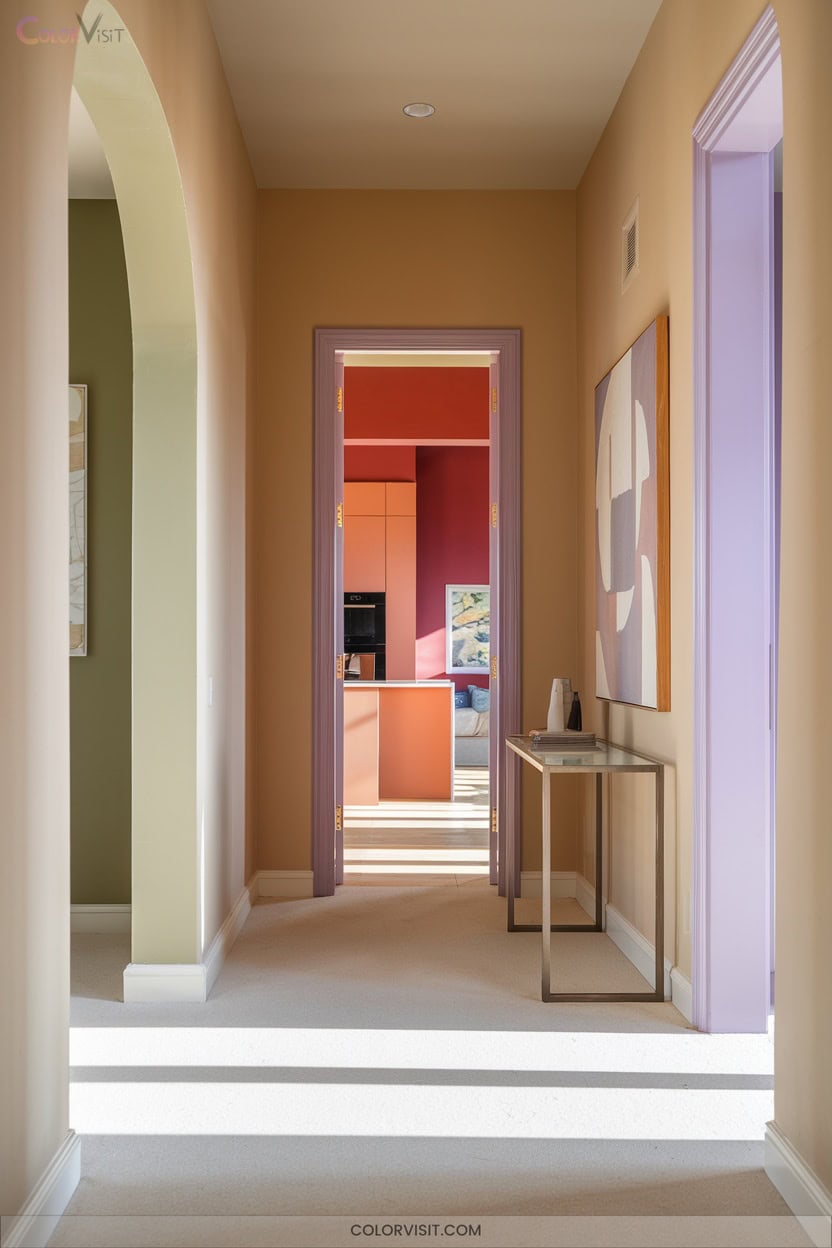
Harmony in your hallway starts with a coordinated color palette that effortlessly links adjoining spaces.
Select a dominant hue—white, navy, or another sophisticated choice—and vary its intensity across rooms for unity without monotony.
Limit your palette to two or three colors; repeat shades on walls, architectural trim, and key furnishings to reinforce connection.
Integrate accent colors through textiles, artwork, or rugs, guiding visual movement and enhancing spatial rhythm.
Maintain consistent flooring materials or textures for uninterrupted flow.
Consistent color temperature in lighting guarantees true palette perception, while reflective elements and curated art echo hues, creating seamless, forward-thinking changes throughout your home.
8. Brighten Narrow Hallways With Light Gray
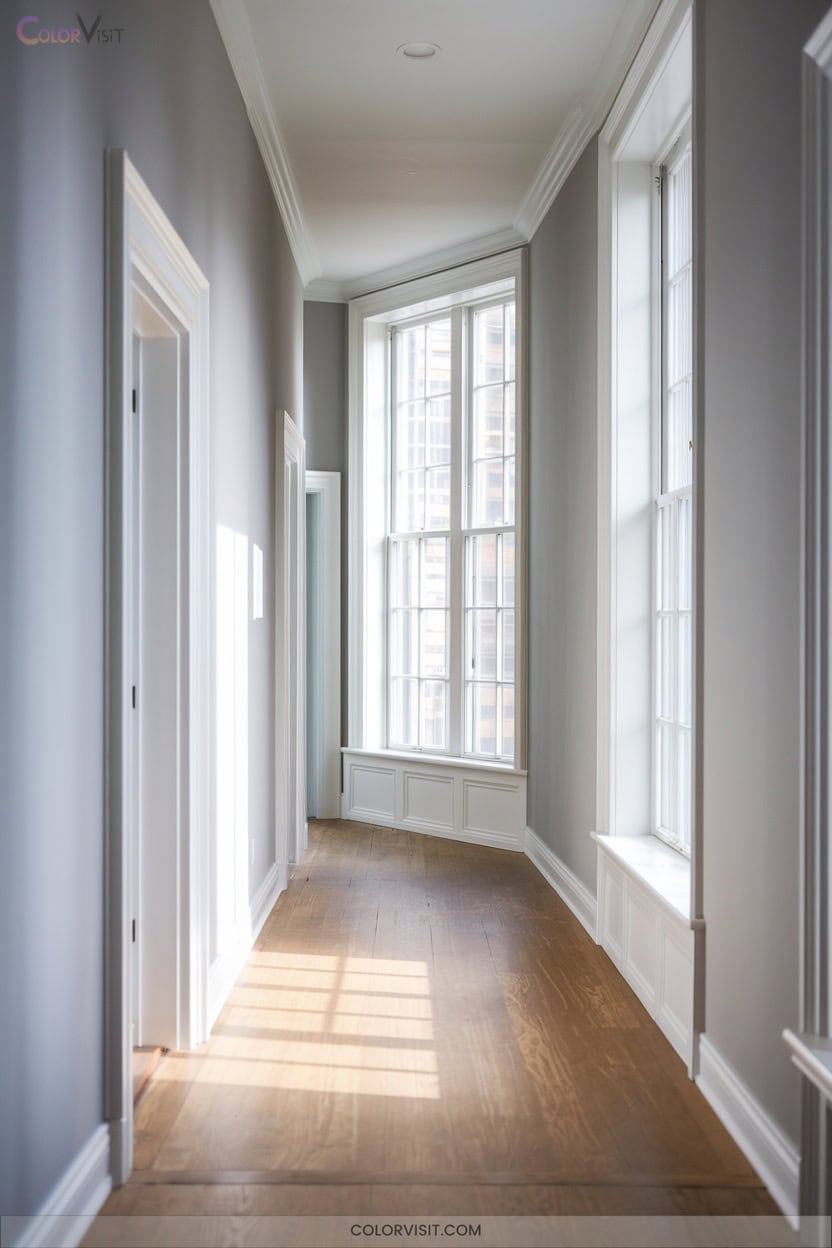
Infuse your narrow hallway with brightness and visual openness by opting for light gray walls—a designer’s secret for maximizing space without sacrificing sophistication.
Light gray’s high light reflection visually expands tight corridors and acts as a neutral canvas, harmonizing with diverse materials and décor styles.
Light gray reflects light to visually open up narrow hallways, seamlessly blending with any materials or décor style for effortless cohesion.
Select from soft gray for warmth, pure light gray for minimalism, or gray-white for subtlety. Amplify the effect with mirrors, polished metals, or glass accents to bounce light. Pair with light flooring and streamlined, pale storage for seamless cohesion.
Light gray is easy to maintain and adapts effortlessly, ensuring your hallway feels both innovative and inviting.
9. Add Sophistication With Jewel-Tone Blues and Greens
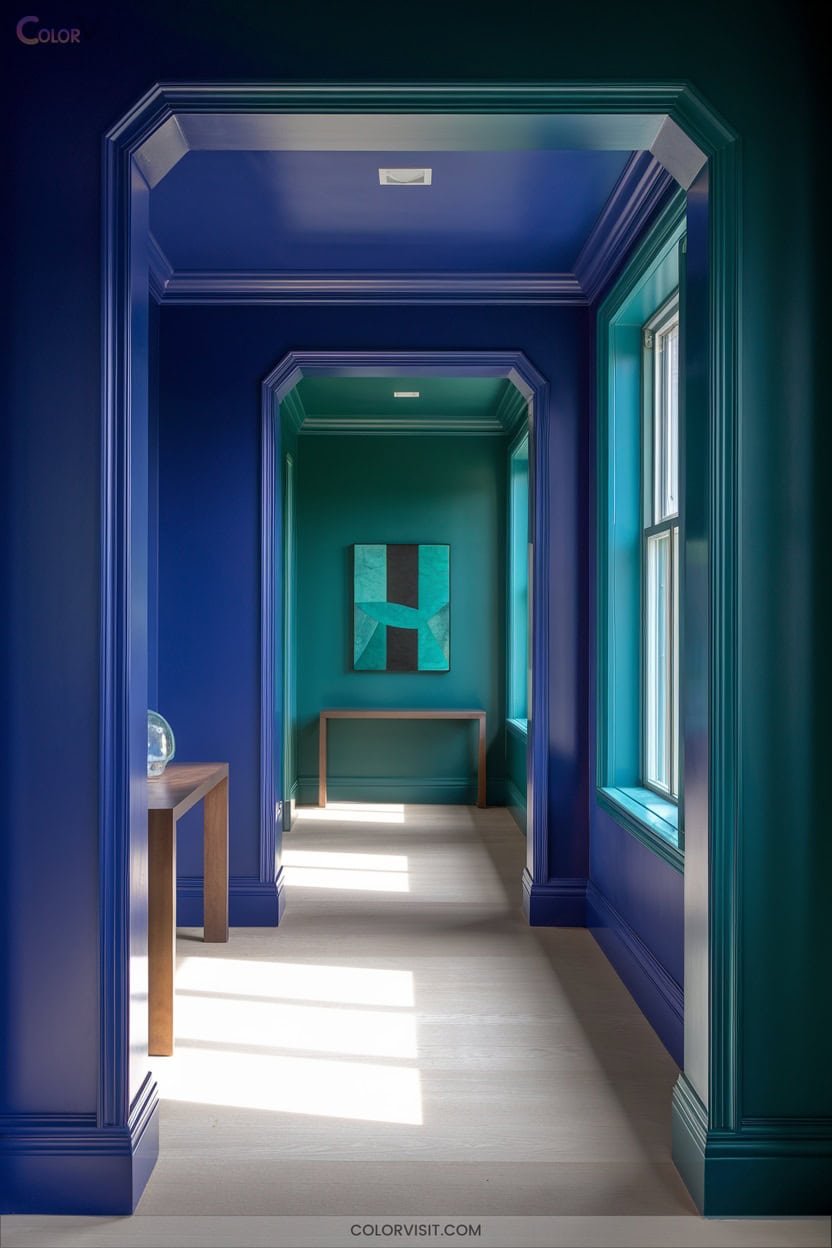
Elevate your hallway’s atmosphere by embracing jewel-tone blues and greens—colors renowned for their depth, elegance, and versatility.
Sapphire blue walls create a dramatic, luxurious focal point, while emerald green accents infuse the space with vibrancy and a nod to nature.
For a curated, innovative look, integrate these hues with expert precision:
- Pair sapphire blue accent walls with emerald green textiles for layered sophistication.
- Balance deep tones using neutral backgrounds to avoid visual overload.
- Introduce gold or metallic accents to amplify the richness of jewel tones.
- Layer velvet, silk, or brocade for tactile dimension and visual intrigue.
10. Incorporate Contrasting Trim and Molding
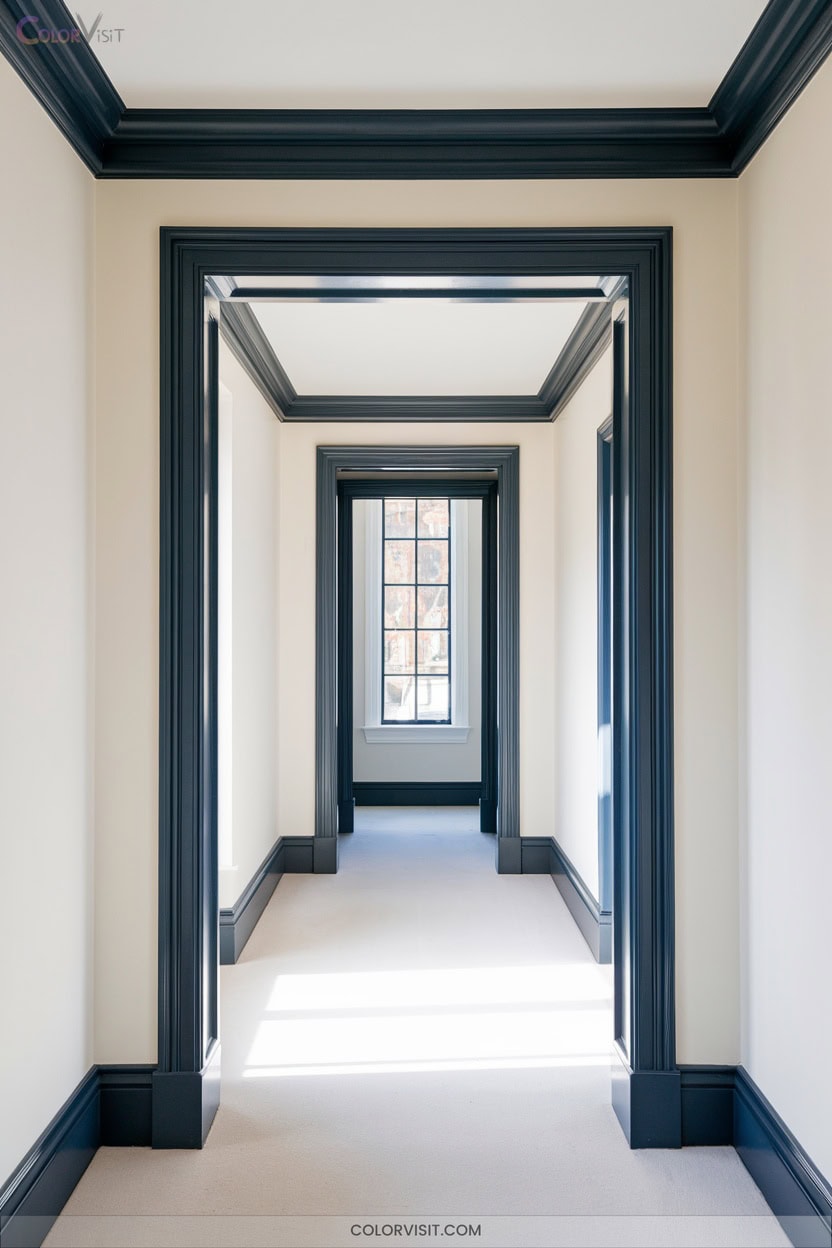
One of the most impactful ways to define your hallway’s character is by incorporating contrasting trim and molding.
Opt for dark trim against neutral walls—think charcoal on soft gray—to emphasize architectural lines and create visual dynamism.
Experiment with painted, wooden, or even metal-accented trim to customize the level of texture and depth.
Leverage color theory and Light Reflectance Values (LRV) to balance brightness and contrast, ensuring harmony with floors and furnishings.
Highlight intricate millwork to showcase craftsmanship, or choose sustainable materials for a forward-thinking touch.
Strategic contrast not only modernizes classic homes, it orchestrates visual flow through connecting spaces.
11. Personalize With a Gallery Wall of Colorful Art
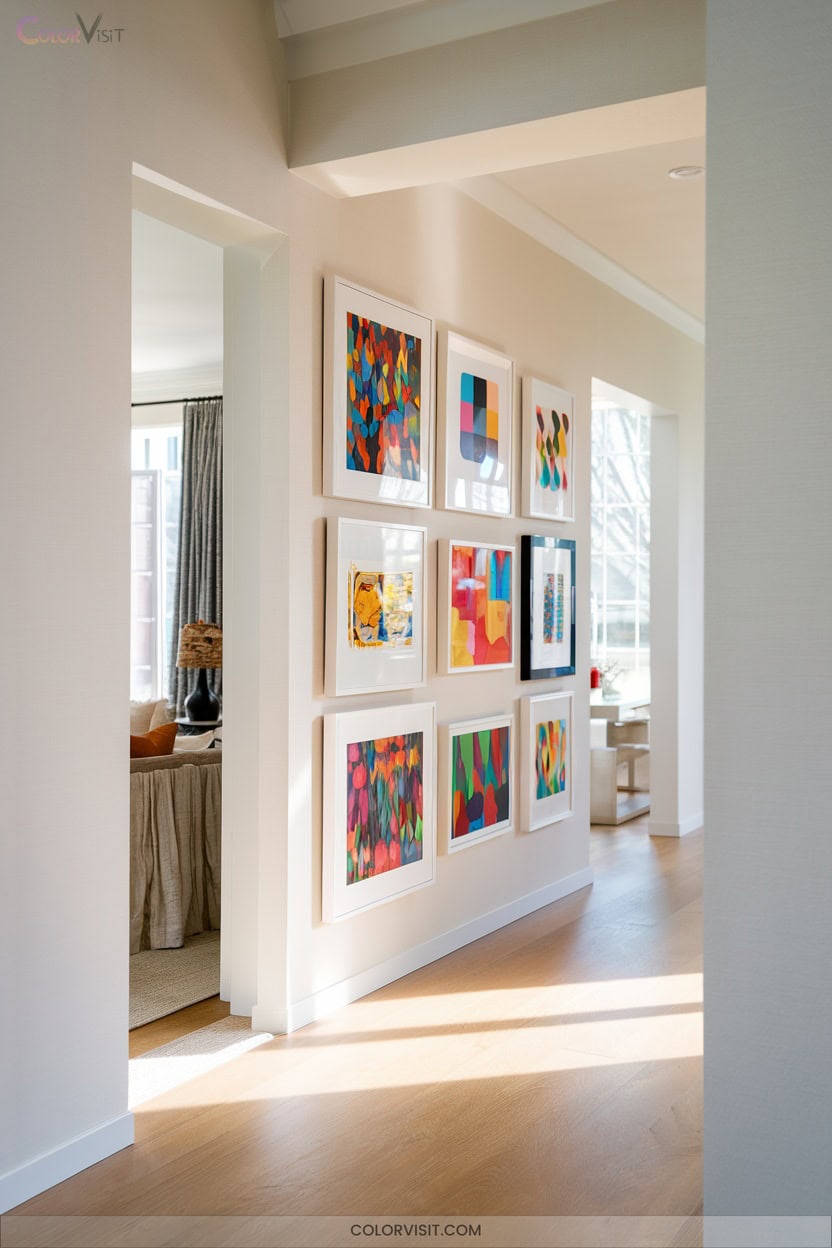
Transform your hallway into a visual narrative by curating a gallery wall filled with vibrant, colorful art.
Select energetic pieces—think bold abstracts or vivid family photos—to create instant impact, especially when coordinated with wall colors like blush pink or soft neutrals.
Choose vibrant abstracts or lively family photos for instant impact, especially when paired with blush pink or gentle neutral backdrops.
Achieve dynamic visual interest and a sophisticated, curated look by leveraging these expert strategies:
- Mix portrait and landscape formats, incorporating both framed and unframed works.
- Layer mixed media—paintings, photos, and decorative objects—for dimensionality.
- Embrace asymmetrical or off-center arrangements for a modern edge.
- Unify eclectic displays with consistent frame colors, ensuring cohesion amid creativity.
12. Feature Patterned or Floral Accent Walls
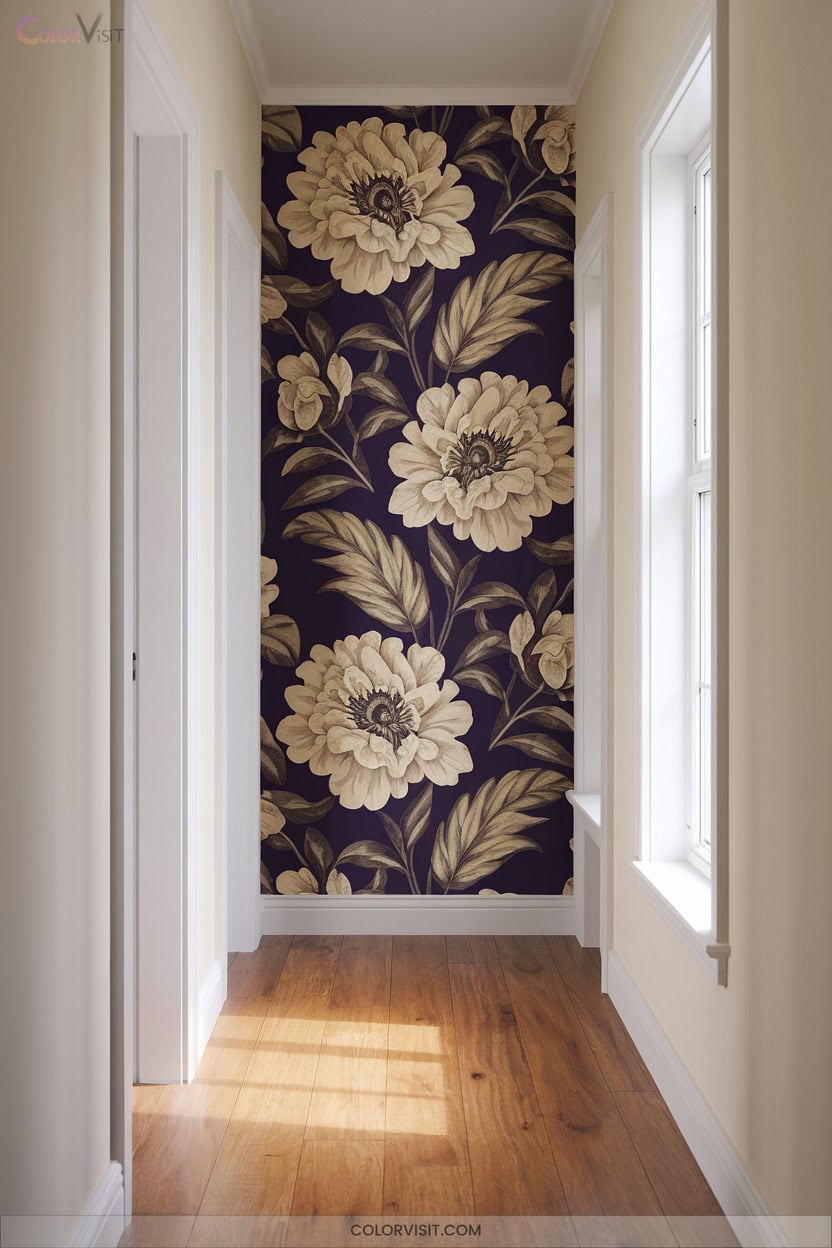
After curating a vibrant gallery wall, consider amplifying your hallway’s character with a patterned or floral accent wall.
Opt for hand-painted blooms or high-impact wallpapers to create a focal point that draws the eye and elevates spatial perception.
Floral motifs—ranging from classic to abstract—infuse warmth and visual intrigue, while harmonious color palettes guarantee seamless integration with existing decor.
Leverage Pinterest for cutting-edge inspiration and select materials that suit your needs, from custom murals to peel-and-stick designs.
13. Define Alcoves With Cheerful Pops of Color
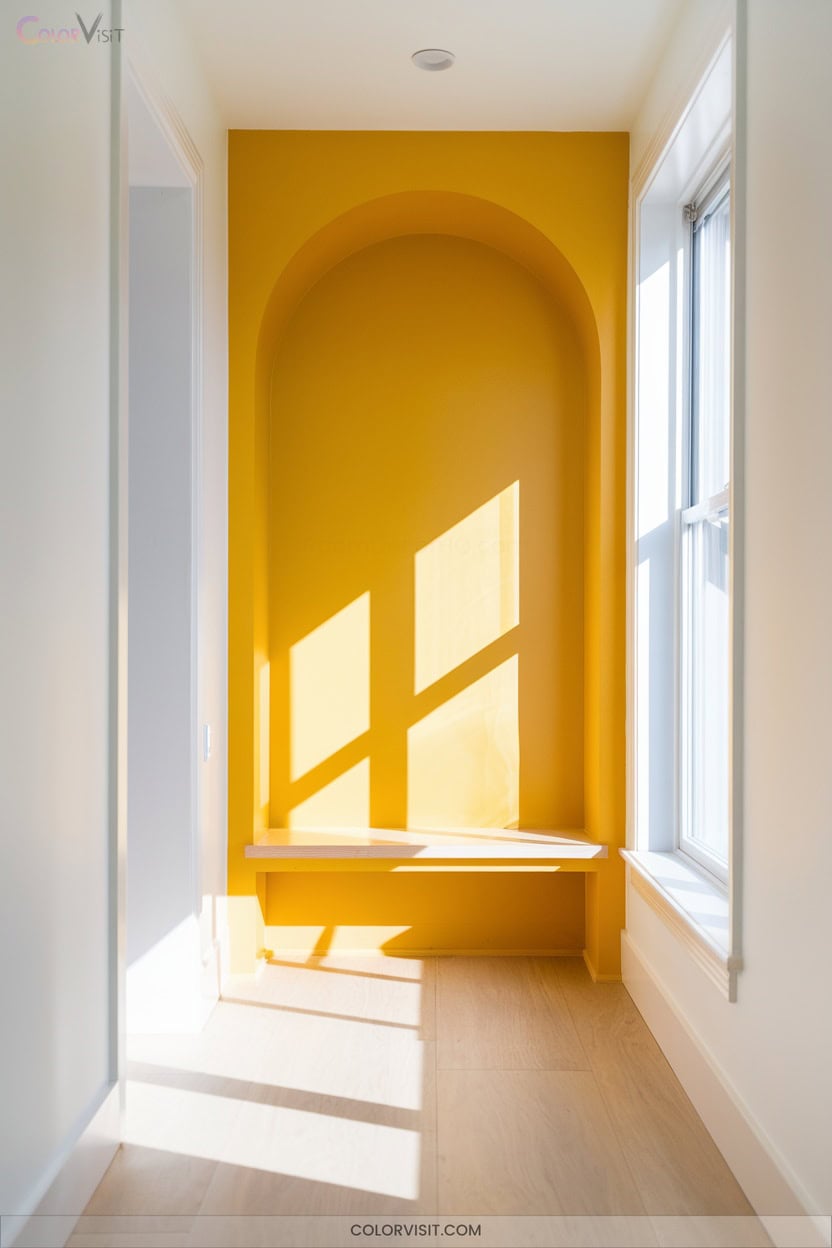
Alcove definition hinges on strategic color application—think bursts of citrus yellow, teal, or coral to instantly command attention and delineate space.
Strategic color pops—like citrus yellow, teal, or coral—transform alcoves into striking focal points and clearly defined spaces.
Use vibrant hues to transform alcoves from overlooked nooks into architectural highlights.
To maximize visual impact and depth, employ these expert tactics:
- Install colorful wall art or shelving for curated, layered visual intrigue.
- Contrast alcove flooring or ceiling treatments for dimensional separation.
- Integrate bold lighting or statement furniture to amplify focal points.
- Employ removable wall decals or bright throw pillows for budget-friendly, flexible innovation.
Harness color as your tool to define, energize, and unify connecting zones.
14. Choose Durable Finishes for Lasting Beauty
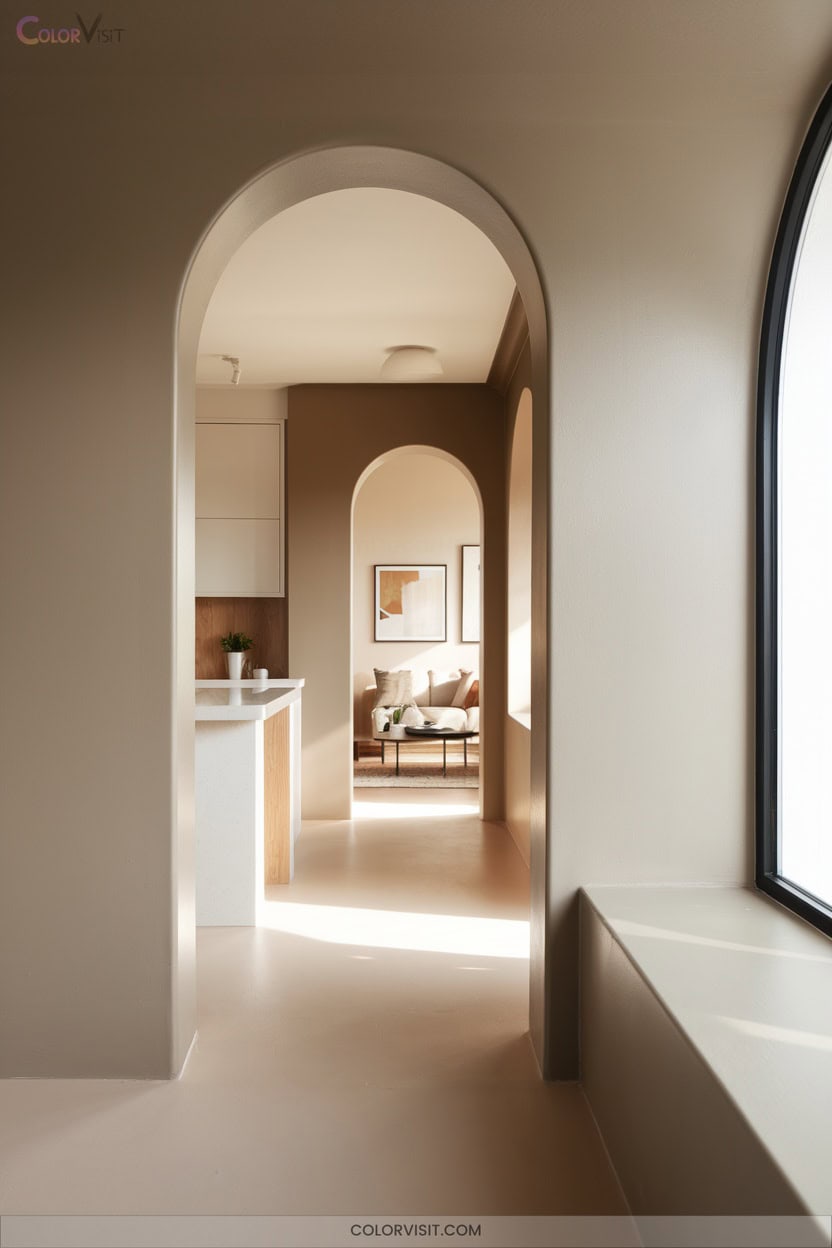
Elevate your hallway’s resilience and style by selecting finishes engineered for both beauty and endurance.
Opt for reclaimed wood to infuse warmth and sustainable character, or use recycled glass tiles for vibrant, eco-conscious surfaces.
Specify porcelain tiles or decorative concrete on walls for unmatched durability, while low-VOC or epoxy paints guarantee color longevity and healthier air.
For flooring, bamboo and cork combine sustainability with high performance, while natural fiber carpets add tactile interest.
Incorporate polished metal accents or recycled material details for innovative, lasting impact.
Prioritize finish materials that balance visual sophistication with robust, low-maintenance practicality for truly future-ready design.
Frequently Asked Questions
How Do Lighting Conditions Affect Paint Color Choices in Hallways?
You must analyze orientation, light temperature, and fixture type—north-facing halls mute warmth, while LEDs or skylights demand mid-tones. Opt for matte finishes to minimize hue shifts, and strategically layer lighting to reveal innovative, dynamic color interactions.
What Paint Finishes Are Best for High-Traffic Hallway Areas?
Imagine kids racing down your hallway—choose a satin or semi-gloss finish. You’ll get superior scuff resistance, easy cleaning, and a luminous look. For a cutting-edge touch, try pearl finishes for subtle depth and advanced washability.
Can Hallway Colors Help Make Small Spaces Feel Larger?
Absolutely—hallway colors dramatically influence spatial perception. Choose light-reflective shades like pale blue or soft gray to visually expand tight corridors. Integrate muted pastels and strategic lighting for an innovative, airy effect that maximizes brightness while maintaining a seamless, contemporary flow.
How Do I Test Paint Colors Before Committing to One?
Test paint colors by applying 1’x1′ sample patches directly onto prepped walls, using two coats and a white primer border. Evaluate under shifting natural and artificial light. Don’t rush—observe how color morphs throughout the day for precision.
Are Washable Paints Recommended for Families With Children or Pets?
Think of washable paints as your home’s suit of armor—you’ll shield walls from daily chaos. Opt for low-VOC, stain-resistant formulas in satin or eggshell finishes. You’ll enjoy durability, easy maintenance, and a consistently fresh, innovative aesthetic.
Conclusion
Ready to transform your hallway into a seamless extension of your home’s personality? By thoughtfully selecting hues—whether it’s timeless neutrals, dramatic moody tones, or energetic bursts of yellow—you’ll enhance flow and create visual impact.
Why settle for a bland passageway when you can showcase architectural interest with two-tone walls or playful alcove accents?
Prioritize durable finishes and curated art for lasting style. With these expert tips, your hallway becomes both practical and visually striking.