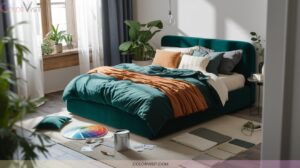
16 Appetizing Dining Room Wall Color Ideas for Entertaining Spaces
Transform your dining room into an engaging entertaining hub by choosing wall colors that command attention—think full-bodied reds for appetite-whetting drama, rich emerald or navy for sophistication, or greige for a versatile, on-trend canvas.
Energize gatherings with vibrant yellows, create moody intimacy with charcoal, or opt for serene sage and terracotta for earthy warmth.
Pastels, metallic accents, and bold color juxtapositions add playful flair and visual intrigue. Let’s uncover which of these 16 inspired hues best suits your style.
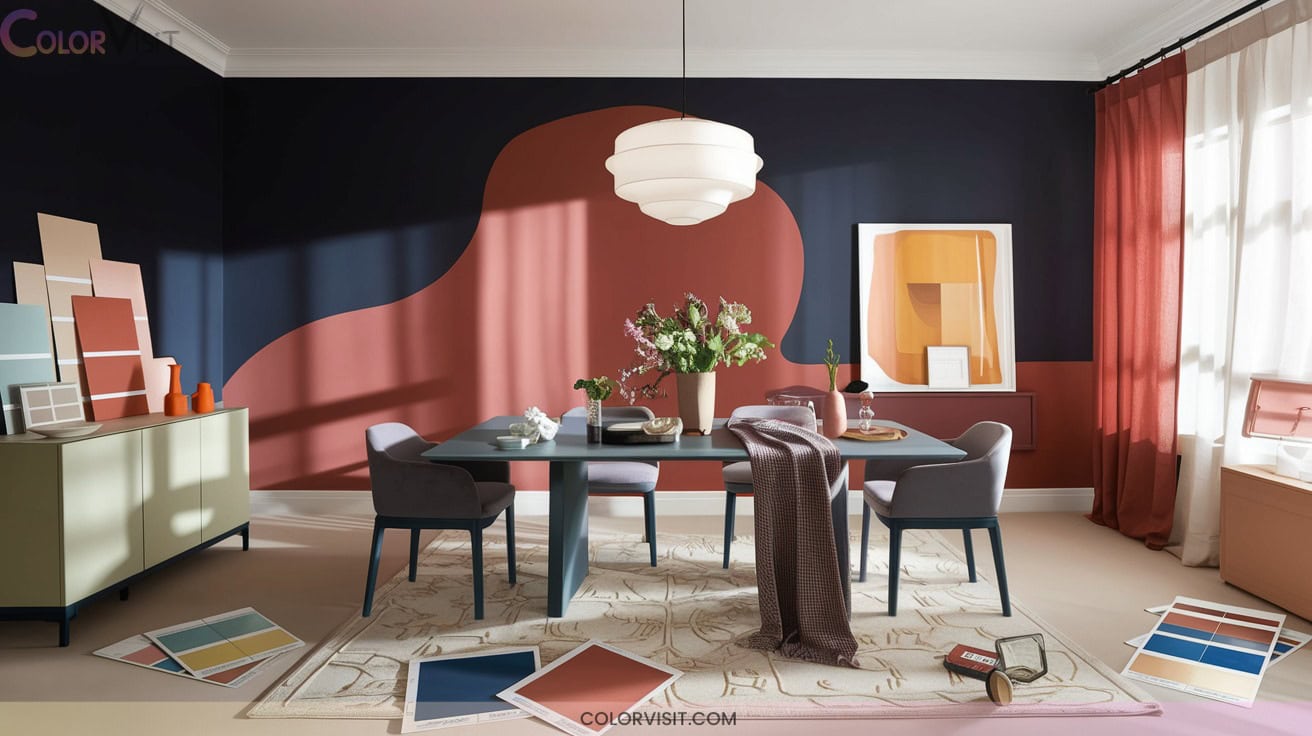

1. Bold Reds for a Dramatic Dining Experience
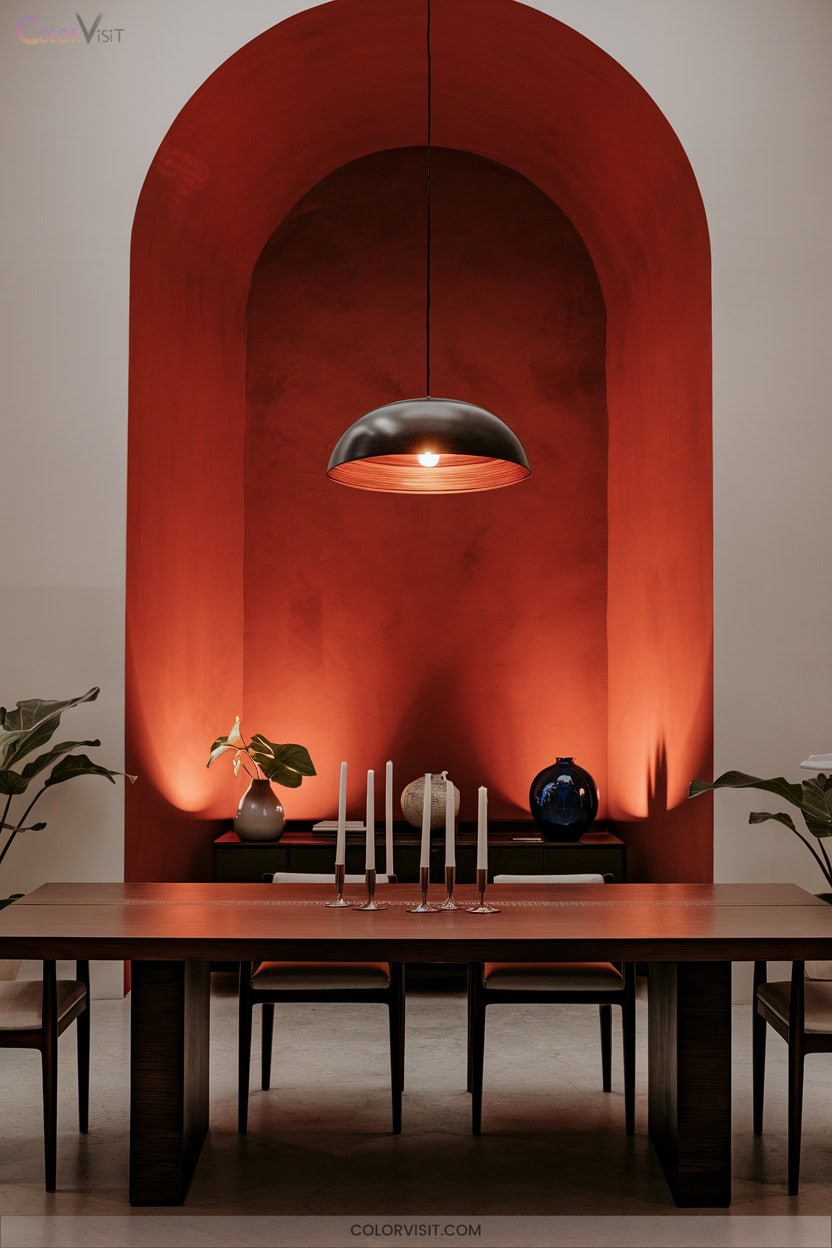
Ignite your dining room’s ambiance with bold reds that instantly command attention and elevate every meal into a sensory experience.
High-saturation hues like Benjamin Moore Heritage Red and Clay Ridge stimulate appetite, boost energy, and foster intimacy—ideal for entertaining.
Opt for full-wall application to maximize drama, or introduce accent walls for nuanced boldness.
Pair earthy reds with dark hardwood furniture to create cohesion, and balance intensity with cream trims or metallic accents. Monochromatic schemes using varied saturations add layered depth.
Embrace burgundy maroons for timeless elegance or Christian Louboutin reds for a maximalist statement, ensuring your space feels both current and inviting.
2. Navy Blue Elegance in Modern Settings
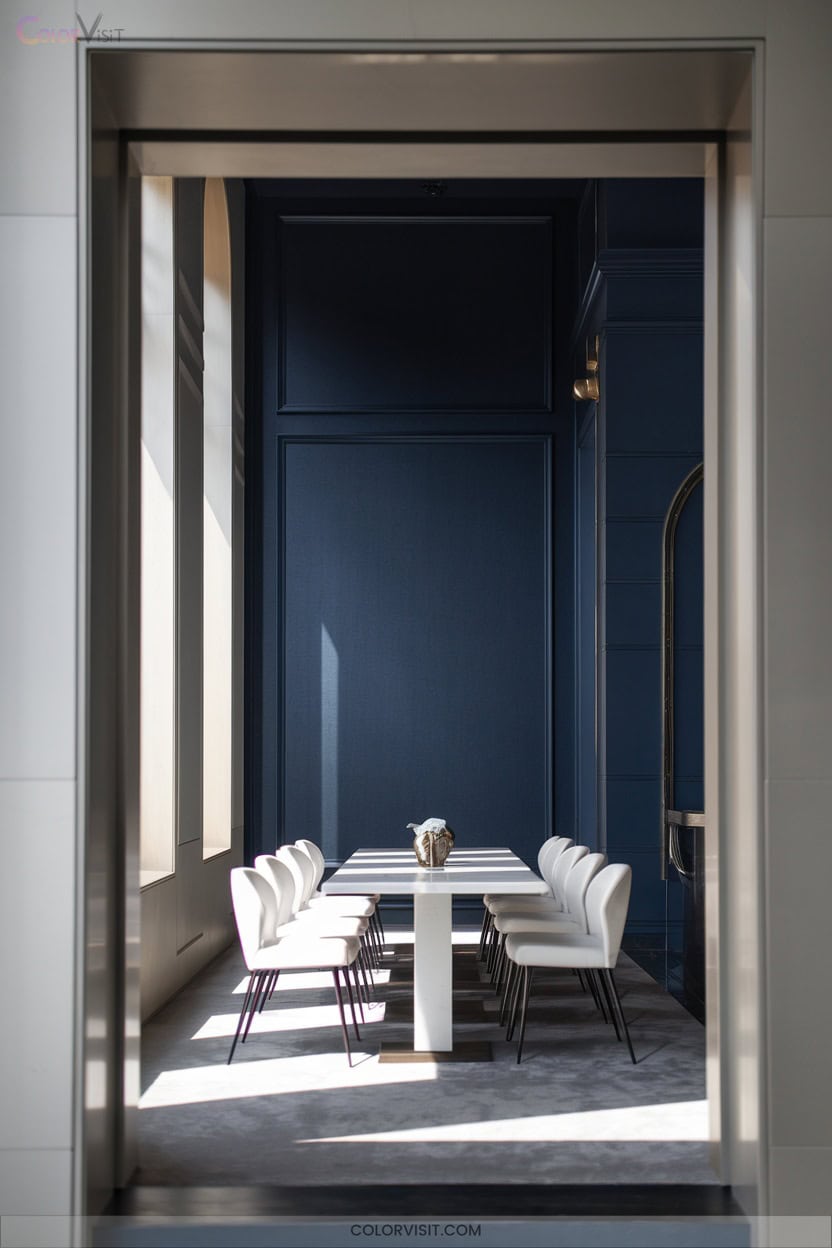
A deep navy blue instantly infuses your dining room with refined sophistication, setting an elegant foundation that suits both modern and traditional interiors.
Embrace this versatile hue for a dramatic yet inviting backdrop—think Farrow & Ball’s Wine Dark or Benjamin Moore’s Hale Navy for statement walls.
Pair navy with sleek, minimalist furniture and metallic accents like brass or chrome to channel cutting-edge luxury.
Introduce warm textiles, natural woods, and curated art to soften the look and create visual intrigue.
Navy blue’s depth highlights contemporary decor and bold sculptures, making your dining space an on-trend showcase for innovative entertaining.
3. Greige: the Ultimate Neutral With Character
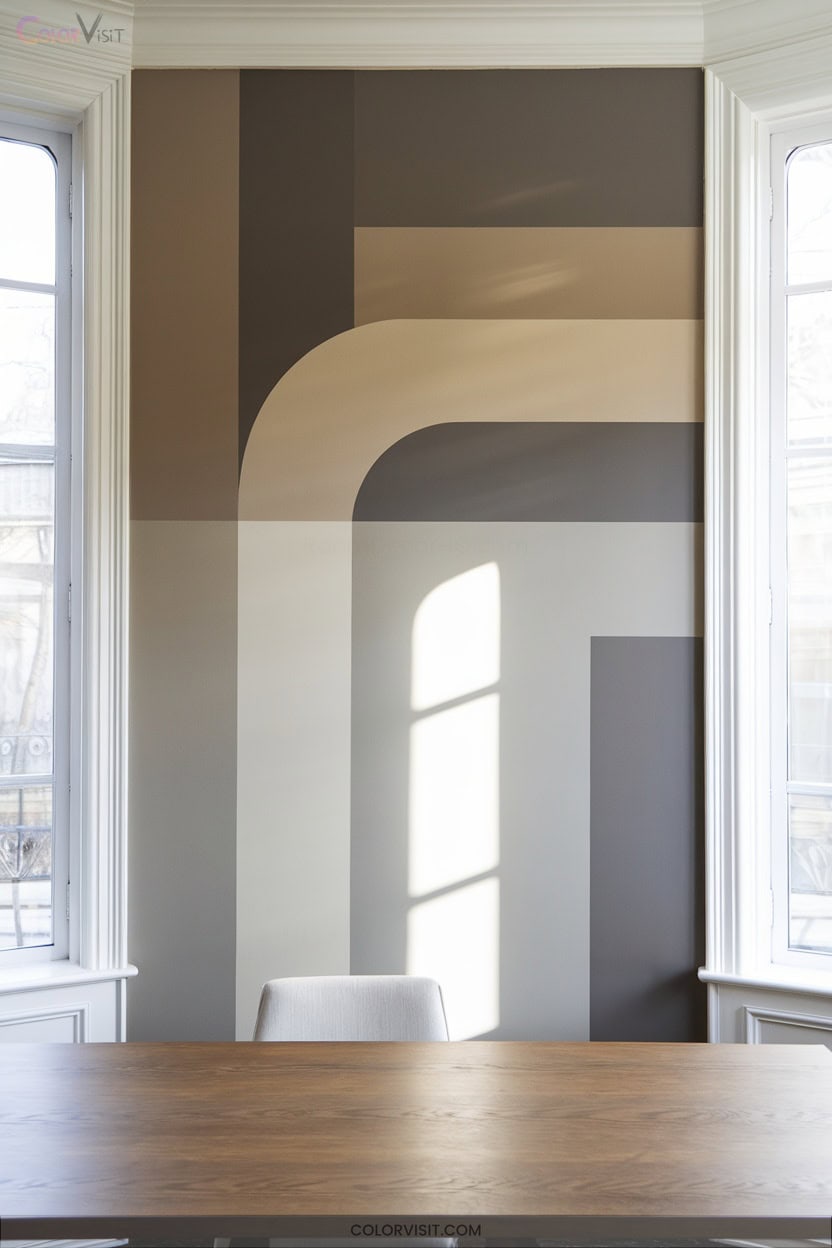
Step into a dining space painted in greige and you’ll immediately notice its sophisticated equilibrium—this modern neutral fuses gray’s understated coolness with beige’s soft warmth, creating an adaptable canvas that feels elevated but never sterile.
Greige dining spaces balance gray’s cool elegance with beige’s warmth, offering a modern yet welcoming foundation for elevated design.
Greige’s chameleon quality adapts to light, shifting from the warm embrace of Edgecomb Gray to the refined restraint of Nimbus.
Pair it with jewel-toned accents or metallic finishes for curated contrast, or layer monochromatic textiles for depth.
Lighter greiges like Balboa Mist expand compact rooms, while eggshell finishes amplify warmth.
Use crisp white trim to sharpen edges and guarantee your space feels both innovative and inviting.
4. Vibrant Yellows for a Playful Gathering Space
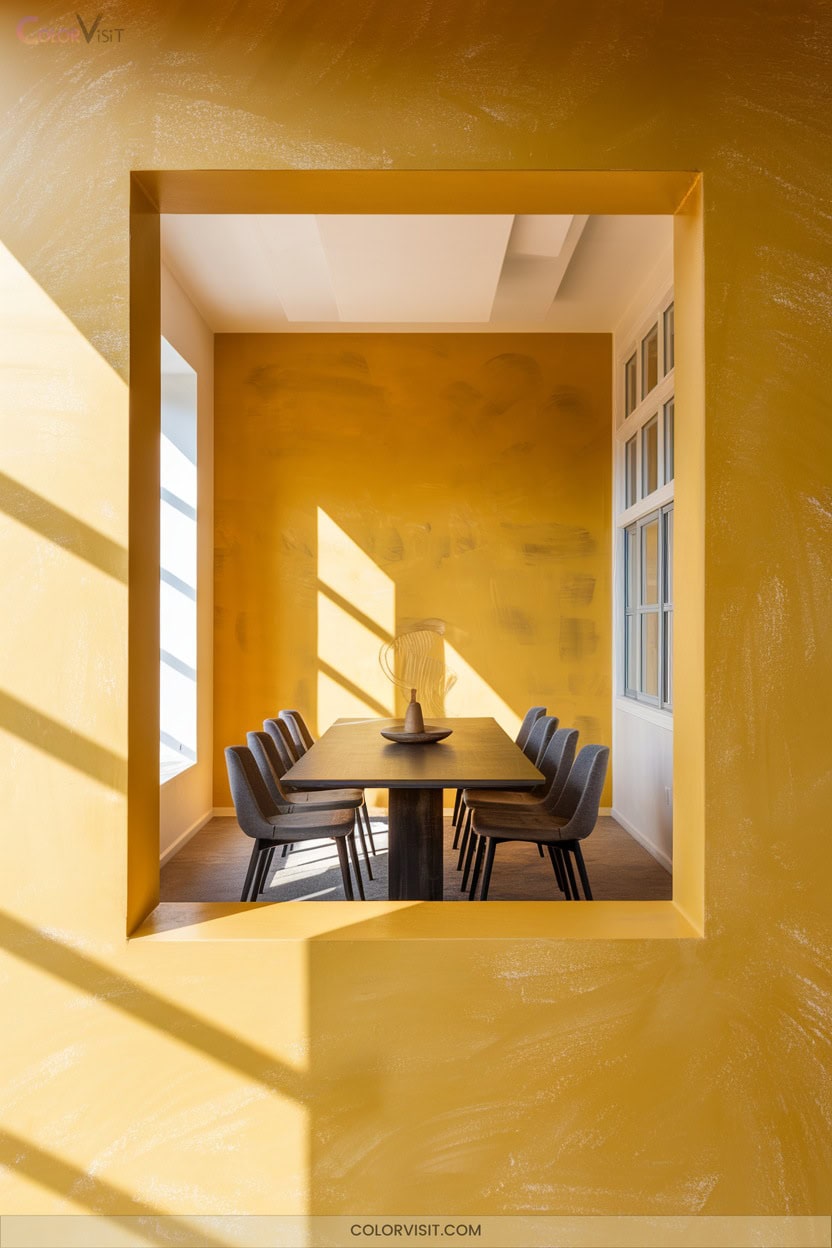
While greige sets a tone of understated elegance, yellow brings undeniable vibrancy and playful energy to the dining room.
Innovative homeowners like you’re embracing shades from the zesty “Plantain Chip” to sophisticated “Pita Bread,” crafting spaces that radiate optimism and creativity.
A yellow palette isn’t just a color choice—it’s a mood enhancer and a design statement.
Elevate your entertaining environment by:
- Pairing Indian Yellow with blue tiles for a modern, eclectic vibe.
- Framing outdoor views with Margarita Yellow to bridge interior and landscape.
- Introducing citrus or honeyed accents to amplify warmth and social appeal.
5. Crisp White for a Gallery-Inspired Dining Room
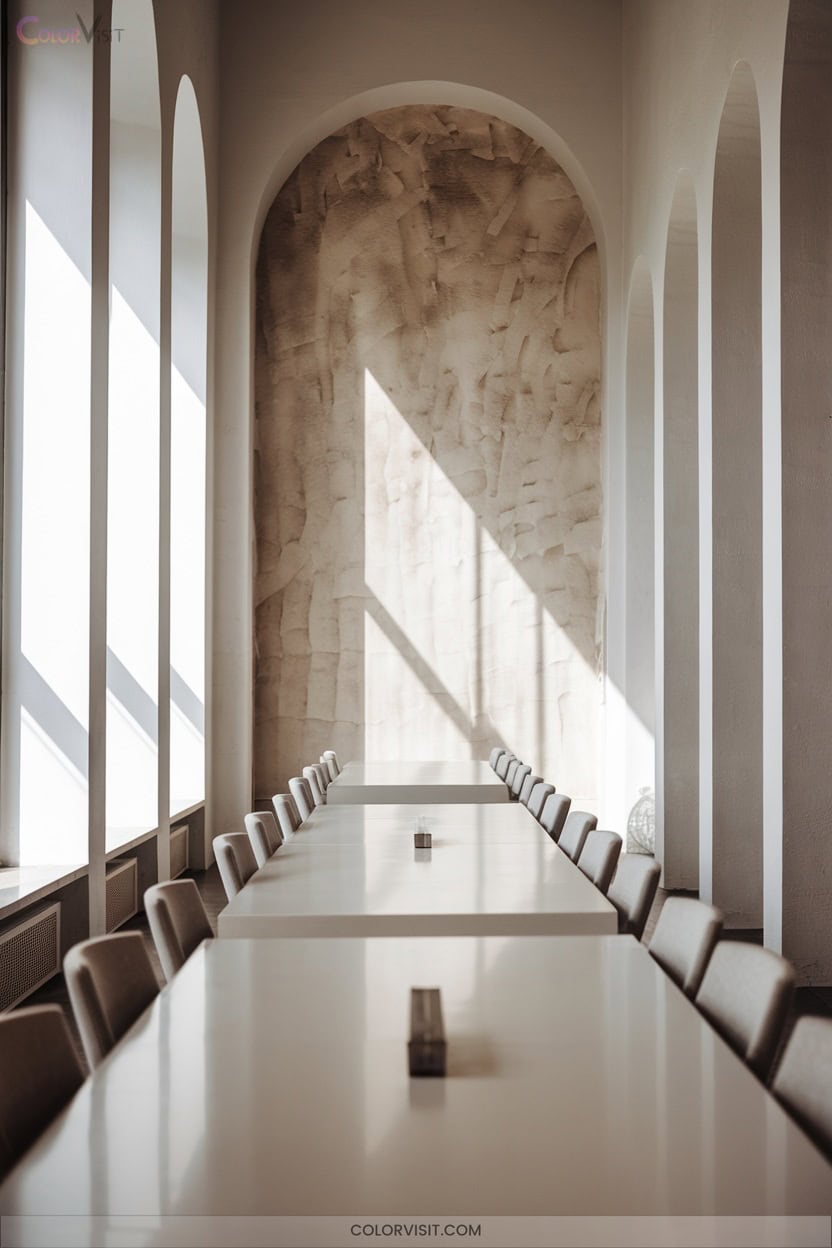
Nothing elevates a dining room’s visual impact like crisp white walls, transforming the space into a luminous, gallery-inspired backdrop for art and conversation.
Opt for cool whites with subtle gray undertones to prevent yellowing under low light, or embrace creamy hues for warmth.
High-reflectivity finishes amplify natural light, while black trim or minimalist furnishings deliver striking contrast.
Add depth using shiplap or textural paneling, and punctuate with metallic accents for modern sophistication.
Pair layered illumination—recessed LEDs with a sculptural chandelier—to spotlight both art and guests.
Complete the look with dark wood floors and monochromatic textiles for dimensional, curated elegance.
6. Sage Green for Rustic Charm
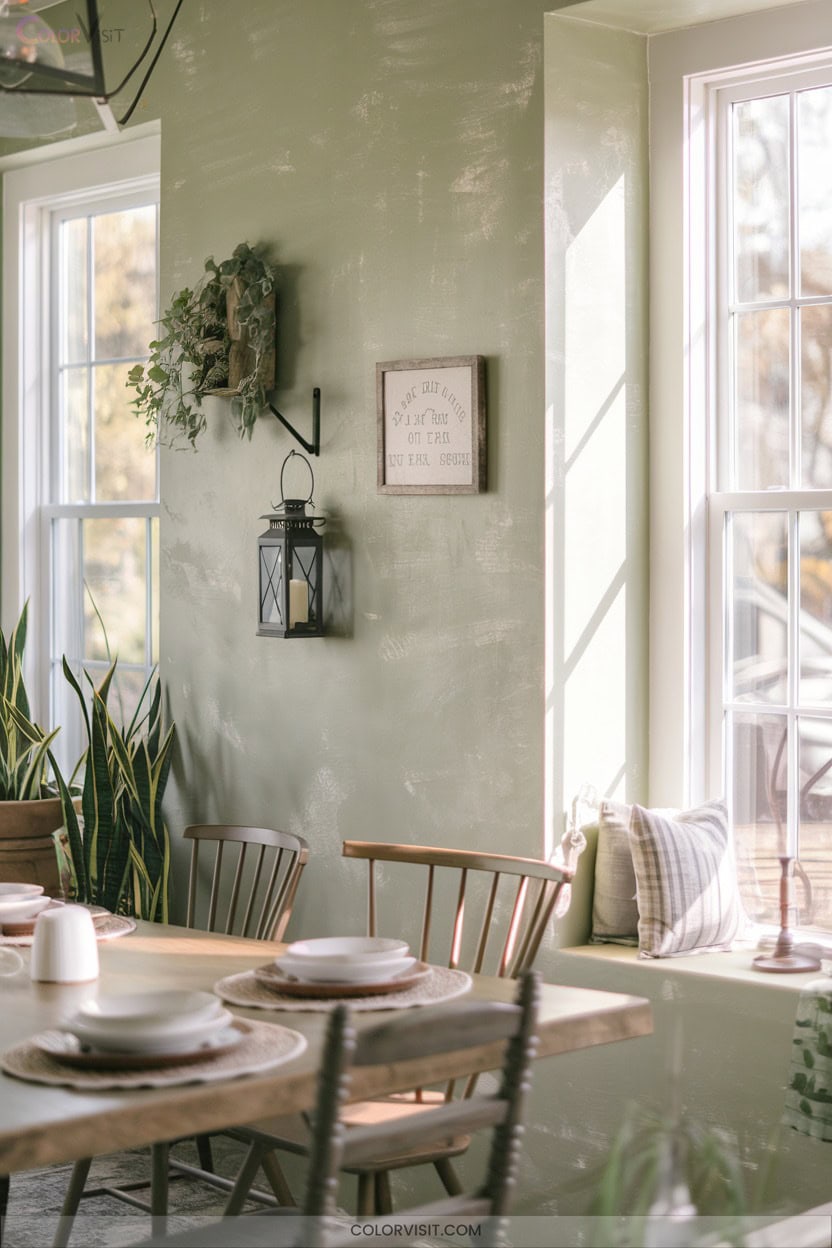
Infuse your dining room with rustic charm by embracing sage green walls—a trending hue that evokes tranquility and a seamless connection to nature.
Sage green walls bring rustic charm and tranquility to your dining room, creating a natural, inviting atmosphere perfect for gathering.
This innovative color harmonizes with organic materials, elevating your space with visual depth and contemporary appeal.
To maximize rustic sophistication, consider these essentials:
- Pair with dark wood tones for a grounded, sophisticated contrast.
- Accent with gold or bronze fixtures to introduce subtle luxury and reflect warm lighting.
- Incorporate earthy-toned artwork and natural textiles for layered texture and authentic ambiance.
Sage green’s versatility lets you experiment with eco-chic, farmhouse, or rustic modern design, ensuring your dining space feels both current and inviting.
7. Natural Wood Tones for Warmth and Texture
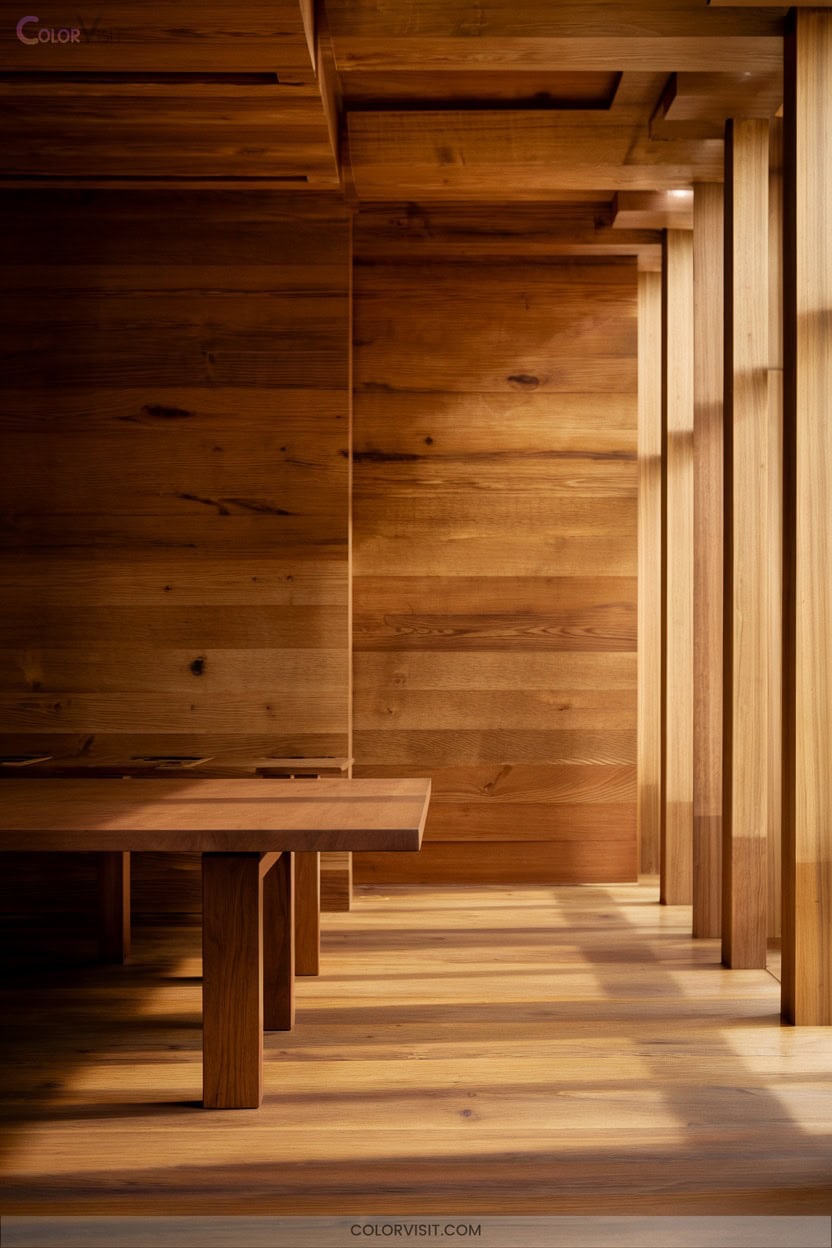
Anchor your dining room’s aesthetic in natural wood tones to instantly add warmth, texture, and timeless appeal.
Integrate light, medium, and dark woods—think oak tables paired with walnut chairs—for intentional contrast and depth.
Leverage the 60/30/10 rule: allocate dominant, secondary, and accent wood tones for visual rhythm.
Align your wall color with undertones—pure white for crisp contrast, warm greens to amplify richness, or slate for drama. Use matte paint finishes to let wood grains stand out.
Layered rugs and metallic accents, like brushed gold, bridge textures, while decluttered layouts and strategic lighting highlight the organic sophistication of your space.
8. Soft Gray for a Soothing Ambiance
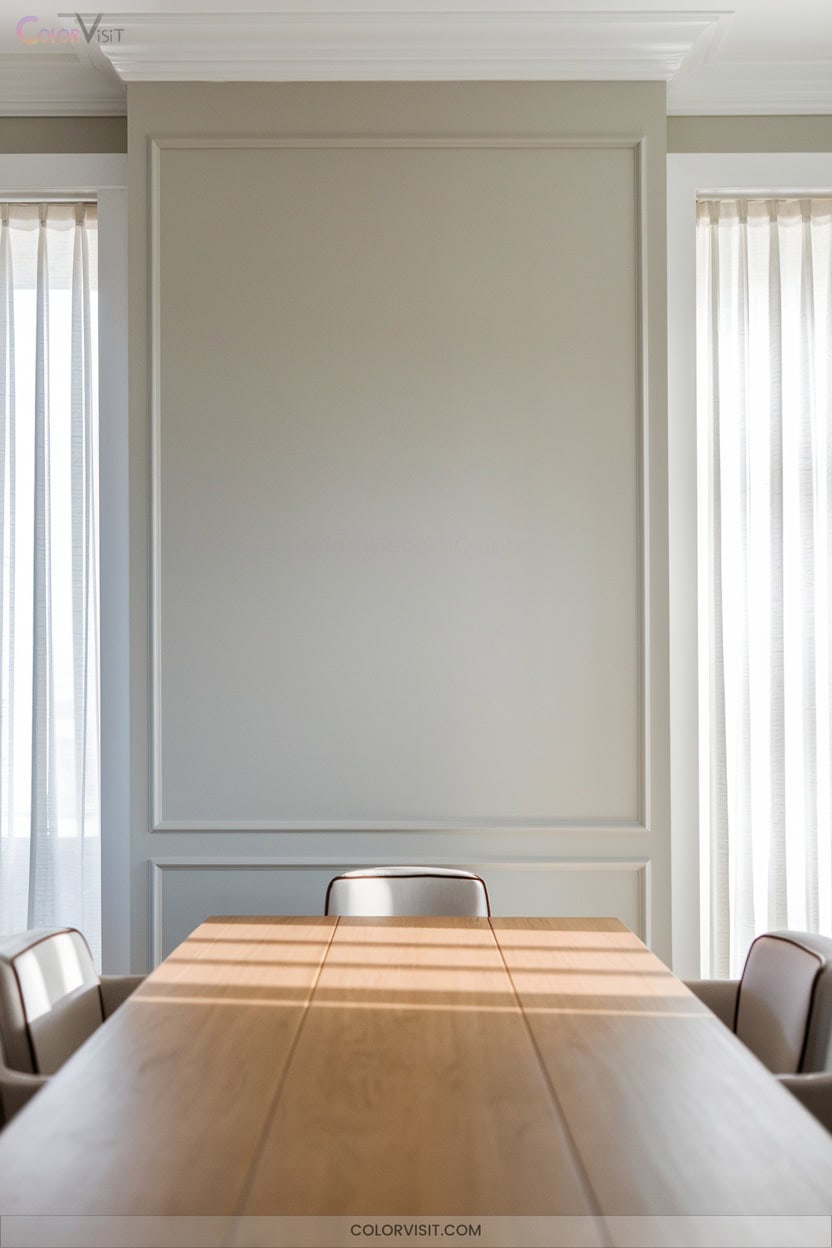
While natural wood tones bring organic warmth and depth to your dining room, soft gray walls introduce a refined sense of calm that’s both modern and timeless.
Select cutting-edge hues like Sherwin-Williams Repose Gray or Benjamin Moore Revere Pewter to cultivate a serene, airy ambiance that spotlights architectural detail and elevates contemporary dining experiences.
Use these expert strategies:
- Pair with white trim and metallic accents for crisp contrast and sophistication.
- Incorporate textured textiles and botanical elements to add depth and vibrancy.
- Experiment with monochromatic layering—vary gray tones across furniture and accessories for visual intrigue.
Embrace gray’s versatility for innovative dining spaces.
9. Terra Cotta Hues for Earthy Appeal
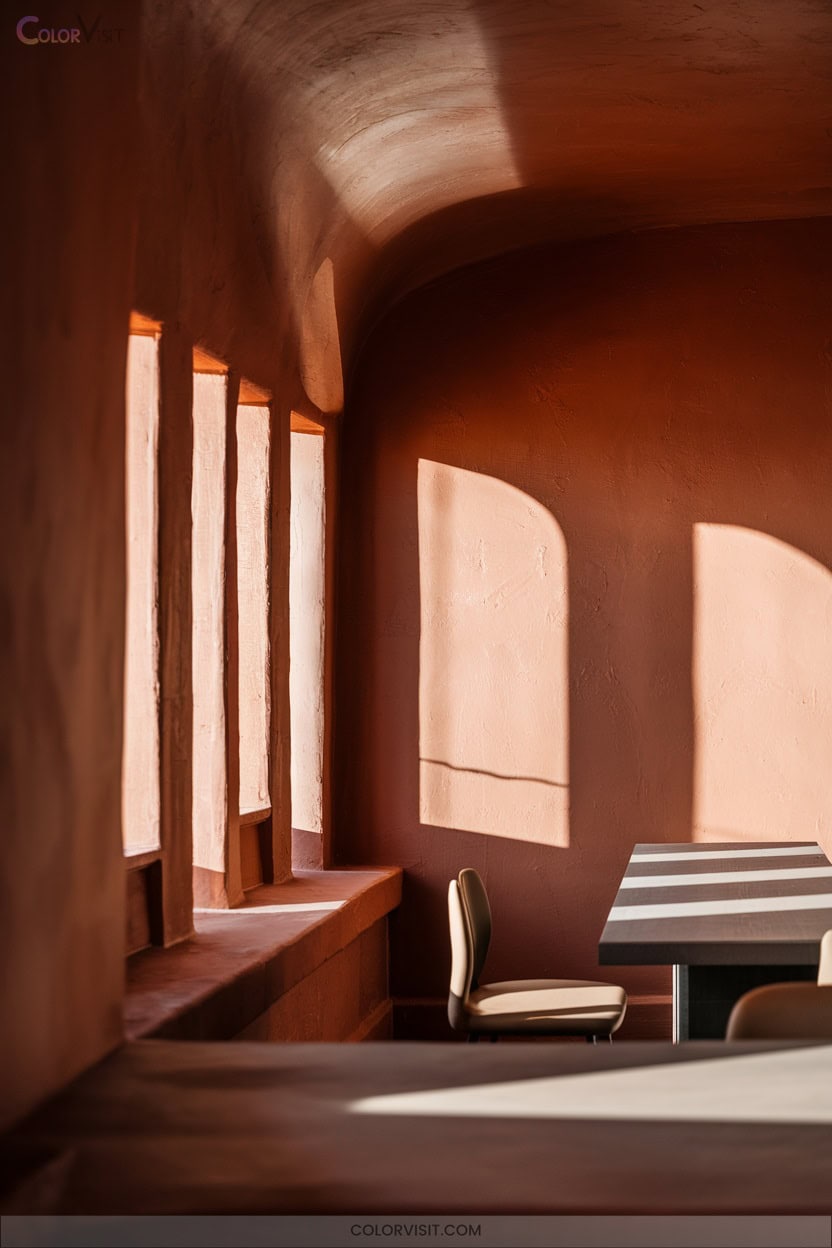
A rich palette of terra cotta hues instantly grounds your dining room with earthy sophistication and Mediterranean flair.
Embrace the spectrum—from vibrant orange to deep Tuscan red—to evoke the warmth of terracotta pottery and sunbaked earthenware. Terra cotta walls create a cozy atmosphere, amplifying appetite and conviviality.
Pair these tones with gold or copper accents for a contemporary edge, or layer in rustic wood and stone for an organic, curated look. Integrate geometric patterns or minimalist details to keep the aesthetic forward-thinking.
Terra cotta’s versatility lets you blend tradition and innovation, ensuring your dining space feels both timeless and fresh.
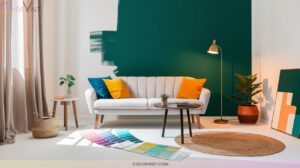
10. Emerald Green for Luxe Entertaining
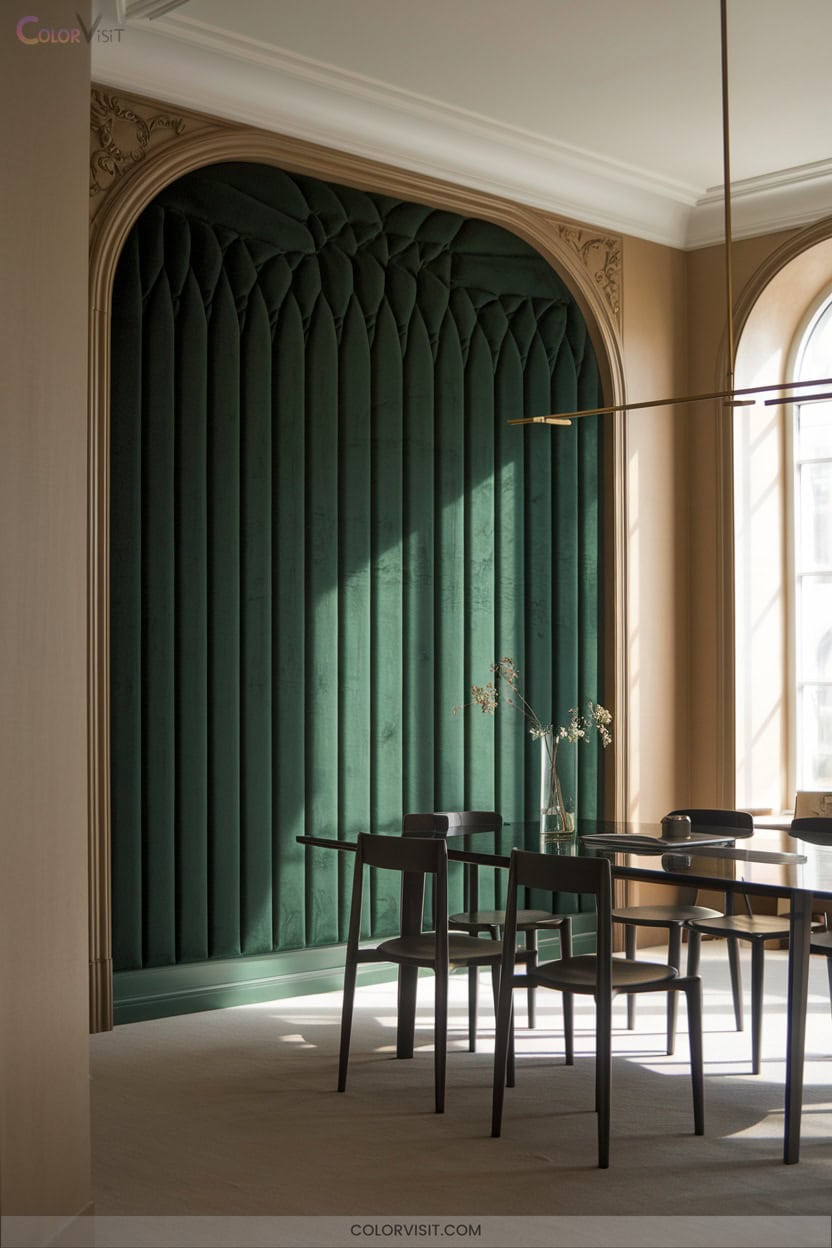
Opulence radiates from emerald green walls, instantly transforming your dining room into a space that feels both refined and inviting.
Emerald green walls infuse your dining room with opulence, creating a refined and welcoming atmosphere for memorable gatherings.
This trend-forward hue delivers a rich, dramatic backdrop, perfect for those who crave innovation in entertaining spaces.
Elevate the luxe atmosphere by integrating plush textures, metallic accents, and curated decor.
Consider these expert strategies:
- Paint all four walls in emerald green for maximalist impact—balance with crisp white trims and ceilings.
- Introduce velvet emerald chairs or a statement sideboard for tactile depth.
- Accentuate with gold or brass accessories to amplify warmth and visual intrigue, fostering an unforgettable dining experience.
11. Deep Blues for Sophisticated Gatherings
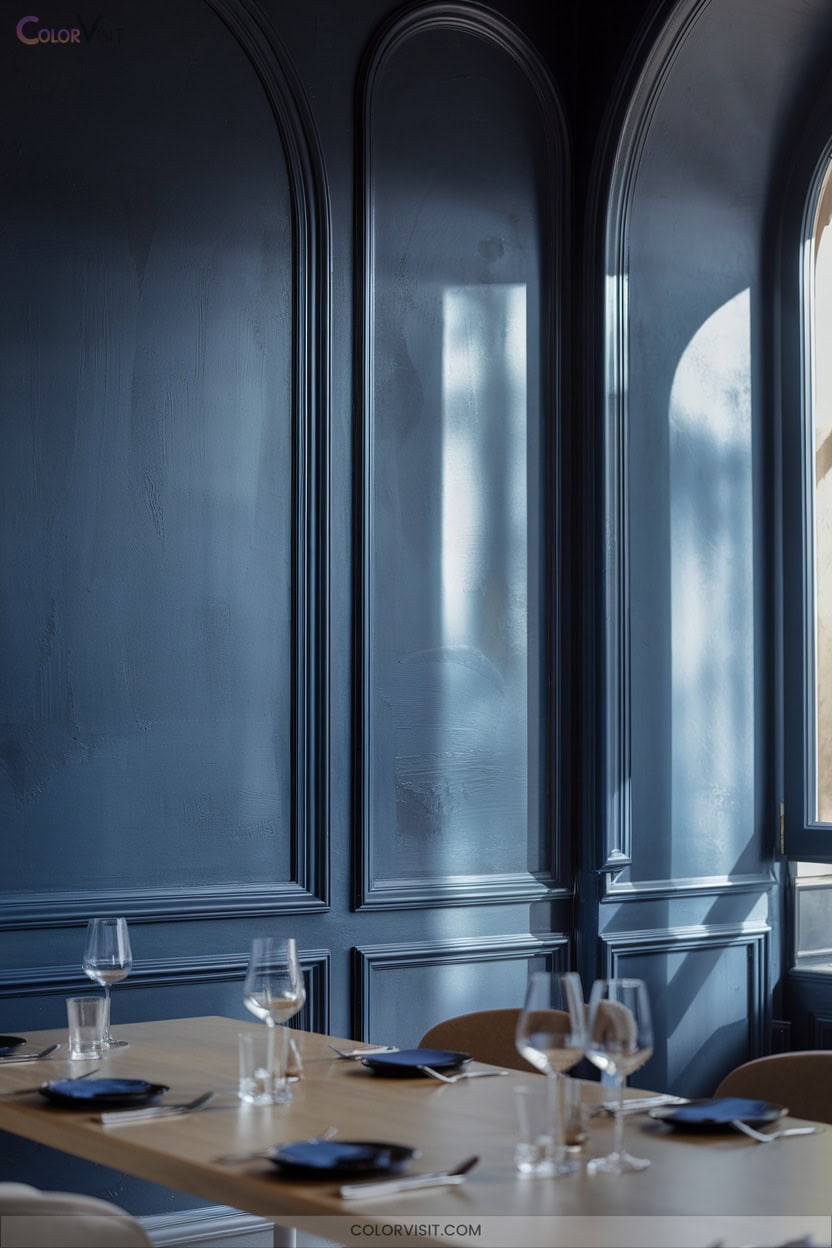
Atmosphere reigns supreme when you envelop your dining room in deep blues.
Opt for shades like Stiffkey Blue or Lulworth Blue No.89 to establish an opulent, dramatic canvas—perfect for sophisticated gatherings.
Harness the interplay of candlelight on bold blue walls to amplify vibrancy and depth. Pair these hues with metallic accents and crisp neutrals for a balanced, modern aesthetic.
Integrate lighter ceilings, airy trims, and textured rugs to prevent heaviness. Elevate with sculptural pendant lighting, reflective surfaces, and bold artwork.
Deep blues invite expressive design, seamlessly blending tradition and innovation for a dining space that feels both exclusive and current.
12. Rich Berry Shades for Cozy Dinners
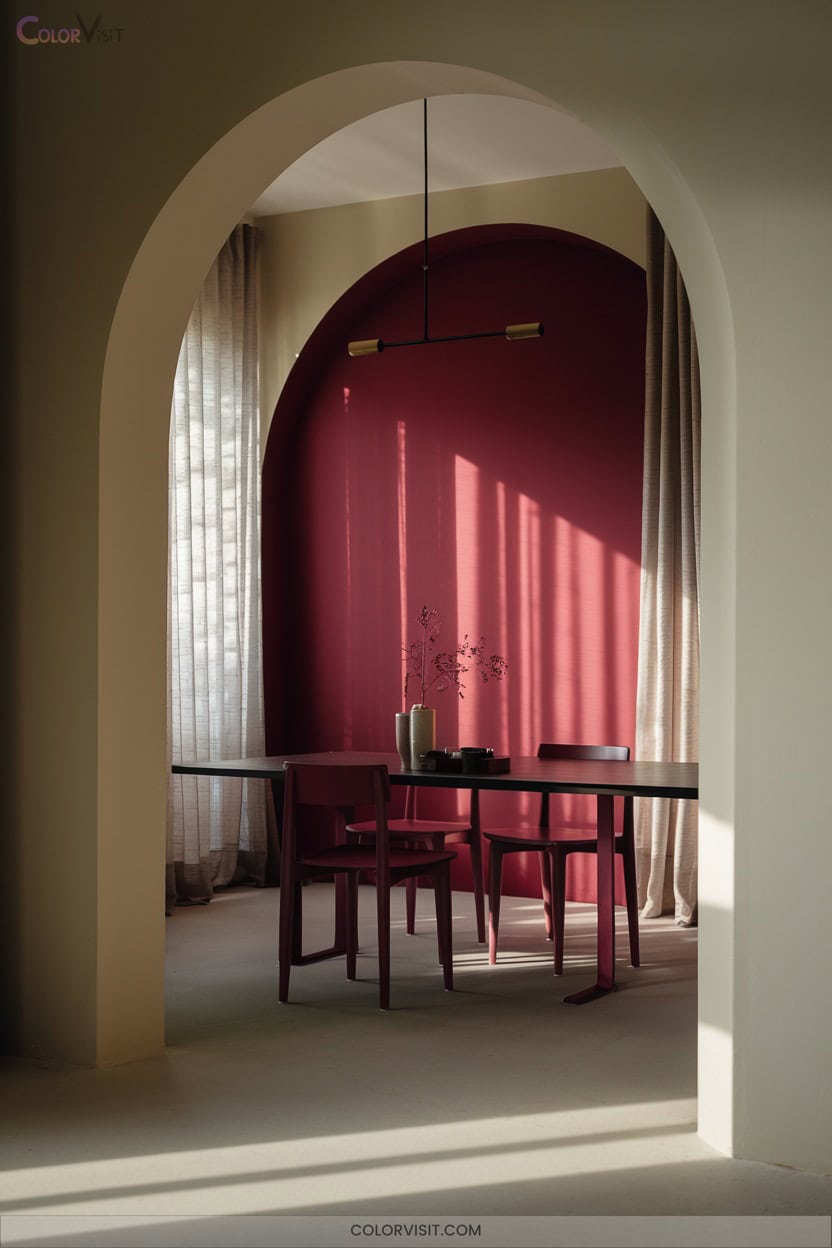
While deep blues evoke refined energy, rich berry shades introduce a different kind of indulgence—one rooted in warmth and intimacy.
Imagine walls dressed in boysenberry or dusty violet, enveloping your dining space with plush, opulent hues that naturally stimulate appetite and conversation.
For the innovative host, berry tones offer a sophisticated backdrop that feels both grounded and decadent.
Enhance the effect by:
- Pairing with warm neutrals and metallic accents for contrast.
- Layering velvet or suede textures to amplify tactile richness.
- Using accent walls or strategic color blocking to balance intensity and highlight architectural details.
13. Dark Charcoal for a Moody, Intimate Setting
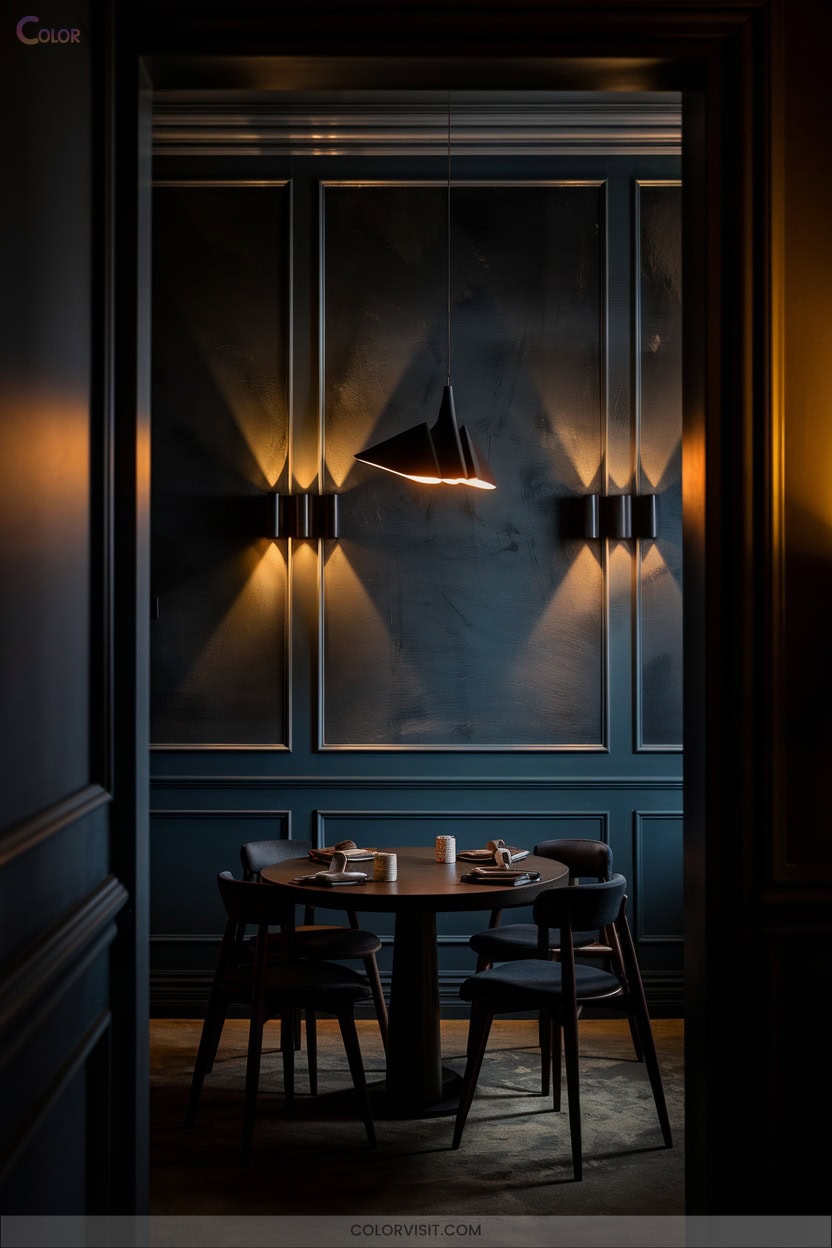
When you want your dining room to exude a moody, intimate vibe, dark charcoal walls deliver both drama and refined sophistication.
This on-trend hue creates a cocooning effect, visually compressing large spaces for a cozier ambiance.
Leverage contrast—think white trim, sculptural lighting, or metallic accents—for dynamic visual interplay.
Integrate textured elements like leather chairs, geometric rugs, or wood finishes to heighten sensory depth.
Charcoal pairs seamlessly with farmhouse or modern aesthetics, serving as an ideal backdrop for bold art, dark green botanicals, or backlit cabinetry.
Master ambient lighting to sculpt a romantic, conversational setting that’s thoroughly contemporary.
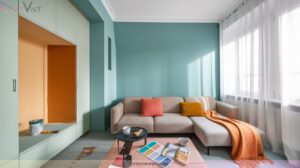
14. Pastel Shades for an Eclectic Twist
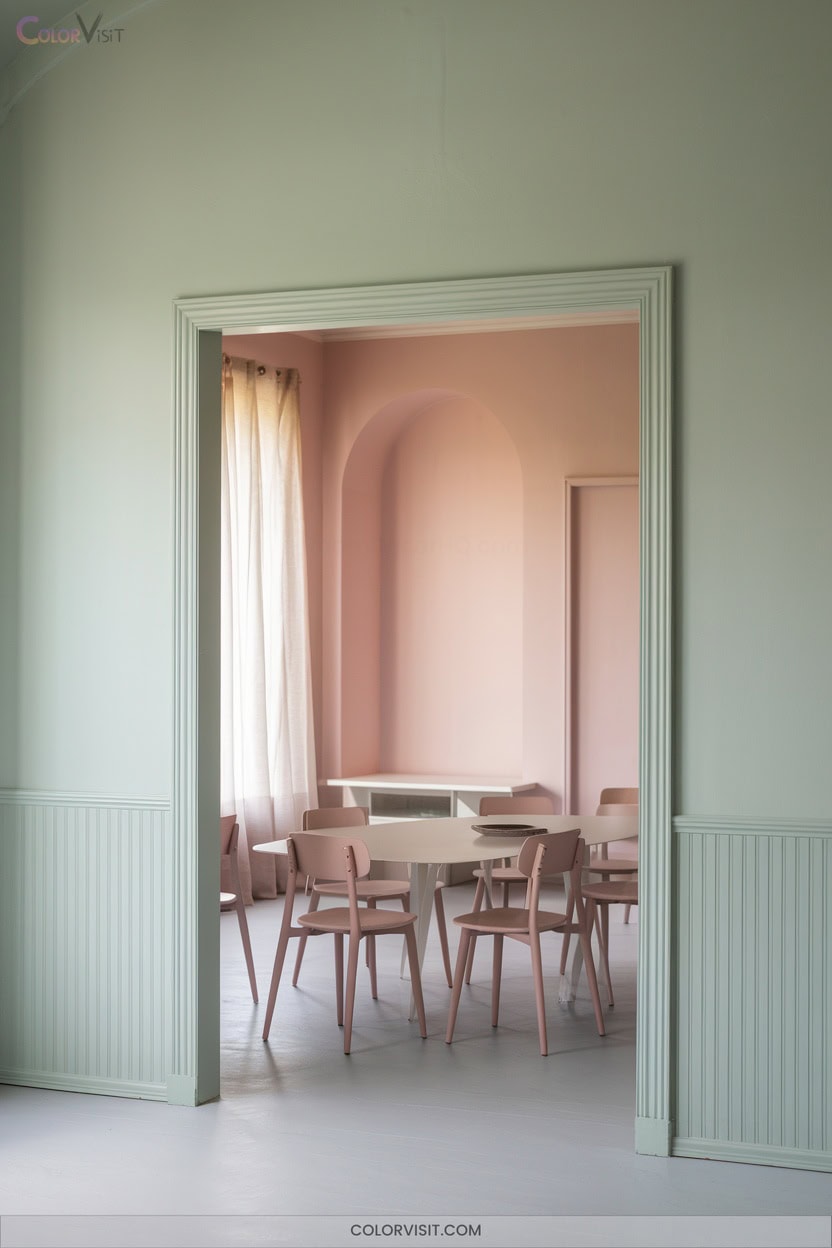
If bold charcoal makes your dining room feel intimate, pastel shades offer an entirely different kind of visual intrigue—an eclectic twist that’s bright, welcoming, and full of personality.
Embrace expert color blocking with lavender or mint green accent walls, or pair mismatched pastel chairs for that curated, playful edge.
Pastel tones aren’t just stylish—they’re psychologically uplifting, transforming your dining space into a haven for relaxed socializing and vibrant entertaining.
For a truly innovative dining environment:
- Layer pastel rugs to reinforce your color scheme.
- Dilute pastels with crisp neutrals for brightness.
- Frame soft walls with white trim for definition.
15. Metallic Accents for a Touch of Glam
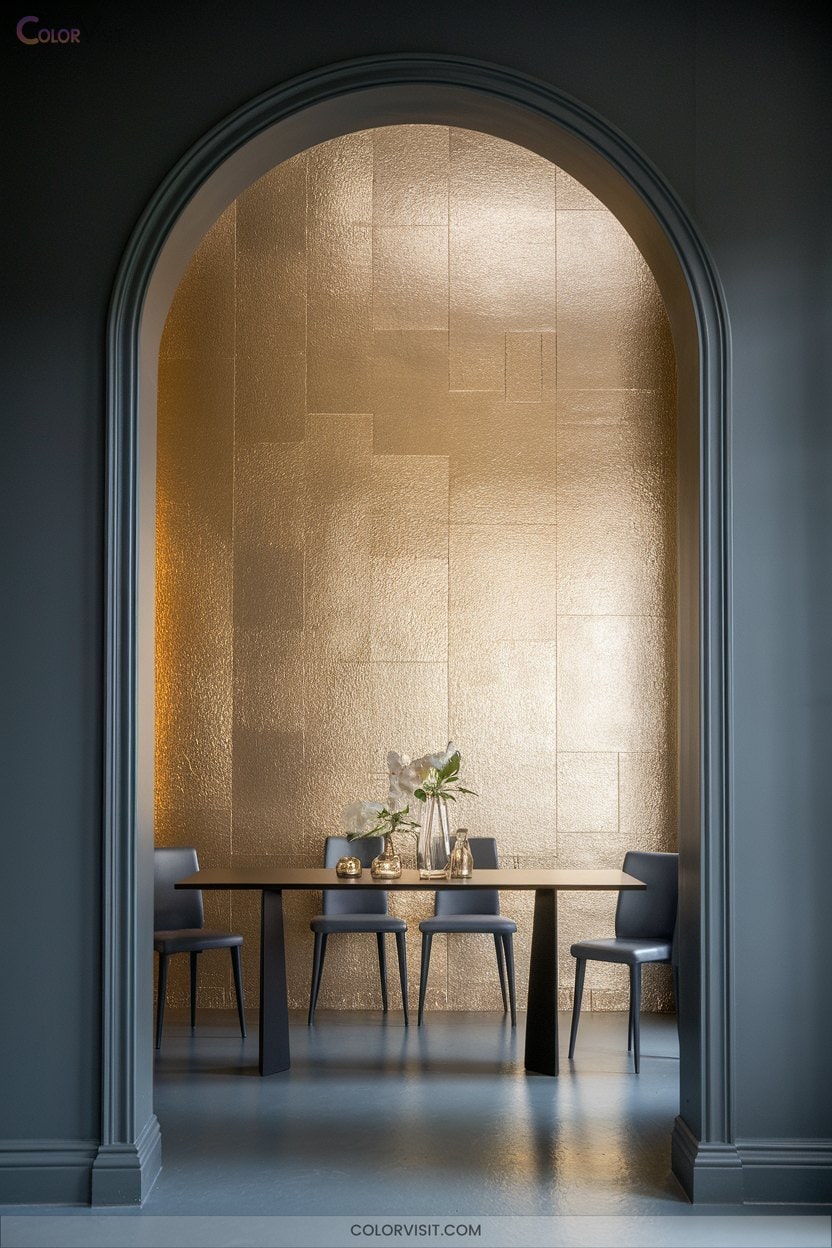
A single metallic accent can instantly elevate your dining room, infusing the space with contemporary glamour and visual drama.
Opt for gilded wallpaper or geometric metallic paint to create a luminous backdrop. A sculptural gold chandelier or chrome pendant lights add architectural focus and amplify ambient light.
Gilded wallpaper or metallic paint sets a radiant scene, while a gold chandelier or chrome lights add dramatic, luminous flair.
Choose accent furniture with metallic legs or mirrored surfaces for modern sophistication. Maintain balance with a matte or neutral palette to prevent visual overload.
Mix metals—rose gold, copper, silver—for an on-trend, curated effect. Integrate metallic art, hardware, or tableware for subtle shimmer.
These strategic touches craft a chic, inviting atmosphere that dazzles guests.
16. Juxtaposed Colors for Visual Interest
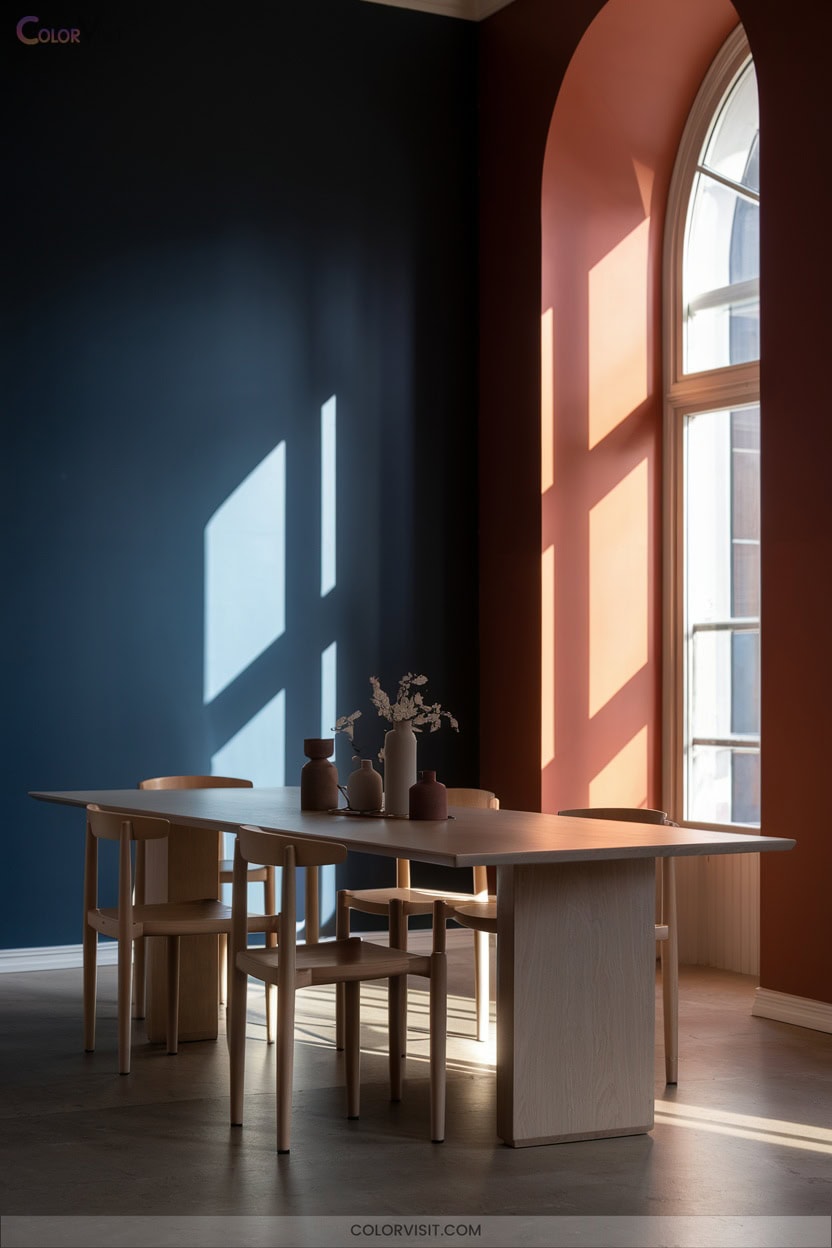
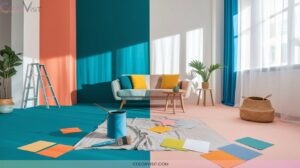
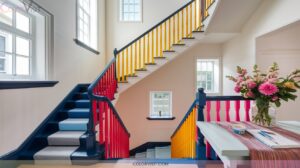
Curious how to make your dining room walls truly stand out? Juxtaposed colors inject instant visual intrigue, transforming your space into an avant-garde canvas.
By strategically pairing bold and neutral elements, or blending vibrant hues with soft pastels, you’ll create dynamic tension that feels fresh and inviting.
Consider these expert-approved strategies:
- Merge warm oranges with cool blues for a sophisticated chromatic balance.
- Experiment with a monochromatic palette—layer navy and sky blue for harmonious depth.
- Use a black-and-white base, then punctuate with vibrant accents like yellow for contemporary flair.
Innovative color juxtapositions signal daring taste and create memorable entertaining experiences.
Frequently Asked Questions
Which Dining Room Colors Make Small Spaces Appear Larger?
You’ll maximize perceived space by choosing luminous neutrals, creamy whites, or pale greiges with subtle undertones. Incorporate barely-there blues or dusty pastels to amplify light. Strategically layer accent walls in charcoal or deep teal for dimensional, cutting-edge visual expansion.
How Do I Coordinate Dining Room Wall Colors With Adjacent Rooms?
You coordinate dining room wall colors with adjacent rooms by leveraging the color wheel, establishing a neutral base, and layering bold accents. Prioritize visual flow, integrate complementary furnishings, and embrace blending color schemes for contemporary, cohesive aesthetics throughout your space.
Are Certain Wall Colors Better for Increasing Appetite?
Imagine your dining room as a culinary stage—paint it with vibrant reds or sunlit yellows, and you’ll set the spotlight on appetite. Studies show warm hues can amplify guests’ hunger, making each meal feel like an event.
What Paint Finishes Work Best in Dining Rooms?
You’ll want to choose eggshell or satin finishes for dining rooms—they balance contemporary sheen, visual warmth, and easy maintenance. For high-traffic spaces, opt for semi-gloss to maximize durability and highlight design details, staying ahead of design trends.
How Can Lighting Affect the Appearance of Wall Colors?
Lighting transforms wall colors dramatically—you’ll see hues shift in intensity and undertones as sunlight changes or LEDs adjust temperature. Embrace dynamic, adaptive palettes and experiment with samples under varied lighting to achieve cutting-edge, visually stunning results.
Conclusion
Delve into daring design decisions and dress your dining room with colors that captivate, charm, and create conversation.
Whether you’re wooed by warm reds, mesmerized by moody charcoals, or enchanted by ethereal pastels, today’s trends invite you to infuse individuality and intrigue.
Let layered luminosity and rich, resonant hues transform your entertaining space into a stunning stage for memorable meals. Don’t just decorate—define your dining experience with walls that wow and welcome every guest.