9 Best Display Color Calibrators for 2026 (Perfect Hue Every Time)
You’ll waste hundreds of hours editing photos or videos on an uncalibrated display. For 2026, trust tools like the Datacolor SpyderExpress for quick setups, the SpyderPro for 12,000-nit HDR precision, or Calibrite’s Display Plus HL with its high-luminance sensor.
Choose Calibrite Photo Kit for camera-to-screen accuracy or ColorChecker Studio for pro-grade profiling. Match your device type, brightness needs, and workflow—each pick guarantees flawless color.
Pick right, and see exactly how close to perfect your screen can get.

Quick Overview
- Choose calibrators with high-nit support (up to 12,000 nits) for accurate HDR and Apple XDR display calibration.
- Opt for devices with ambient light sensors and auto-recalibration for consistent color accuracy over time.
- Use tools offering 3D LUT export and ICC profiling for cross-device color consistency and professional workflows.
- Select models with user-friendly software, preset modes, and one-click calibration for fast, reliable results.
- Ensure compatibility with OLED, mini-LED, and projection systems for versatile, future-proof color precision.
| Datacolor SpyderExpress |  | Best Entry-Level Pick | Display Compatibility: LED, mini-LED, Liquid Retina XDR | Max Brightness Support (nits): Not specified | Software Features: Upgradeable software, ambient adjustment, multi-display, DevicePreview | VIEW LATEST PRICE | Read Our Analysis |
| Datacolor Spyder Monitor Calibrator for Creators | 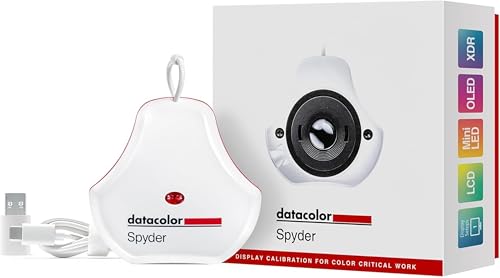 | Best for Creators | Display Compatibility: OLED, mini-LED, LED, Liquid Retina XDR | Max Brightness Support (nits): Not specified | Software Features: Ambient light adjustment, DevicePreview Beta, auto-recalibration | VIEW LATEST PRICE | Read Our Analysis |
| Calibrite Display 123 Colorimeter (CCDIS123) |  | Budget-Friendly Choice | Display Compatibility: LED, mini-LED, OLED | Max Brightness Support (nits): Not specified | Software Features: Easy 1-2-3 workflow, supports two displays | VIEW LATEST PRICE | Read Our Analysis |
| Calibrite Display Plus HL (CCDIS3PLHL) |  | High-Luminance Leader | Display Compatibility: LCD, mini-LED, OLED, Apple XDR | Max Brightness Support (nits): 10,000 nits | Software Features: Calibrite PROFILER (custom white point, gamma, validation, uniformity) | VIEW LATEST PRICE | Read Our Analysis |
| Datacolor SpyderPro Monitor Calibration (3D LUT 12000nits) |  | Professional Grade | Display Compatibility: OLED, Mini-LED, QD-OLED, Apple XDR | Max Brightness Support (nits): 12,000 nits | Software Features: 3D LUT export, Device Preview Plus, C2PA content credentials | VIEW LATEST PRICE | Read Our Analysis |
| Datacolor Spyder X Pro Monitor Calibrator |  | Best For Beginners | Display Compatibility: Multiple monitors (OLED, LED, LCD) | Max Brightness Support (nits): Not specified | Software Features: SpyderProof evaluation, predefined targets, profile switching | VIEW LATEST PRICE | Read Our Analysis |
| Calibrite Photo Kit – Display Pro HL and Passport Photo 2 (CCHL-PP2) |  | Complete Studio Kit | Display Compatibility: LCD, mini-LED, OLED, Apple XDR | Max Brightness Support (nits): 3,000 nits | Software Features: Calibrite Profiler + camera calibration software | VIEW LATEST PRICE | Read Our Analysis |
| Calibrite ColorChecker Display Pro (CCDIS3) |  | Most Accurate | Display Compatibility: Multiple display types | Max Brightness Support (nits): Not specified | Software Features: Works with ccProfiler and i1Profiler | VIEW LATEST PRICE | Read Our Analysis |
| Calibrite ColorChecker Studio (CCSTUDIO) | 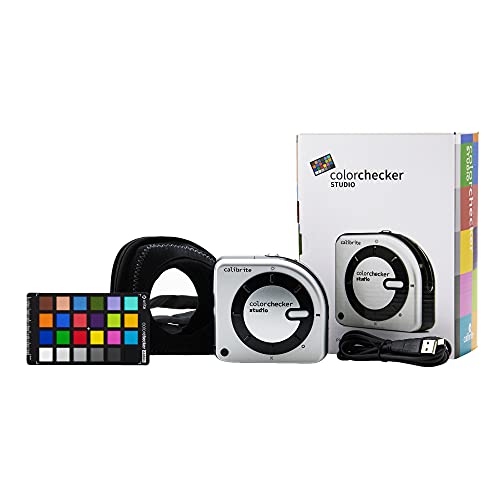 | Most Versatile | Display Compatibility: Monitor, projector, scanner | Max Brightness Support (nits): Not specified | Software Features: ccStudio (i1Studio) software, Intelligent Iterative Profiling | VIEW LATEST PRICE | Read Our Analysis |
More Details on Our Top Picks
Datacolor SpyderExpress
If you’re a photo editor, graphic designer, or content creator who needs accurate, lifelike color across digital and print, the Datacolor SpyderExpress is your fastest route to professional calibration. You plug in, download the software, and follow three simple steps to get started.
It’s 3x faster than most entry-level tools, delivering edit-ready color in about 90 seconds. You can calibrate up to three displays, including MacBook M4 mini-LED and Liquid Retina XDR screens—no other tool does that yet.
Upgrade your software to enable OLED support, ambient light adjustment, and DevicePreview. You’ll save profiles, reapply them easily, and keep skin tones, shadows, and highlights true.- Display Compatibility:LED, mini-LED, Liquid Retina XDR
- Max Brightness Support (nits):Not specified
- Software Features:Upgradeable software, ambient adjustment, multi-display, DevicePreview
- Calibration Speed:~90 seconds
- Supported Displays Count:Up to 3
- Ambient Light Features:Upgradeable ambient light adjustment
- Additional Feature:Upgradeable software no hardware
- Additional Feature:Recalibrate before editing reminder
- Additional Feature:Save profiles for reuse
Datacolor Spyder Monitor Calibrator for Creators
You’re a graphic designer, photographer, or content creator who needs true-to-life colors—right from your first edit. The Datacolor Spyder Monitor Calibrator for Creators delivers just that.
It works across OLED, mini-LED, and Apple Liquid Retina XDR displays, ensuring accurate color on almost any screen. You’ll calibrate in about 90 seconds, with an ambient light sensor adjusting brightness based on your workspace.
Use DevicePreview™ Beta to see how images look on other devices. The software’s intuitive—preset modes for beginners, full customization for pros.
It even alerts or auto-recalibrates when light changes. No more color surprises.
Just fast, confident, professional results every time.- Display Compatibility:OLED, mini-LED, LED, Liquid Retina XDR
- Max Brightness Support (nits):Not specified
- Software Features:Ambient light adjustment, DevicePreview Beta, auto-recalibration
- Calibration Speed:~90 seconds
- Supported Displays Count:Multiple (unspecified)
- Ambient Light Features:Ambient light sensor and auto-adjustment
- Additional Feature:Pre-set option for beginners
- Additional Feature:Automatic recalibration based on light
- Additional Feature:DevicePreview TM Beta support
Calibrite Display 123 Colorimeter (CCDIS123)
The Calibrite Display 123 Colorimeter (CCDIS123) is your go-to tool if you want accurate colors without the hassle—perfect for photographers, designers, gamers, and everyday users who demand color precision. You’ll love its simple 1-2-3 workflow that gets you calibrated fast.
It supports two displays, so you can match your main and secondary screens effortlessly. Choose between Native or Photo brightness modes depending on your needs.
Whether you’re editing photos, gaming, or picking paint colors for your living room, this tool guarantees what you see is what you get. It’s the smart, no-fuss choice for anyone who values true-to-life color—all in a compact, reliable design.
See more product details for deeper insights.- Display Compatibility:LED, mini-LED, OLED
- Max Brightness Support (nits):Not specified
- Software Features:Easy 1-2-3 workflow, supports two displays
- Calibration Speed:Not specified
- Supported Displays Count:2
- Ambient Light Features:Not specified
- Additional Feature:Native or Photo brightness select
- Additional Feature:Ideal for home decorating
- Additional Feature:1-2-3 workflow simplicity
Calibrite Display Plus HL (CCDIS3PLHL)
You’ll consistently get the most accurate results with the Calibrite Display Plus HL (CCDIS3PLHL) if you work on super bright displays like Apple XDR panels, where precision matters most for video editing, high-end photo work, or design. It’s the only calibrator that measures up to 10,000 nits, thanks to its advanced HL sensor.
You’ll calibrate LCD, mini-LED, and OLED displays with unmatched accuracy. The included Calibrite PROFILER software gives you full control over white point, gamma, and validation.
It connects via USB-C, works on macOS and Windows, and comes with a travel pouch. You’re getting professional-grade performance in a smarter, eco-friendly package.- Display Compatibility:LCD, mini-LED, OLED, Apple XDR
- Max Brightness Support (nits):10,000 nits
- Software Features:Calibrite PROFILER (custom white point, gamma, validation, uniformity)
- Calibration Speed:Not specified
- Supported Displays Count:Not specified
- Ambient Light Features:Not specified
- Additional Feature:Measures up to 10,000 nits
- Additional Feature:Recyclable compact packaging
- Additional Feature:Includes travel storage pouch
Datacolor SpyderPro Monitor Calibration (3D LUT 12000nits)
When you’re working with high dynamic range displays like QD-OLED, OLED, Mini-LED, or Apple XDR, and need precise color accuracy up to 12,000 nits, the Datacolor SpyderPro Monitor Calibration tool is your best choice. It delivers accurate 3D LUT export for seamless color translation across devices and workflows.
You’ll maintain consistency from capture to final output. Use Device Preview Plus for side-by-side comparisons, pixel sampling, and batch processing.
It supports Content Credentials (C2PA), so you can export photos with verified creator info and edit history. The integrated light meter, or any LUX-capable meter, captures ambient lighting to fine-tune calibration.
You’re covered for professional, future-proof color accuracy.- Display Compatibility:OLED, Mini-LED, QD-OLED, Apple XDR
- Max Brightness Support (nits):12,000 nits
- Software Features:3D LUT export, Device Preview Plus, C2PA content credentials
- Calibration Speed:Not specified
- Supported Displays Count:Not specified
- Ambient Light Features:Ambient light measurement (via LightColor Meter)
- Additional Feature:12,000 nits calibration support
- Additional Feature:3D LUT export capability
- Additional Feature:Content Credentials (C2PA) export
Datacolor Spyder X Pro Monitor Calibrator
Get perfect color accuracy with the Datacolor Spyder X Pro Monitor Calibrator, ideal for photographers and designers who need reliable, professional-grade results without prior calibration experience. You’ll love its lens-based color engine—it delivers precise color, shadow detail, and white balance across multiple monitors.
Ambient light monitoring adjusts profiles automatically, while one-click calibration takes just one to two minutes. The intuitive software guides you through setup, supports 12 preset targets, and lets you compare results with your own images using SpyderProof.
You can easily calibrate multiple displays and switch profiles based on your environment—no expertise needed. It’s fast, smart, and built for real-world accuracy.- Display Compatibility:Multiple monitors (OLED, LED, LCD)
- Max Brightness Support (nits):Not specified
- Software Features:SpyderProof evaluation, predefined targets, profile switching
- Calibration Speed:1–2 minutes
- Supported Displays Count:Multiple laptops/desktops
- Ambient Light Features:Room-light monitoring and profile adjustment
- Additional Feature:SpyderProof before-and-after evaluation
- Additional Feature:12 predefined calibration targets
- Additional Feature:Single-click wizard workflow
Calibrite Photo Kit – Display Pro HL and Passport Photo 2 (CCHL-PP2)
Photographers and visual artists who demand precise color accuracy across both display and capture workflows will find the Calibrite Photo Kit – Display Pro HL and Passport Photo 2 (CCHL-PP2) an essential tool. You get the Display Pro HL colorimeter, accurate up to 3,000 nits and optimized for OLED, mini-LED, and Apple XDR displays.
The included ColorChecker Passport Photo 2 gives you 24 patches for white, gray, and enhancement targets, ensuring correct color in any light. You’ll use Calibrite Profiler for custom ICC profiles and camera calibration software to match devices.
It’s future-proof, works on Mac and Windows, and ranks #14 in calibration charts—backed by a solid 4.2-star rating from pros like you.- Display Compatibility:LCD, mini-LED, OLED, Apple XDR
- Max Brightness Support (nits):3,000 nits
- Software Features:Calibrite Profiler + camera calibration software
- Calibration Speed:Not specified
- Supported Displays Count:Not specified
- Ambient Light Features:Not specified
- Additional Feature:Includes ColorChecker Passport Photo 2
- Additional Feature:3,000 nits HL sensor
- Additional Feature:Camera calibration software included
Calibrite ColorChecker Display Pro (CCDIS3)
You demand precision across multiple display types, and the Calibrite ColorChecker Display Pro (CCDIS3) delivers consistent, repeatable color profiling no matter the screen. Powered by X-Rite, it works seamlessly with i1Profiler and ccProfiler for powerful, easy-to-use calibration.
Its optical design guarantees high repeatability on the same display, so you get reliable results every time. The rotatable diffuser arm doubles as a projector stand, ambient light tool, and lens cover, while the integrated tripod mount lets you profile projectors in larger spaces.
You’ll save time and boost accuracy across monitors, TVs, and projection systems—all with one compact, versatile device.- Display Compatibility:Multiple display types
- Max Brightness Support (nits):Not specified
- Software Features:Works with ccProfiler and i1Profiler
- Calibration Speed:Not specified
- Supported Displays Count:Multiple
- Ambient Light Features:Ambient light measurement tool (diffuser arm)
- Additional Feature:Rotatable diffuser doubles as stand
- Additional Feature:Integrated tripod mount included
- Additional Feature:Works with i1Profiler software
Calibrite ColorChecker Studio (CCSTUDIO)
If you demand lab-grade color accuracy across every device in your workflow, the Calibrite ColorChecker Studio (CCSTUDIO) delivers—with intelligent iterative profiling that adapts to each unique display for flawless calibration. You’ll use it to profile monitors, projectors, scanners, and printers with ease.
It measures ambient light to set ideal display brightness for print matching. Powered by X-Rite and a 12V battery, it includes the ColorChecker Classic Mini and camera calibration software.
Replacing the i1Studio, this compact tool (5 x 4 x 2 inches, 14.5 oz) has earned a 4.0-star rating from 75 reviews and ranks #15 in calibration charts since its June 2021 launch.- Display Compatibility:Monitor, projector, scanner
- Max Brightness Support (nits):Not specified
- Software Features:ccStudio (i1Studio) software, Intelligent Iterative Profiling
- Calibration Speed:Not specified
- Supported Displays Count:Monitor and projector
- Ambient Light Features:Ambient Light Measurement for print matching
- Additional Feature:Printer/paper profiling support
- Additional Feature:Intelligent Iterative Profiling technology
- Additional Feature:Includes Classic Mini target
Factors to Consider When Choosing Display Color Calibrators
You need to check if your display is compatible with the calibrator, since not every device works with all monitors or operating systems. Look at how the sensor technology and brightness support affect accuracy—your workflow depends on getting true-to-life colors.
Also, don’t overlook software features, as they can make calibration faster, more precise, or easier to manage over time.
Display Compatibility
While display technology varies widely, matching your calibrator to your screen type—whether LCD, LED, OLED, mini-LED, QD-OLED, or high-brightness XDR—is essential, as sensors and measurement ranges differ substantially. You need to confirm your device works with your specific panels, or you’ll risk inaccurate color readings.
Check that it supports your operating system and connects properly via USB or USB-C, including driver compatibility. If you run dual or triple monitors, make sure the calibrator handles multi-display setups seamlessly.
Don’t skip ambient light sensing—built-in or via software—since it helps maintain consistent color under changing lighting. You’ll want adaptive profiles that respond to real-world conditions.
And always verify the software can communicate with your displays directly, especially for factory calibration LUTs. Without full compatibility, your results won’t be reliable—even if the sensor’s top-tier.
Brightness Support
When pushing your display to its brightest extremes, don’t get caught with a calibrator that can’t keep up—make certain the sensor’s maximum luminance rating exceeds your screen’s peak output, especially for HDR, mini-LED, OLED, or XDR monitors that hit 1,000 nits or more. You’ll need a device rated beyond your target brightness, with headroom for HDR highlights.
Choose a calibrator with dedicated high-luminance or HDR mode if you’re working with ultra-bright panels. Check that both the sensor and software support your display’s full range, from deep blacks to dazzling peaks.
A wide dynamic sensor ensures accurate shadow detail and contrast. You also want the flexibility to set multiple brightness targets—whether for sRGB, P3, print, or specific HDR standards—so you can create precise profiles at various levels.
Don’t compromise on brightness support; it’s critical for true-to-life results.
Accuracy Level
A high maximum luminance rating guarantees your calibrator can handle bright displays, but accuracy goes beyond just brightness. You need precise measurement of both nits and spectral sensitivity to correctly profile wide-gamut and HDR panels.
Aim for ΔE2000 values under 1—this makes sure colors look right to the human eye. Your calibrator must support your display’s color depth and gamut, especially for 10-bit or wide-gamut workflows, so subtle gradations stay smooth and accurate.
Choose models with lens- or filter-based color engines and validated spectral calibration to minimize metamerism errors across OLED, mini-LED, or QD-OLED screens. Don’t skip ambient light measurement—your device ought to adapt to room lighting, since surroundings directly impact how color and tone appear.
When you match calibration to real-world viewing conditions, you get truer results. Accuracy isn’t just specs—it’s consistency, adaptability, and tech that works the way your eyes do.
Sensor Technology
Choose the right sensor technology and you’ll get accurate, reliable color calibration tailored to your display type. If you’re on a budget and calibrating standard LCDs, a colorimeter with filtered photodiodes works fast and affordably, though it may falter on ultra-bright HDR or quantum-dot displays.
For the highest precision—especially with OLED, mini-LED, or QD-OLED—opt for a spectroradiometer; it reads full spectral data, ensuring accuracy across all panel types, but costs more and moves slower. Make sure your sensor handles high luminance if you’re using HDR, as standard models can’t reliably measure thousands of nits.
Watch for spectral mismatch errors on wide-gamut screens—choose devices with improved response or built-in spectral correction. Also, pick a calibrator with an ambient light sensor so it can auto-adjust brightness and contrast based on your room’s lighting, giving you a more realistic profile.
Software Features
Since accurate calibration depends as much on software as on hardware, you’ll want tools that give you control without complicating the process. You need software that supports both preset workflows and advanced adjustments—like white point, gamma, and luminance—so you can quickly calibrate or plunge into custom settings.
Make sure it measures ambient light and adjusts targets or prompts recalibration when conditions change. You’ll benefit from apps that create, save, and auto-switch multiple ICC/3D LUT profiles for different displays or tasks.
Always check for proofing features like before/after previews, profile verification, and screen uniformity checks. Also, pick software that offers device-agnostic soft-proofing and exports 3D LUTs so you can maintain color consistency across monitors, printers, and video workflows—without reworking your process.
Ease of Use
You’ve seen how powerful software features can fine-tune your calibration results—now it’s time to contemplate how smoothly that software fits into your daily routine. You want a guided, wizard-style interface with presets and one-click calibration to get started fast and simplify regular adjustments.
Look for tools that auto-measure ambient light or alert you when it’s time to recalibrate—no guesswork needed. Pick a calibrator that shows clear before-and-after previews using your own images so you instantly see the difference.
Validation feedback should be straightforward, not buried in technical jargon. Check setup speed: plug-and-play models with minimal downloads and quick calibration cycles save time.
Fewer steps mean less disruption to your editing flow. Choose one that lets you save and reapply profiles effortlessly.
The smoother the process, the more consistently you’ll maintain accurate color.
Multi-Device Support
When juggling multiple screens, don’t settle for a calibrator that can’t keep up—make sure it supports all your displays at once, whether you’re working with two monitors or a complex multi-screen setup. Check how many screens it can profile simultaneously, since some tools only handle one or two.
Verify it works with your display types—like OLED, mini-LED, or XDR—because not all sensors read advanced panels accurately. Make certain the software stores multiple profiles per device and switches them automatically for different tasks.
Look for features like side-by-side simulation or device preview so you can compare color across screens and mobiles. If you work in a team, confirm it supports networked use, lets you share profiles, and apply calibrations across several workstations for consistent results.
Don’t guess—sync your whole setup with confidence.
Future-Proofing
Though today’s displays are already pushing limits, pick a calibrator that won’t hold you back tomorrow. Choose one with a sensor and software that measure beyond current specs—think several thousand nits—to handle next-gen HDR and high-brightness panels.
Opt for upgradeable firmware or software so your device adapts to new technologies like mini-LED, quantum-dot, and evolving HDR formats without needing hardware swaps. Make certain it generates and exports advanced profiles, including 3D LUTs and wide-gamut ICC/ICMT, for seamless integration into future color workflows.
Pick a model with ambient light sensing and supports automatic or scheduled recalibration, keeping colors accurate as lighting conditions change over time. Finally, go for tools offering cross-device preview or simulation across multiple displays, guaranteeing consistent color across current and upcoming devices and color spaces.
Smart choices today keep you ahead.
Frequently Asked Questions
Can I Calibrate Multiple Monitors With One Device?
Yes, you can calibrate multiple monitors with one device. Just unplug it from one screen, plug it into the next, and run the software again—no extra gear needed.
It’s quick, easy, and guarantees consistent color across all your displays.
How Often Should I Recalibrate My Display?
You should recalibrate your display every four to six weeks. Perfectly precise, practical performance depends on prompt, periodic checks.
Don’t delay—do it regularly to dodge dull, distorted shades. You’ve got the power to preserve pristine, professional-looking results every single time.
Is Display Calibration Necessary for Gaming?
Yes, you should calibrate your display for gaming. You’ll see true colors, spot enemies faster, and enjoy a more immersive experience.
Don’t rely on factory settings—they’re often way off. You’ve got better control when you calibrate it yourself.
Do Color Calibrators Work With Laptops?
Yes, color calibrators absolutely work with laptops—you just plug one in and instantly transform your dull, lifeless screen into a vibrant, eye-popping visual masterpiece. It’s like giving your laptop superhuman color vision overnight.
You won’t believe the difference.
Can I Use a Calibrator on a TV?
Yes, you can use a calibrator on a TV. Just plug it in, run the software, and let it adjust colors automatically.
It’ll fine-tune brightness, contrast, and hues so your shows and movies look sharper, more accurate, and true to life.
Conclusion
You want accuracy, you need consistency, you demand control. With the right calibrator, you get true colors, faster edits, better results.
Whether you’re a pro or just starting, these tools deliver precision, performance, and peace of mind. Don’t guess—calibrate.
Don’t settle—shine. Perfect hue isn’t luck.
It’s choice. It’s craft.
It’s yours.